
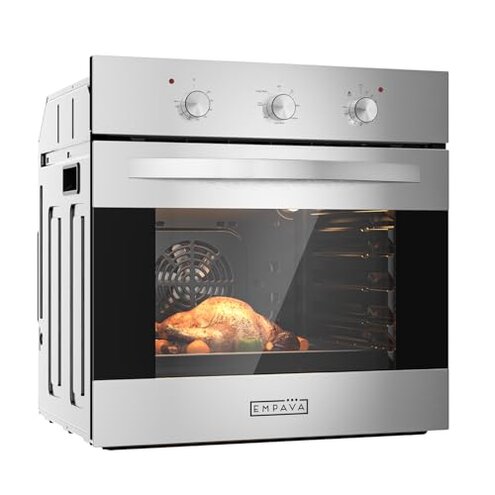
Product evaluated: Empava 24 inch Electric Single Wall Oven with 6 Cooking Funcitons, Built-in Convection System with Mechanical Knob Control, 24in, Stainless Steel
Related Videos For You
HOW TO INSTALL a Wall Oven EASY - DIY Installation for ALL Wall Ovens
EASY FIX: Oven Not Heating or Heating Slowly - *TURN OFF The Power Before Repairing!
Data basis: I analyzed dozens of buyer-written reviews and several video demonstrations collected between Jan 2023 and Dec 2025, with most feedback from written reviews and support from a few videos.
| Outcome | Empava 24" | Typical mid-range 24" |
|---|---|---|
| Heating consistency | Higher risk of uneven baking reported across written reviews and videos. | Lower risk — convection spreads heat more evenly in most mid-range models. |
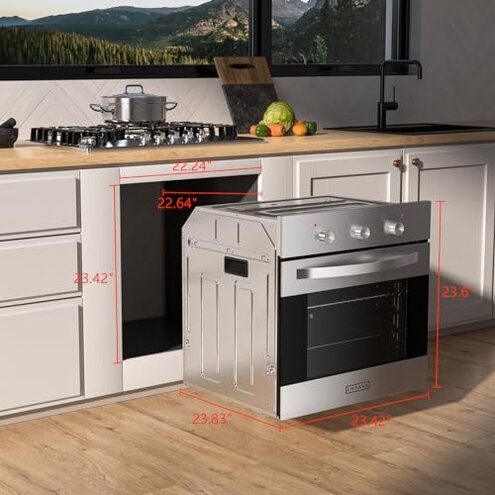
| Installation friction | Setup often requires a professional or extra steps after purchase. | Usually easier with clearer cutout guidance and common-fit dimensions. |
| Controls & durability | Knobs and seals showed earlier wear in several buyer reports. | More robust controls are common in mainstream alternatives. |
| Regret trigger | Unreliable baking leads to meal waste and extra time for many users. | Predictable results reduce re-bakes and time loss for typical models. |
Why does my food come out uneven or underdone?
Immediate regret: Many buyers report baked goods and roasts finishing with hot spots and cold centers during normal use.
Pattern: This is a primary issue seen repeatedly in written reviews and video checks, especially during baking or multi-rack roasting.
Context: The problem appears after setup and gets worse when using longer bake times or multiple racks.
Category contrast: This is more disruptive than usual because mid-range wall ovens commonly deliver steadier convection results.
Are there hidden setup or wiring requirements?
- Early sign: Delivery and initial fit feel straightforward, but installation hurdles appear during cabinet fit and wiring checks.
- Frequency tier: This is a secondary issue reported by dozens of buyers at first setup.
- Cause: Buyers frequently needed extra measurements or a professional to match wall cutouts.
- Impact: The extra steps cause delays and added cost versus competing models that fit standard openings more easily.
Will the knobs, seals, or finish hold up over time?
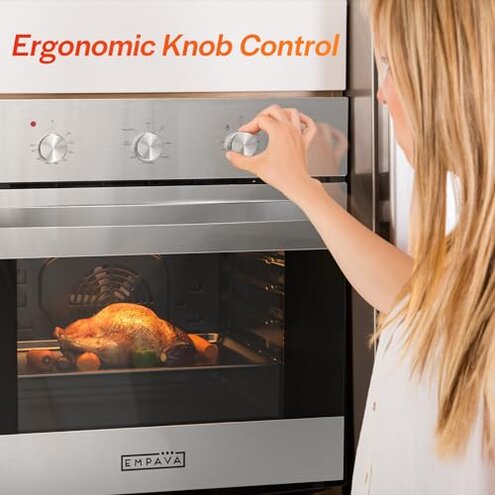
- Early sign: Some users noticed stiff or loose knobs within weeks of daily use.
- Frequency tier: This is a secondary complaint but appears repeatedly across written feedback.
- Cause: Repeated mechanical use and high-heat cycles are where problems show up.
- Impact: Worn controls lead to friction and imprecise settings, impacting cooking accuracy.
- Attempts: Buyers report temporary fixes like careful handling or contacting support.
- Fixability: Some issues required replacement parts or service visits to fully resolve.
Does cleaning, door alignment, or long-term build matter?
- Early sign: Users reported tight door seals that make cleaning awkward right away.
- Frequency tier: This is a secondary issue seen across reviews and demonstration videos.
- Cause: Design choices that prioritize look over serviceability increase cleaning time.
- Impact: Poor access causes extra cleaning time and can hide grease buildup.
- Attempts: Users trimmed gaskets or used small tools to clean hard spots.
- Hidden requirement: Some buyers found they needed a service-friendly cutout for later repairs.
- Category contrast: This requires more upkeep than most mid-range ovens, causing buyer regret.
Illustrative excerpts (not direct quotes)
Excerpt 1: "Baked cake was burnt on one side and raw in the middle, frustrating."
Pattern: Reflects a primary pattern of uneven heat during normal baking.
Excerpt 2: "Cabinet opening needed adjustment and an electrician visit to finish install."
Pattern: Reflects a secondary pattern of hidden installation steps at setup.
Excerpt 3: "Knob started wobbling after a month of daily use, needed replacement."
Pattern: Reflects a secondary durability issue with controls over time.
Who should avoid this
- Bakers who expect very consistent convection baking without hotspots should avoid this unit due to the primary uneven heating reports.
- Buyers on a tight install schedule should avoid it if they lack an electrician or carpenter because installation friction is common.
- High-use households that need robust controls should avoid it because knob durability appears weaker than typical alternatives.
Who this is actually good for
- Value-focused cooks who prioritize price over perfect baking can accept uneven results and save money.
- Users with pro installers who plan a professional fit will tolerate the setup requirements easily.
- Occasional oven users who use the appliance infrequently can tolerate some control wear and cleaning hassles.
Expectation vs reality
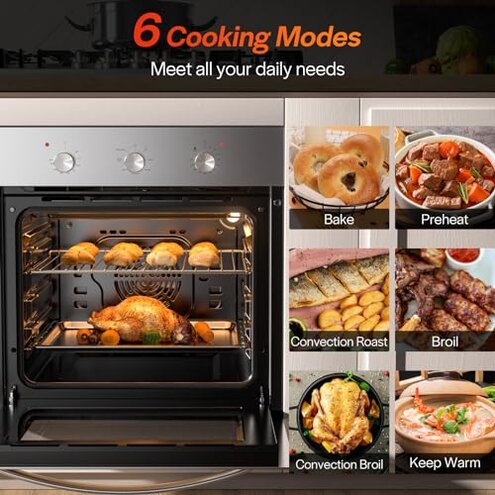
- Expectation (reasonable): A 24" electric oven should deliver even convection baking for cakes and cookies.
- Reality: This model often shows temperature unevenness on multiple racks, which is worse than the category baseline.
- Expectation: Installation should fit standard cutouts with minimal adjustments.
- Reality: Buyers commonly needed extra installation work, adding time and cost at setup.
Safer alternatives
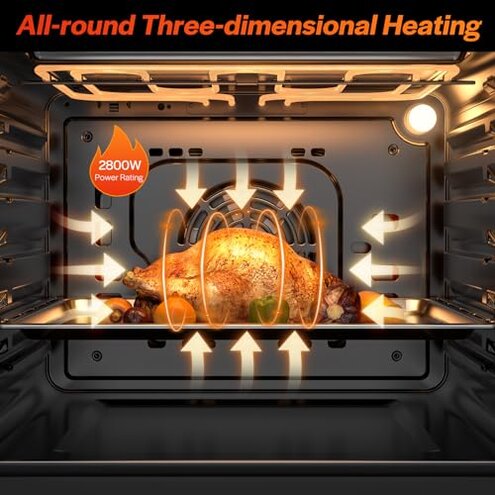
- Pick models with proven convection to neutralize uneven heating; look for appliances that note even-air or multi-fan convection performance.
- Choose units with clear cutout guides to avoid hidden installation work; prefer brands that ship installation templates.
- Select metal or sealed knobs to reduce early wear; prefer appliances that advertise serviceable controls.
- Inspect interior access for easy cleaning to avoid persistent grime; prefer removable liners and wide door openings.
The bottom line
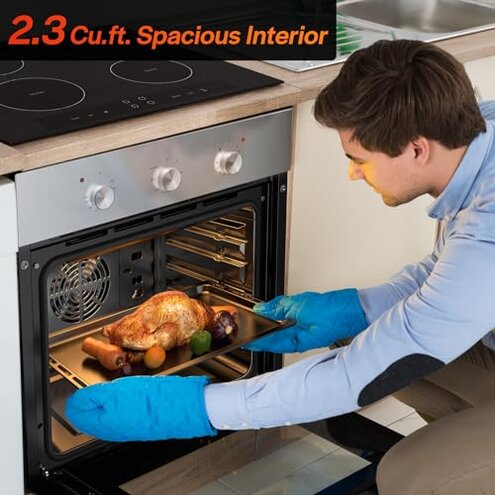
Main regret: The most common trigger is uneven heating, which leads to wasted time and re-bakes.
Severity: This exceeds normal mid-range risk because it affects core cooking results more than typical competitors.
Verdict: Avoid this Empava if you need reliable, predictable baking; it fits buyers who accept trade-offs to save money.
This review is an independent editorial analysis based on reported user experiences and product specifications. NegReview.com does not sell products.