
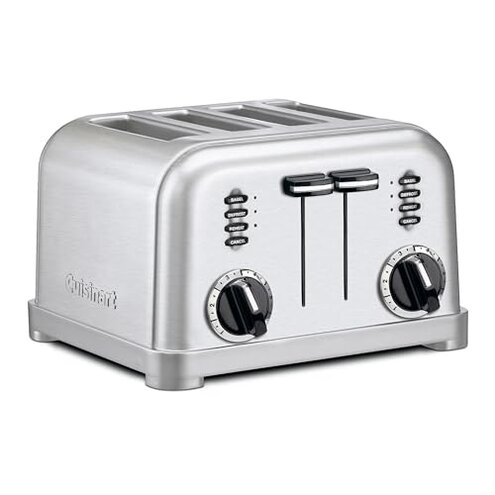
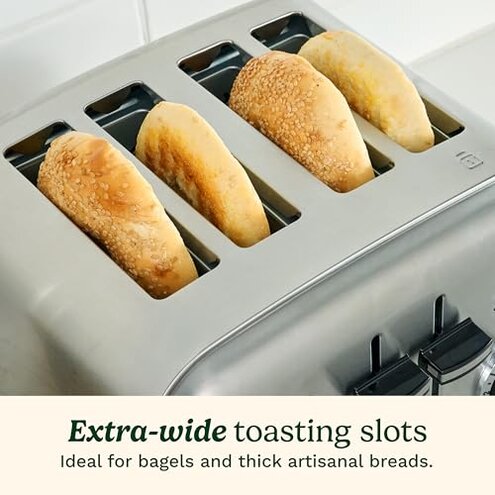
Product evaluated: Cuisinart 4 Slice Toaster, Compact Stainless Steel Toaster with Extra-Wide Slots for Toasting Bread, French Toast, Bagels and Pastries, Defrost & Reheat Functions, CPT-180P1, Brushed Stainless
Related Videos For You
You’ve been using your Toaster WRONG 🤯
How to Clean a Toaster (Oven!) Helpful Tips for Cleaning Your Kitchen Appliances (Clean My Space)
Data basis This report is drawn from hundreds of aggregated buyer comments and demonstrations collected between 2018–2025, combining written reviews and video demonstrations. Most feedback came from written reviews, supported by video clips showing usage and failure moments.
| Buyer outcome | Cuisinart 4-Slice | Typical mid-range toaster |
|---|---|---|
| Consistency of toast | Uneven browning reported commonly across slots and settings. | More consistent browning across cycles for most models. |
| Mechanical reliability | Higher risk of lever or carriage stiffness appearing after months. | Lower risk with similar-priced alternatives lasting longer without jams. |
| Cleanup & maintenance | Crumbs and smoke build-up appears repeatedly under heavy use. | Better access or simpler trays on many mid-range models. |
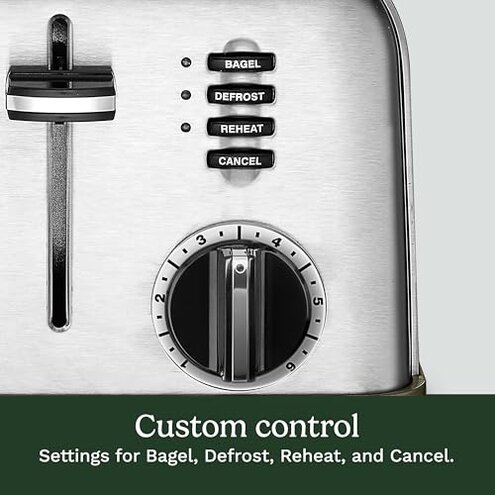
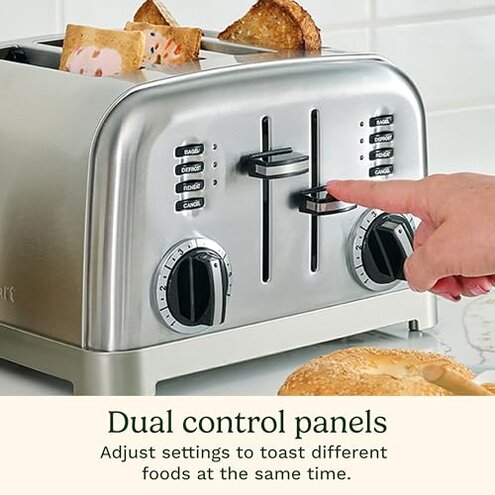
| Controls accuracy | Imprecise browning dial and function buttons need readjustment. | More predictable settings on several competitors. |
| Regret trigger | Frequent re-toasting and occasional hardware fixes make this product a higher regret risk. | Less rework needed with typical mid-range alternatives. |
Top failures
Why does my toast come out uneven or burned on one side?
Regret moment You expect a uniform slice but see one side darker or charred while the other side is pale.
Pattern This is a primary issue that appears repeatedly across feedback for initial and ongoing use.
Usage anchor It usually shows up during daily use when toasting different bread thicknesses or using the bagel function.
Category contrast This is worse than the mid-range baseline because more adjustments and repeated cycles are needed to reach acceptable results.
Why does the carriage or lever feel sticky or fail after months?
- Early signs Lever stiffness or rough travel shows up after a few weeks to months of regular use.
- Frequency tier This is a secondary issue seen repeatedly in longer-term feedback.
- Cause Partial jamming and alignment drift appear with daily insertion of bulky items.
- Impact Jams force extra handling and can interrupt morning routines.
- Fixability Temporary fixes require disassembly or pressing the carriage repeatedly, which is not a practical long-term solution.
Why do crumbs, smoke, and smells become an issue more often than expected?
- Early signs Noticeable crumb accumulation and occasional smoking after heavy use or frying batter in the toaster slots.
- Pattern This is a primary issue that appears repeatedly in written reports and visual demos.
- When It worsens during frequent daily use or when toasting sticky or sugary items.
- Cause Shallow or hard-to-access crumb areas require more cleaning than typical toasters.
- Impact Smoke leads to odor and may trigger kitchen fans or alarms, disrupting routines.
- Hidden requirement Requires regular slide-out tray cleaning more often than buyers expect for this price class.
- Attempts Users report repeated manual cleaning to reduce smell and smoke, adding time and effort.
Why do the browning dial and special functions feel unreliable?
- Primary signal Settings like defrost, reheat, and bagel sometimes deliver inconsistent results.
- Usage anchor Problems surface right away for some and become more obvious after repeated cycles.
- Frequency This is a secondary issue that appears repeatedly, though not universal.
- Cause The dial calibration and button feedback appear imprecise compared with reasonable category expectations.
- Impact You may need multiple cycles or manual flipping to reach desired browning.
- Attempts Buyers commonly recalibrate by trial runs, which wastes time and food.
- Why worse This is less forgiving than typical mid-range toasters that score better for consistent settings.
- Hidden requirement Accepting this toaster means budgeting extra time each morning for test toasts and adjustments.
Illustrative excerpts
"Toast darker on one side every cycle, need to flip slices." — illustrative, reflects a primary pattern
"Lever got stuck after three months of daily use, annoying fix needed." — illustrative, reflects a secondary pattern
"Smoke and smell after pancakes, crumb tray hard to clean thoroughly." — illustrative, reflects a primary pattern
Who should avoid this
- Buyers needing precision Avoid this if you require exact, uniform browning every cycle.
- Heavy users Avoid this if you toast multiple times daily and cannot tolerate extra maintenance.
- Low-tolerance for repair Avoid this if you won’t accept occasional mechanical fiddling or early part wear.
Who this is actually good for
- Occasional users Good if you toast infrequently and can accept occasional uneven results.
- Budget-conscious buyers Good if you prioritize compact size and price over long-term reliability.
- Hands-on troubleshooters Good if you’re willing to adjust settings and clean frequently to get acceptable outcomes.
Expectation vs reality
Expectation Reasonable for this category: a 4-slice toaster should give similar results across both slots without constant fiddling.
Reality This toaster often requires repeated cycles, manual adjustments, or extra cleaning to reach that reasonable outcome.
Safer alternatives
- Pick models with proven consistency Look for toasters that advertise verified even-heating or have demonstrable user tests.
- Choose better service options Prefer models with longer real-world reliability records or accessible replacement parts.
- Check crumb access design Buy toasters with full-width, easy-slide crumb trays to reduce smoke risk and cleaning time.
- Prefer clear calibration Seek toasters with digital controls or repeatable presets to avoid manual trial-and-error.
The bottom line
Main regret The most common regret is uneven toasting combined with occasional mechanical or maintenance headaches.
Why worse These issues exceed normal category risk because they force repeated cycles and extra cleaning more often than typical mid-range toasters.
Verdict If you value consistent, low-effort toasting, avoid this model; if you accept extra fiddling and cleaning, it can work.
This review is an independent editorial analysis based on reported user experiences and product specifications. NegReview.com does not sell products.