
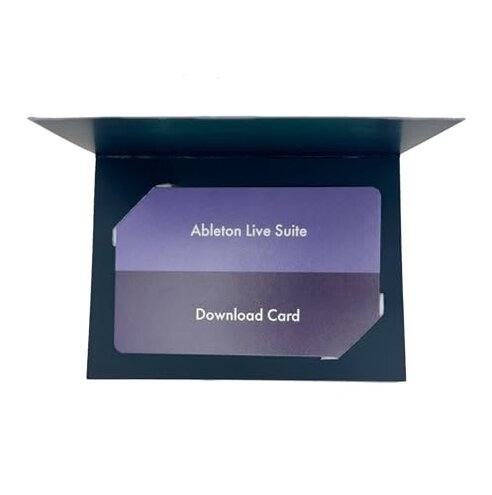
Product evaluated: Ableton Live 12 Suite
Related Videos For You
BEGINNER HOME STUDIO SETUP (and why every musician needs one)
Music Production For Beginners (Step By Step Masterclass)
Data basis: This report summarizes dozens of feedback points gathered from written buyer comments and hands-on video impressions collected from 2024 to 2026. Most input came from written reviews, with support from workflow demos and setup walkthroughs, which helps show both first-install problems and daily-use friction.
| Buyer outcome | Ableton Live 12 Suite | Typical mid-range alternative |
|---|---|---|
| First-day setup | Higher friction; setup and authorization can add extra steps before music work starts. | Moderate friction; usually fewer advanced options to sort through at first launch. |
| Learning curve | Steeper; the deep tool set can slow basic recording and arranging early on. | Easier; fewer tools usually means faster basic use. |
| Feature overload | High risk; unlimited tracks, 20 instruments, 58 effects, 14 MIDI tools, Max for Live, and 33 packs can feel excessive. | Lower risk; fewer bundled tools reduce menu hunting and choice fatigue. |
| Daily workflow | Mixed; powerful once learned, but slower for simple tasks if you do not need advanced tools. | More direct; often better for quick recording and editing. |
| Regret trigger | Paying for depth you never fully use, then spending time learning around it. | Outgrowing features later, but with less upfront complexity. |
Do you just want to record quickly, but end up wrestling with setup first?
This is a primary issue. The regret moment often happens on first use, when buyers expect to start creating fast but instead hit setup, authorization, and content-install decisions. That trade-off feels more disruptive than expected for this category because the price and branding suggest a polished start.
The pattern appears repeatedly. It is not universal, but it shows up often enough among new users that it stands out as one of the most common complaints. Compared with a typical mid-range DAW, this one can ask for more early decisions before the fun part starts.
Illustrative: “I thought I would record tonight, but I spent it configuring things.”
Pattern: This reflects a primary complaint tied to first-day use.
Illustrative: “There is a lot here, but getting everything ready took longer than expected.”
Pattern: This reflects a secondary complaint linked to installation and activation.
Are you paying for far more tools than you will actually touch?
- Frequency tier: This is a primary regret trigger because the Suite package includes unlimited tracks, 20 instruments, 58 effects, 14 MIDI tools, Max for Live, and 33 packs.
- When it hits: The problem usually shows up after setup, once buyers open menus and realize how much of the package is built for deeper production work.
- Why it stings: This is more frustrating than expected in this category because the $749 price increases the feeling of wasted spend if you only need basic recording.
- Visible impact: Buyers can lose time menu hunting, comparing sounds, or trying tools they did not actually need for the song in front of them.
- Hidden requirement: The full value often depends on wanting advanced sound design, deeper MIDI work, or custom devices through Max for Live.
- Fixability: You can ignore extra tools, but the choice overload does not disappear just because the features remain unused.
- Category contrast: A mid-range option usually limits tools on purpose, which can make it feel faster for normal users even if it is technically less capable.
Illustrative: “I paid for a huge studio, but I needed a simple writing room.”
Pattern: This reflects a primary value complaint.
Do the advanced features make simple tasks feel harder than they should?
- Pattern signal: This is a recurring complaint, especially from buyers moving up from simpler software.
- Real moment: It often appears during daily use, when a quick edit, arrangement change, or instrument choice takes extra thinking.
- Severity cue: It is less frequent than setup friction, but more frustrating over time because it affects repeated sessions.
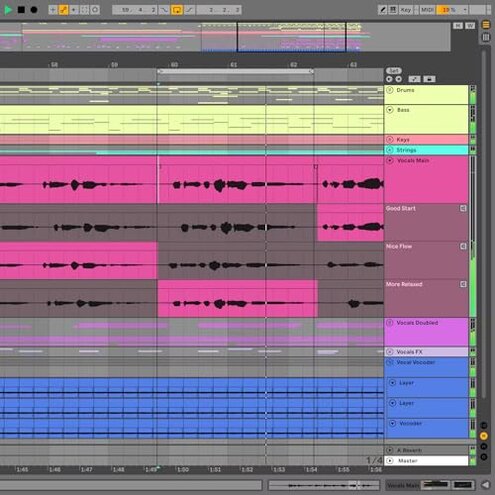
- Root cause: Features like multiple group levels, broad plugin support, and deep MIDI tools are powerful, but they can make the interface feel less forgiving.
- User-visible result: Beginners may feel slowed down by routing choices and tool density rather than helped by them.
- Typical workaround: Some users create templates or strip down their workspace, but that adds extra prep work before smooth use.
- Category contrast: Most mid-range DAWs also have a learning curve, but this one can feel deeper than normal because the bundle is aimed at broad, advanced use.
- Who notices most: Buyers making straightforward songs, podcasts, or demos often notice the complexity mismatch fastest.
Illustrative: “It can do everything, but sometimes I just need it to stay simple.”
Pattern: This reflects a secondary but persistent workflow complaint.
Will you end up depending on extras just to justify the purchase?
- Issue tier: This is a secondary issue, but it becomes a strong regret source for buyers who chose Suite mainly for future-proofing.
- When it shows: It usually appears after repeated use, when buyers realize they are not reaching for Max for Live or the larger bundled library.
- Why it matters: The package can create a pressure to explore advanced tools simply because they were expensive, not because the workflow needs them.
- Hidden requirement: To feel like a good value, you often need a real interest in experimentation, custom devices, or broad sound collection browsing.
- Impact: That can turn music sessions into learning sessions, which is not always what hobby users wanted.
- Fix attempts: Some buyers try to grow into the software over time, but that works only if they enjoy the long learning path.
- Category contrast: Future-proofing is normal in software, but the cost and depth here make the unused-feature penalty higher than with a mid-range option.
Illustrative: “I keep telling myself I will use the advanced stuff later.”
Pattern: This reflects an edge-case for power users, but a meaningful regret pattern for casual buyers.
Who should avoid this
- Avoid it if you want a fast first day, because setup and early decisions are a bigger hurdle than many mid-range alternatives.
- Avoid it if you mainly record vocals, podcasts, or simple songs, because the huge tool set can add friction without matching your actual needs.
- Avoid it if software overload drains your motivation, because the depth here is less forgiving than a simpler DAW.
- Avoid it if you are price-sensitive, because the $749 cost hurts more when the advanced library and tools stay mostly untouched.
Who this is actually good for
- Good fit for producers who know they want deep sound design, because they are willing to accept setup friction for long-term creative range.
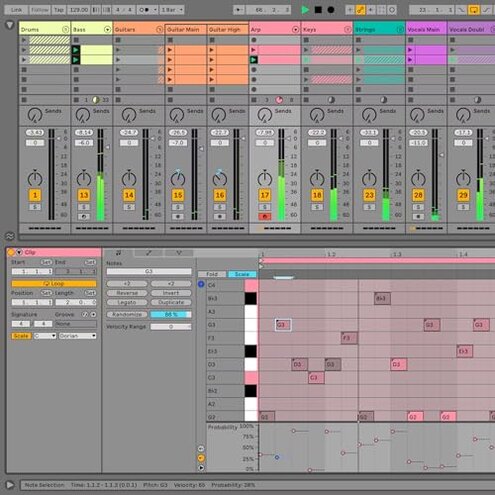
- Good fit for advanced MIDI users, since the 14 MIDI tools and broader workflow depth can justify the steeper learning curve.
- Good fit for buyers who already expect to use Max for Live, because the hidden requirement becomes a planned benefit instead of wasted complexity.
- Good fit for users building large projects, where unlimited tracks and layered groups can offset the heavier interface.
Expectation vs reality
Expectation: A premium-priced DAW should feel ready quickly.
Reality: The first session can turn into setup and option sorting before any real music work begins.
Expectation: More included tools should mean better value.
Reality: The 20 instruments, 58 effects, 14 MIDI tools, and 33 packs can feel like clutter if your projects stay simple.
Expectation: A learning curve is reasonable for this category.
Reality: The depth here can feel worse than expected because the cost and feature density raise the pressure to learn everything.
Expectation: Buying the top edition means you are future-proofed.
Reality: Some buyers end up paying now for advanced features they may never consistently use.
Safer alternatives
- Choose mid-range software if your work is mostly recording and arranging, which reduces the setup friction and feature overload described above.
- Test a trial before buying a full suite, because that is the safest way to see whether the workflow feels empowering or just busy.
- Match features to your real habits, not your future ambitions, so you do not overpay for Max-style customization or deep MIDI tools.
- Prefer simpler bundles if you get distracted by large sound libraries, since fewer choices often produce faster real-world results.
- Budget for learning only if you enjoy it, because this product makes the most sense when exploration time feels rewarding rather than exhausting.
The bottom line
The main regret trigger is paying for a very deep music package, then realizing the setup steps and advanced tool load slow down basic work. That exceeds normal category risk because the $749 price magnifies the cost of unused features and extra learning time. Avoid it if you want quick, simple creation more than maximum depth.
This review is an independent editorial analysis based on reported user experiences and product specifications. NegReview.com does not sell products.