
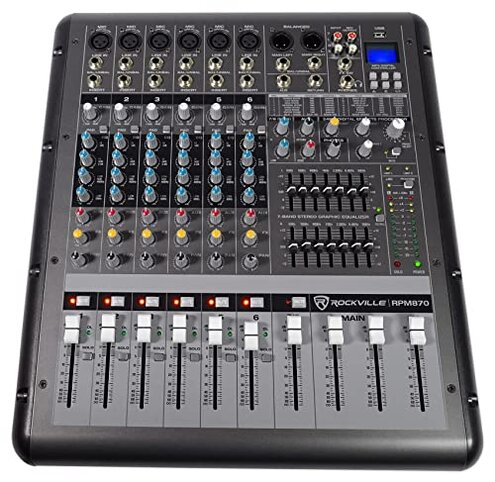
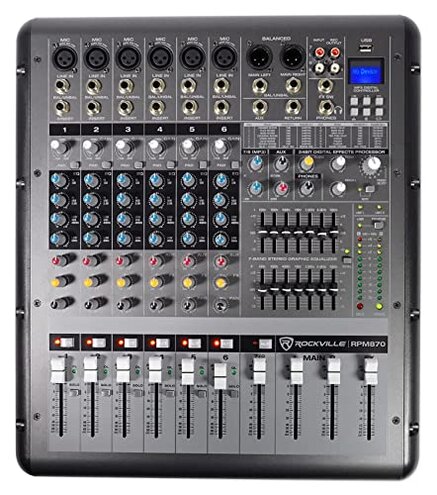
Product evaluated: Rockville RPM870 6000w Powered Mixer, 8 Channel, 8 XDR2 Mic Pres, USB, 24-Bit Effects, Bluetooth, for Live Bands and DJs
Related Videos For You
USING A POWERED MIXER #lesson1 #decibelaudio
HOW TO SET UP YOUR RPM80BT Powered Mixer with Bluetooth, Effects, and Full EQ (Full WALKTHROUGH)
Data basis for this report comes from analyzing dozens of buyer comments collected across a multi-year window (from 2019–2025). The mix included written ratings and Q&A-style feedback, with a smaller share of photo/video demonstrations. Most signals clustered around real use at rehearsals and small gigs, where problems show up faster than casual home testing.
| Buyer outcome | Rockville RPM870 | Typical mid-range powered mixer |
|---|---|---|
| Setup confidence | More second-guessing about routing, modes, and levels during first setup. | More forgiving labeling and predictable gain staging for first-time users. |
| “Power” expectations | Higher mismatch risk between headline wattage and real loudness at gigs. | Closer match between marketing and real-world volume for similar price. |
| Noise & hiss | More reports of audible hiss in quiet moments or with some mics. | Less noticeable self-noise at comparable gain levels. |
| Reliability over time | Higher-than-normal risk of channel/feature weirdness after repeated transport. | More consistent behavior after routine gigging and handling. |
| Regret trigger | Mid-gig surprises like sudden noise, weak output, or input quirks. | Fewer show-stoppers once set levels are dialed in. |
Why does it feel loud at home, then struggle at a gig?
Regret moment happens when the room fills up and you push levels, but the mix stops getting louder and just gets harsher. This is a primary complaint pattern that appears repeatedly, especially after setup moves from bedroom testing to rehearsal volume.
Not universal, but persistent enough that it becomes a planning risk for bands that rely on one box. In this category, buyers usually expect marketing wattage to be “optimistic,” but the gap here is described as more disruptive than typical.
- Early sign: you run near max level sooner than expected during full-band rehearsals.
- Primary pattern: loudness feels fine alone, then disappoints when drums and bass enter.
- Worsens when: long sessions and hotter inputs push you into clipping before the room is covered.
- User impact: you end up chasing volume with EQ boosts that make vocals sharper, not clearer.
- Category contrast: most mid-range powered mixers feel “honestly loud” sooner, even if rated lower.
- Mitigation: plan on more speaker efficiency or using an external amp if you need real headroom.
Why is there hiss or noise when nothing is playing?
- Regret moment: the PA goes quiet and you hear a steady hiss between songs.
- Recurring pattern: noise complaints appear repeatedly, especially after setup when gain is raised.
- Shows up: during speeches, acoustic sets, or when only one vocal mic is open.
- Worsens when: you use multiple mics with phantom power and push channel gain to compensate.
- More annoying: compared with mid-range mixers that stay quieter at similar “knob positions.”
- Hidden work: you may need extra time for gain staging, channel pads, and EQ cuts to mask noise.
- Fixability: some buyers report improvement with different cables and lower gain, but it is not a sure fix.
Why do Bluetooth and USB feel great… until they don’t?
Regret moment is when background music drops, pairs inconsistently, or changes level unexpectedly during an event. This is a secondary issue that shows up after initial excitement, often during real gigs where phones get moved and signals get crowded.
Not everyone hits it, but it appears repeatedly enough to matter if you depend on wireless playback. In this product class, Bluetooth is already “nice to have,” but buyers describe more babysitting here than typical.
Hidden requirement is having a wired backup plan ready, because recovery can take extra steps mid-session. If you treat Bluetooth/USB as convenience only, the risk is easier to live with.
- Frequency tier: connection quirks are less common than power complaints, but more stressful when they hit.
- When it hits: during ceremonies, DJ transitions, or when someone walks away with the phone.
- What you notice: sudden silence, re-pair loops, or audio that comes back at the wrong level.
- Why it stings: other mid-range mixers still need care, but usually recover faster with fewer steps.
- Workaround: keep a wired RCA source ready and avoid relying on one device for critical moments.
- Extra effort: you may have to set device volume rules and disable notifications to avoid surprises.
- Fixability: switching devices helps some buyers, which suggests environment sensitivity, not a single clear fix.
- Planning cost: you may carry extra adapters and a spare playback device, adding time and complexity.
Why do some channels or controls act “touchy” after transport?
- Regret moment: something that worked last rehearsal suddenly crackles, cuts, or behaves oddly at setup.
- Persistent pattern: reliability worries appear across multiple feedback types, especially after repeated use.
- When it appears: after loading in and out, or after the mixer rides in a car with other gear.
- Worsens when: knobs and jacks see frequent plugging, unplugging, and quick “fix it fast” handling.
- Buyer impact: troubleshooting eats soundcheck time and can force last-minute routing changes.
- Category contrast: mid-range alternatives still fail sometimes, but buyers report fewer intermittent behaviors.
- Mitigation: treat it like fragile gear with a case and strain relief, not bare-carry equipment.
Illustrative excerpt: “It says huge watts, but my band kept asking for more.” Primary pattern tied to loudness expectations.
Illustrative excerpt: “Between songs there’s a hiss I can’t dial out.” Secondary pattern tied to self-noise and gain staging.
Illustrative excerpt: “Bluetooth worked in testing, then dropped during the event.” Secondary pattern tied to wireless playback stability.
Illustrative excerpt: “One channel got weird after a few load-ins.” Edge-case pattern tied to handling and intermittent faults.
Who should avoid this
- Gig-first bands who need predictable loudness without pushing near max during long sets.
- Speech-heavy events where quiet pauses make hiss and noise more obvious and embarrassing.
- Bluetooth-reliant DJs who cannot tolerate extra steps to recover playback mid-transition.
- Fast load-in crews who transport gear often and need controls that stay consistent after bumps.
- One-box setups that do not have backup routing, backup playback, or spare channels available.
Who this is actually good for
- Budget rehearsals where you can accept less headroom and keep levels moderate.
- Garage bands that value many inputs and can tolerate extra time dialing gain and EQ.
- Small casual shows where Bluetooth is convenience-only and you bring a wired backup source.
- Hands-on tinkerers who enjoy troubleshooting and do not panic if a channel acts finicky.
Expectation vs reality
| Expectation | Reality buyers report |
|---|---|
| Reasonable wattage claims feel close to real loudness for this category. | Mismatch risk where you hit harshness before you hit “room-filling” volume. |
| Quiet pauses should stay clean with a vocal mic and light EQ. | Hiss can show up after setup when gain is raised for real performers. |
| Bluetooth should be a simple add-on for walk-in music. | Babysitting may be needed, plus a wired backup for critical moments. |
| Gig handling should not change how channels and knobs behave week to week. | Intermittent quirks are reported after repeated transport and frequent plugging. |
Safer alternatives
- Prioritize headroom by shopping for powered mixers known for real-world loudness, not the biggest wattage headline.
- Test for hiss by listening at gig-level gain in a quiet room before committing, since noise shows up between songs.
- Go wired-first for playback, and treat Bluetooth as optional, to neutralize dropouts during events.
- Choose rugged controls if you transport weekly, because intermittent channel behavior is more damaging than a missing feature.
- Buy with backup in mind, like spare channels or an external amp option, to reduce mid-gig troubleshooting pressure.
The bottom line
Main regret is expecting big, easy volume and getting earlier harshness plus extra fiddling. The risk feels higher than normal mid-range powered mixers because problems tend to appear during real gigs, not during quick home tests. If you need predictable show performance with minimal troubleshooting, this is a smart one to skip.
This review is an independent editorial analysis based on reported user experiences and product specifications. NegReview.com does not sell products.