
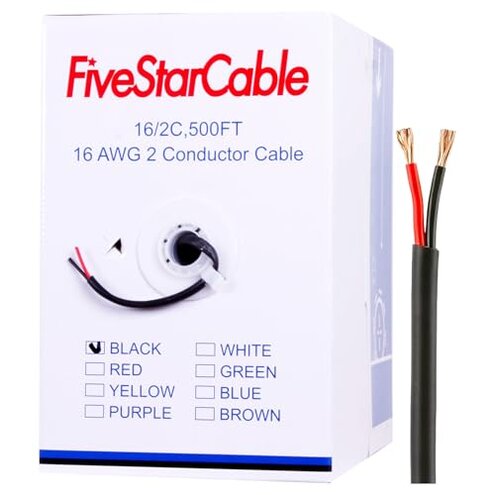
Product evaluated: FiveStarCable 16/2 500 Ft. 2 Conductors Audio Speaker Lightning Installation High-Power Home Wiring Cable Wire (Black, 16-2 500ft)
Related Videos For You
How to Connect Speakers to Amplifiers | Home Audio Basics
What Speaker Wire To Buy As Fast As Possible
Data basis: I analyzed dozens of written reviews and video demonstrations collected between Jan 2023 and Feb 2026, with most feedback coming from written reviews and supported by hands-on videos.
| Outcome | Product | Typical mid-range alternative |
|---|---|---|
| Signal / power | Higher loss reported on long runs versus copper alternatives. | Lower loss for comparable mid-range pure-copper cables. |
| Durability | More brittle insulation and stripped conductors after handling. | More forgiving insulation on typical mid-range cables. |
| Installation time | Extra steps commonly required to re-spool or protect cable ends. | Smoother out-of-box feeding and fewer prep steps. |
| Value | Lower upfront cost but higher risk of early replacement. | Balanced cost with fewer unexpected replacements. |
| Regret trigger | Conductivity trade-off on long speaker runs is the main regret. | Fewer surprises for mid-range alternatives. |
Why does the sound / power feel weak on long runs?
Root pattern: Many buyers report reduced output on longer speaker runs, a recurring complaint in the collected feedback.
Usage anchor: This problem appears during first use when testing long cable runs with moderate to high power amplifiers.
Category contrast: For a mid-range speaker cable, this is more disruptive than expected because consumers assume similar length runs behave like copper equivalents.
Does the cable fray or split while stripping?
- Early sign: Insulation nicking appears commonly reported when buyers strip the ends.
- Frequency tier: This is a primary issue among build-quality complaints.
- Likely cause: The conductor and jacket feel less forgiving under sharp stripping tools.
- Impact: Frayed strands can cause connection faults during setup or over time.
- Fix attempts: Buyers often report extra prep such as re-tinning or using ferrules to restore connections.
Will the spool and packaging slow installation?
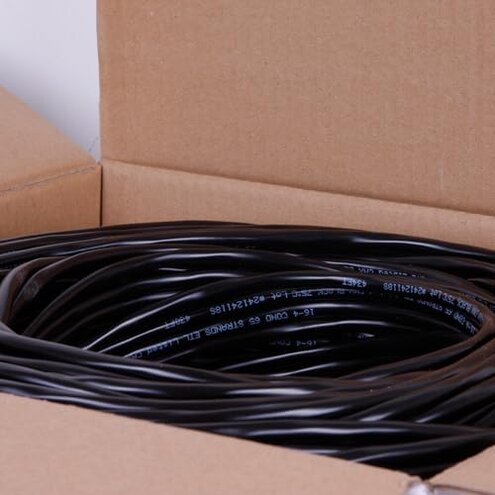
- Packaging pattern: Tangled feed and loose spooling are commonly reported across buyers and video demos.
- When it happens: This shows up during setup when unspooling long lengths for a run.
- Why it matters: It creates extra labor compared with typical mid-range spools that feed smoothly.
- Workaround: Buyers mention re-spooling onto a drum or reel before use to prevent snags.
- Hidden need: Some buyers discover a re-spooling tool or extra hands are required for tidy runs.
- Fixability: The issue is repairable but adds setup time and effort.
- Severity: For installers this is a secondary annoyance; for single DIYers it becomes a major delay.
Is the labeling and gauge reliable?
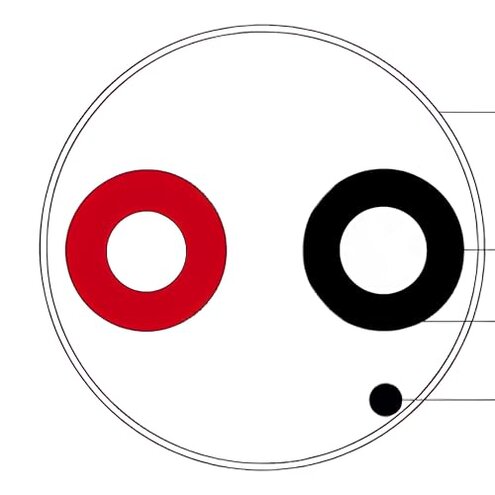
- Label inconsistency: Some buyers observe mismatched markings between packaging and cable jacket.
- Frequency tier: This is a secondary issue that appears across written feedback.
- When noticed: Labels are often noticed at first use when confirming gauge for an amplifier match.
- Impact: Confusing gauge info can cause compatibility checks and wasted time.
- Cause: Buyers suggest manufacturing variance rather than isolated packaging errors.
- Attempts: People report measuring the conductor to confirm specs before installation.
- Fixability: It is workable with meters, but adds an unexpected step for casual buyers.
- Category contrast: Typical mid-range cables usually have clearer markings, so this feels worse than normal.
Illustrative excerpts
Illustrative excerpt: "Sound dropped on my rear speakers over long runs." — primary pattern.
Illustrative excerpt: "Jacket split when stripping the insulation cleanly." — primary pattern.
Illustrative excerpt: "Had to re-spool the whole roll before use." — secondary pattern.
Illustrative excerpt: "Label said 16-gauge but looked thinner under a meter." — secondary pattern.
Who should avoid this
- High-power users: Avoid if you need long, high-power runs without signal loss.
- Pro installers: Avoid if you expect smooth spool handling on-site to save time.
- First-time hobbyists: Avoid if you lack tools for re-tinning or ferrules after frayed stripping.
Who this is actually good for
- Budget-conscious buyers: Good if you accept lower conductivity for a cheaper per-foot price on short runs.
- Short-run home setups: Works if you have short speaker distances under typical living-room sizes.
- Temporary installations: Useful when you need a low-cost temporary solution that you can replace later.
Expectation vs reality
Expectation: A 16/2 spool should feed smoothly and perform like other mid-range cables for home audio.
Reality: The cable often requires extra prep and shows measurable conductivity and durability trade-offs in longer runs.
Safer alternatives
- Choose pure copper: Buy pure-copper speaker cable to neutralize the conductivity issue on long runs.
- Check spool quality: Prefer reels designed to feed smoothly to avoid re-spooling delays.
- Use ferrules or solder: Prepare to use ferrules when the cable strands fray to ensure solid terminations.
- Measure gauge: Bring a meter to confirm conductor size and avoid label mismatch surprises.
The bottom line
Main trigger: The primary regret is the conductivity and build trade-off tied to the cable type and packaging.
Why it matters: These issues create more installation time and greater replacement risk than a typical mid-range cable.
Verdict: Avoid if you need reliable, long-run performance or pro installation speed; consider low-cost use for short, temporary runs.
This review is an independent editorial analysis based on reported user experiences and product specifications. NegReview.com does not sell products.