
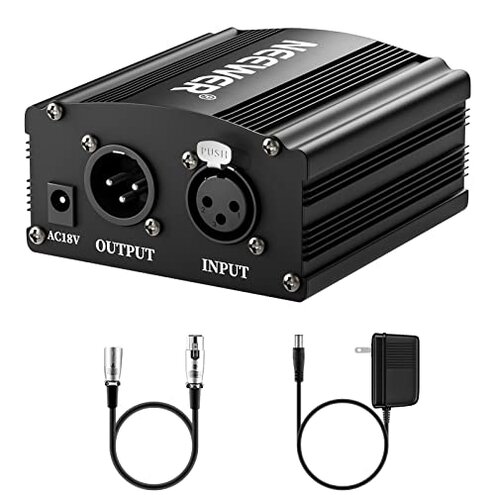
Product evaluated: Neewer 1-Channel 48V Phantom Power Supply with Adapter, BONUS+XLR 3 Pin Microphone Cable for Any Condenser Microphone Music Recording Equipment (8 feet)
Related Videos For You
Ultimate Setup For Your BM-800 with Phantom Power
What Is Phantom Power And Why Do You Need It? - RecordingRevolution.com
Data basis: This report synthesizes dozens of customer reviews and demonstration videos collected between 2015–2025, with most feedback coming from written reviews and supported by video demonstrations.
| Outcome | Neewer unit | Typical mid-range unit |
|---|---|---|
| Reliability | Unstable power delivery reported more often than expected for this category. | Consistent 48V delivery under normal use with fewer failures. |
| Noise/Hum risk | Higher-than-normal chance of introducing hum or hiss during live or recording use. | Lower background noise when used with balanced systems and good grounding. |
| Build quality | Fragile adapters and cable connections were commonly replaced or reseated. | More durable connectors and sturdier housings that survive frequent use. |
| Setup friction | Hidden steps needed for quiet operation and compatibility with mixers. | Simpler plug-and-play behavior for most condenser mics and interfaces. |
| Regret trigger | Frequent failures during recording or live gigs that force retries or replacements. | Lower risk of mid-session failures that cause lost takes. |
Why did my condenser mic stop powering up mid-session?
Primary frustration: Users commonly report the unit failing to deliver steady 48V power either at first use or after months of use.
Context anchor: Problems appear during initial setup or after repeated use and often force replugging or switching to another power source.
Category contrast: This is more disruptive than typical mid-range supplies because many buyers expect simple, uninterrupted power for live or recording sessions.
Why is there a constant hum or background noise?
- Pattern: A recurring hum or hiss appears in many reports and is not isolated to a single environment.
- When it shows up: Noise usually appears after the unit is connected in live setups or when long cables and consumer interfaces are used.
- Frequency tier: Secondary issue for some, but commonly a primary annoyance for home recordists.
- Probable cause: Ground loops or poor internal filtering are commonly suspected by users.
- Impact: Noise degrades recordings and forces extra time troubleshooting or buying noise gates/DI boxes.
Why does the included cable or adapter fail quickly?
- Early sign: Loose connectors or intermittent contact within weeks of use are often reported.
- Scope: This appears across multiple feedback channels, not just occasional isolated posts.
- Cause: Buyers point to thin connector strain relief and weak adapter housings.
- Impact: Replacing cables or adapters adds extra cost and downtime for recording.
- Attempts to fix: Many users reseated plugs, swapped cables, or used tape to stabilize connectors.
- Fixability: The issue is repairable but requires extra parts or a better-quality replacement cable.
- Hidden requirement: Expect to replace the included cable with a higher-grade XLR if you need reliable daily use.
Why doesn’t phantom power make my mic louder or clearer as expected?
- Expectation: Buyers sometimes assume phantom power equals louder signal from the mic.
- Reality: Phantom power only supplies 48V; preamp gain still controls volume and clarity.
- Pattern: This confusion is a primary pattern among beginners and leads to disappointment.
- Usage anchor: The mismatch appears during first recordings when users expect plug-and-play warmth and volume.
- Category contrast: Worse than expected because mid-range units often pair with notes explaining gain staging more clearly.
- Impact: Buyers buy extra preamps or audio interfaces, increasing overall cost.
- Mitigation: Learn gain staging or budget for a modest preamp to avoid frustrating low volume.
- Hidden requirement: This unit often requires a separate preamp/interface for the results users expect.
Illustrative excerpts (not real quotes)

"Mic powered then died mid‑take, had to replug several times." — reflects a primary pattern.
"Constant low hum unless I moved cables or changed outlets." — reflects a secondary pattern.
"Connector felt loose after two weeks of home recording use." — reflects an edge-case pattern.
Who should avoid this
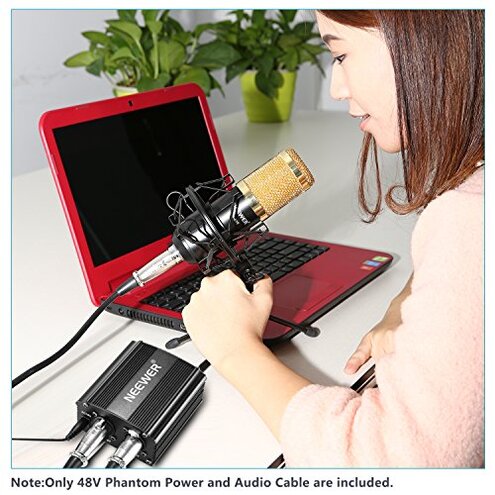
- Gigging musicians who need dependable power during live shows should avoid this unit.
- Critical home recordists who cannot tolerate background hum or intermittent dropouts should avoid it.
- Buyers on tight uptime needs who cannot spend time troubleshooting mid-session failures should avoid this product.
Who this is actually good for
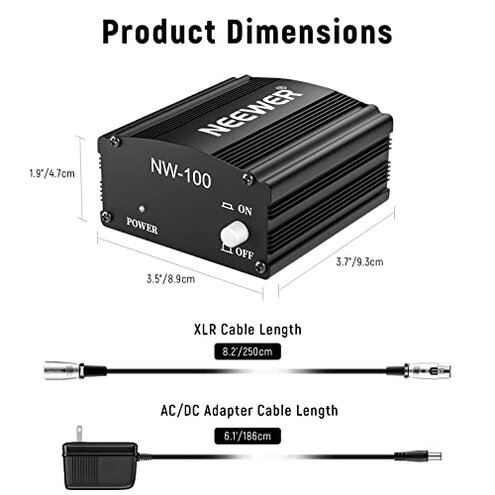
- Hobbyists on a budget who accept occasional tinkering and a replacement cable can tolerate its flaws.
- Experimenters who only need temporary phantom power for short sessions may accept the risk of noise and instability.
- Users with spare preamps who already own a quiet interface can tolerate this as a stopgap for powering mics.
Expectation vs reality
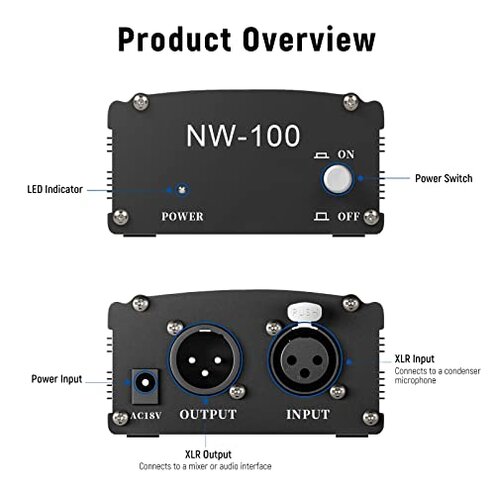
Expectation: A mid-range phantom supply will give stable 48V and quiet operation.
Reality: This unit often adds noise and has intermittent power or connector problems, causing extra troubleshooting.
Expectation: Included cable should work reliably out of the box as typical for the category.
Reality: Many buyers replaced the cable quickly, which raises the true cost above expectations.
Safer alternatives
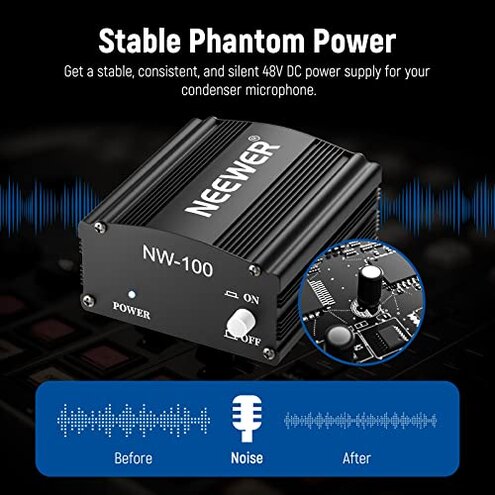
- Buy a known reliable phantom supply from a vendor with robust metal housings to reduce power instability.
- Use a dedicated audio interface with built-in phantom power to avoid external hum and grounding issues.
- Swap the included cable for a high-quality balanced XLR to eliminate connector and signal loss problems.
- Add a DI box or ground-lift when you hear hum to address grounding loops without replacing the unit immediately.
The bottom line
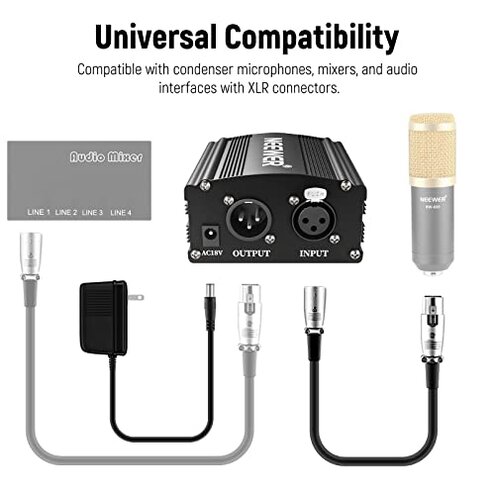
Main regret: The product commonly triggers interrupted power or added noise during recording or live use.
Risk level: These problems exceed normal category risk because they happen repeatedly and force added purchases or troubleshooting.
Verdict: Avoid this unit if you need quiet, reliable phantom power; consider sturdier mid-range alternatives instead.
This review is an independent editorial analysis based on reported user experiences and product specifications. NegReview.com does not sell products.