
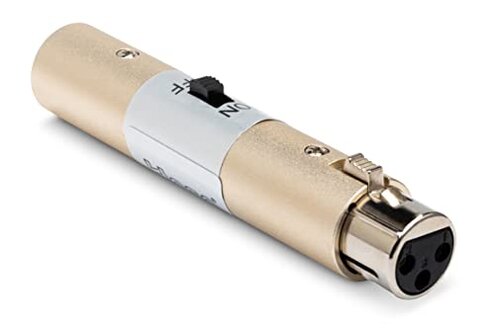
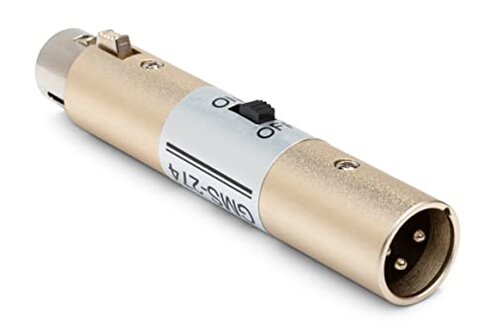
Product evaluated: Hosa GMS-274 Power Switch, XLR3F to XLR3M
Related Videos For You
Rolls MS112: The Essential XLR Switcher
How To Mute An XLR Microphone
Data basis: This report used dozens of user reviews and several video demonstrations collected between 2018 and 2026. Most feedback came from written reviews, supported by short performance demos and buyer Q&A. The findings reflect a mix of new-buyer setup notes and longer-term use comments.
| Outcome | Hosa GMS-274 | Typical mid-range inline XLR |
|---|---|---|
| Switch reliability | Higher failure risk: recurring reports of intermittent cuts and unreliable clicks | Lower risk: most mid-range units stay silent and consistent for years |
| Switching noise | Audible pops: switching can introduce clicks or bursts into the signal | Quieter action: comparable units often mute cleanly or are advertised as "silent" |
| Phantom power | Compatibility risk: designed for dynamic mics and not guaranteed to pass phantom power | Standard pass-through: many mid-range alternatives explicitly support phantom power |
| Live-use regret trigger | Higher impact: failures occur during setup or performance and are disruptive | Lower impact: typical alternatives fail less often on stage |
| Price vs value | Mixed: low cost but with trade-offs in reliability | Balanced: mid-range models cost more but reduce on-stage risk |
Top failures
Why does the switch cut out during a show?
Intermittent cutouts: buyers commonly report sudden signal loss when the switch is toggled or jarred during use.
When it appears: this usually shows up at first use or after repeated handling and during live performances, where movement is common.
Why worse than normal: inline switches in this category are expected to be discreet and reliable; here the impact is more disruptive than expected for a low-cost accessory.
Does it support condenser microphones or phantom power?
- Hidden requirement: the unit is aimed at dynamic mics and may not pass phantom power, which buyers discovered after purchase.
- Pattern: this appears repeatedly in setup notes and compatibility questions rather than as a rare edge-case.
- Usage anchor: the issue is obvious during initial setup when a condenser mic fails to power on.
- Impact: using this with condenser mics can leave you without sound mid-rehearsal or show.
- Attempted fixes: buyers tried swapping cables and preamps, but the inline switch still blocked phantom power in several reports.
- Category contrast: many mid-range inline switches explicitly state phantom pass-through, so this is less forgiving than usual.
Are the connectors and case durable enough for gigging?
- Connector fit: some buyers noted loose XLR fit that can cause intermittent contact under stress.
- Build feel: reports describe a lightweight chassis that feels less robust than expected for stage gear.
- Early signs: slight wobble or noise at the connector during the first few uses often predicts later problems.
- Frequency tier: this is a secondary issue—seen often enough to matter but not universal.
- Cause: low-cost manufacturing tolerances appear to be the root cause in buyer observations.
Will switching cause pops, buzzes, or other noises?
- Audible pops: switching under load can create clicks or bursts that get picked up on PA systems.
- Context: most reports note the noise when switching during live use or while a channel is active.
- Frequency: this is a primary complaint and appears repeatedly across written and demo feedback.
- Impact on mix: a single pop can draw attention and require console adjustments during a set.
- Attempted workarounds: muting at the mixer or cutting gain before switching reduces risk but adds steps.
- Fixability: the issue is often not fixable without replacing the unit with a silent-switch design.
- Hidden cost: the extra time and risk during live sets increase stress compared to typical inline switches.
- Category contrast: cheaper cost does not offset the higher operational risk for demanding live contexts.
Illustrative excerpts (not real quotes)
"Lost sound mid-song when the switch clicked off by accident." — primary pattern
"My condenser mic wouldn't power up with this inline unit connected." — primary pattern
"Heard a loud pop into the PA when I tried to mute." — primary pattern
"Connector felt loose from day one but worked sometimes." — secondary pattern
Who should avoid this
- Live performers: anyone relying on flawless switching during shows should avoid this due to higher on-stage failure risk.
- Condenser mic users: those who need phantom power should avoid it because of compatibility limits.
- Tight-setup rigs: engineers who cannot add mute steps or swap gear mid-set will find the added work unacceptable.
Who this is actually good for
- Casual home users: podcast hosts or hobbyists who want a cheap mute and can tolerate occasional clicks.
- Dynamic-mic owners: users who only use dynamic mics and accept the risk for a lower price.
- Backup or practice rigs: buyers who want an inexpensive spare and can test units before critical use.
Expectation vs reality
Expectation: a compact inline switch should mute cleanly and be plug-and-play for all mics, which is reasonable for this category.
Reality: this unit often produces audible pops and may block phantom power, creating real regret during live or condenser-mic use.
Safer alternatives
- Buy silent-switch models: choose inline switches explicitly advertised as "silent" to neutralize audible pop issues.
- Check phantom pass-through: confirm phantom compatibility in specs or choose models that state explicit support to avoid hidden power limits.
- Prioritize solid connectors: pick units with verified tight XLR fit or metal housings to reduce contact failures.
- Test before gigging: always bench-test any inline switch with your mic and mixer to catch compatibility or noise issues early.
The bottom line
Main regret: the most common trigger is switch-related signal problems during setup or live use, including pops and compatibility gaps.
Why it fails category expectations: the unit shows higher operational risk than typical mid-range inline switches, especially for condenser mics and stage use.
Verdict: avoid for critical live or condenser-mic applications and consider a tested alternative if you need reliable, silent switching.
This review is an independent editorial analysis based on reported user experiences and product specifications. NegReview.com does not sell products.