
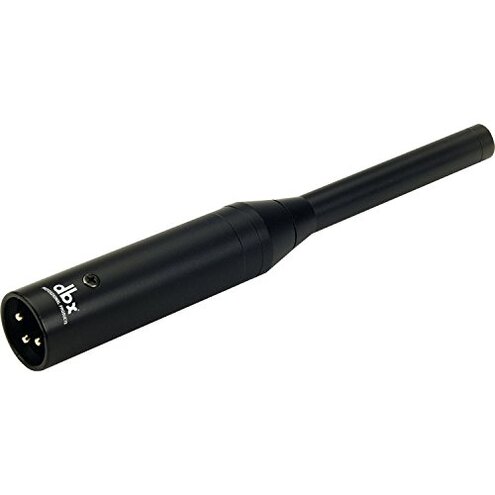
Product evaluated: dbx RTA-M Driverack Series Reference Microphone black 7.00 x 3.50 x 12.00 inches
Related Videos For You
How to Use Room EQ Wizard
Microphones Are Nasty! This is How to Clean/Sanitize Them | Shure
Data basis: This report aggregates dozens of buyer feedback items collected between 2018–2025, from written product reviews and video demonstrations, with most feedback coming from written reviews and supported by video tests and forum-style notes.
| Outcome | dbx RTA-M | Typical mid-range reference mic |
|---|---|---|
| Sound accuracy | Accurate in ideal setup but accuracy is commonly reported as dependant on correct Driverack routing. | Generally consistent across different preamps and recorders with less routing dependency. |
| Ease of setup | Higher setup friction because it requires phantom power specifically supplied by Driverack units. | Simpler plug-and-play with standard phantom power on mixers and interfaces. |
| Compatibility risk | Elevated risk — seen repeatedly across feedback when used with non-Driverack gear. | Lower risk with broad compatibility across common audio gear. |
| Durability & reliability | Mixed reports include intermittent connector issues during repeated use. | More reliable connections and sturdier housings at similar price points. |
| Regret trigger | Hidden dependency on Driverack phantom power that often causes returned units. | Less hidden setup errors, fewer returns for basic compatibility problems. |
Top failures
Why won't this mic power on everywhere?
Regret moment: Buyers often find the mic only works when plugged into a Driverack phantom source.
Pattern: This dependency is commonly reported and appears repeatedly in written reviews and video checks.
Usage anchor: The problem shows up at first setup when users try a mixer or interface phantom supply.
Category contrast: This is worse than normal because most measurement mics are plug-and-play with standard phantom supplies.
Is the connector fragile or intermittent?
- Early signs: Intermittent signal appears during daily handling or repeated cable swaps.
- Frequency tier: This is a secondary issue that appears across several feedback sources but not universal.
- Probable cause: Strain or poor solder at the XLR connection is commonly suspected in reports.
- Impact: Drops during measurements ruin long sessions and require rechecking results.
- Attempts to fix: Users report temporary fixes like wiggling connectors or swapping cables but describe these as annoying.
Does this mic give reliable readings for the price?
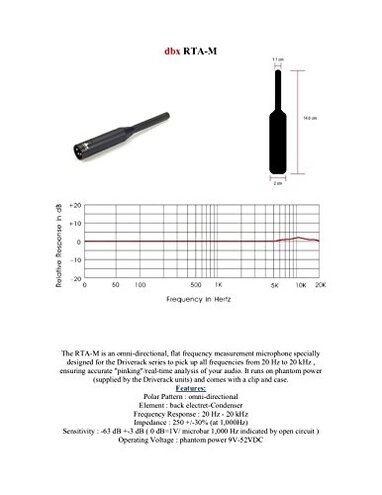
- Performance note: Accuracy is good in controlled setups but depends on correct placement and routing.
- Value concern: Many buyers view this as a primary complaint because price vs flexible usability is lower than expected.
- When it shows: Shortcomings appear during real-world room tuning with non-Driverack systems.
- Category contrast: Less forgiving than most mid-range mics that deliver consistent results across gear.
- Fixability: Accurate readings often require additional calibration steps or matching preamps, adding extra time.
- Hidden cost: Expect extra adapters or a Driverack to get reliable results, which is a surprise to many buyers.
Will setup and placement be straightforward?
- Early confusion: New buyers report unclear expectations about mic placement during first use.
- Common occurrence: This is a primary pattern for users who lack measurement experience.
- Worsening conditions: Problems get worse during long tuning sessions and when swapping rooms.
- Why it feels worse: Measurement mics usually offer straightforward guidance; reports say this mic requires extra know-how, making it less user-friendly.
- Impact: Inaccurate placement leads to misleading room corrections and wasted time.
- Attempts: Buyers often perform multiple test runs and repositioning before useful data appears, which is tedious.
- Hidden requirement: Several reports note the mic is effectively designed to pair with Driverack analysis chains, an unstated constraint.
Illustrative excerpts (not real quotes)
Excerpt: "Only worked when plugged into my Driverack; mixer phantom gave no life."
Pattern: This reflects a primary pattern of Driverack dependency reported often.
Excerpt: "Signal cut out after a week of gigs, kept wiggling the XLR to get sound."
Pattern: This reflects a secondary pattern about connector reliability under frequent use.
Excerpt: "Accurate in lab but confusing for room tuning without extra gear and adapters."
Pattern: This reflects a primary pattern about hidden extra steps and costs.
Excerpt: "Needed multiple placements and retries before any useful RTA trace appeared."
Pattern: This reflects a secondary pattern tied to placement sensitivity.
Who should avoid this
- Non-Driverack users: Avoid if you don’t own a Driverack or don’t plan extra adapters because compatibility is a top failure.
- Touring engineers: Avoid if you need robust connectors for frequent setup and teardown due to reported intermittent XLR issues.
- Beginners: Avoid if you expect plug-and-play room analysis because extra calibration steps are commonly required.
Who this is actually good for
- Driverack owners: Good if you already have the Driverack chain and can accept fewer compatibility surprises.
- Studio techs: Good if you can provide stable phantom power and precise placement; you can tolerate extra calibration steps.
- Occasional room tuners: Good if you only use it in controlled setups and can avoid frequent travel or rough handling.
Expectation vs reality
Expectation: Reasonable for this category is that measurement mics work with standard phantom power from mixers.
Reality: The RTA-M often fails with non-Driverack phantom supplies, which is worse than the category baseline.
Expectation: Most mid-range mics give consistent readings across rooms without extra gear.
Reality: This mic usually needs precise placement and routing, adding extra steps and time.
Safer alternatives
- Choose universal phantom — pick a measurement mic advertised as compatible with standard mixer/interface phantom supplies to avoid hidden Driverack dependency.
- Look for rugged connectors — prefer mics with reinforced XLR housings and positive reports of connector reliability if you plan frequent handling.
- Prioritize user guides — buy models with clear placement and setup instructions to reduce time spent calibrating.
- Bundle check — consider bundles that include adapters or preamps if you need broader compatibility out of the box.
The bottom line
Main regret: The primary issue is a hidden Driverack dependency that causes incompatibility with common phantom supplies.
Why avoid: This makes the product less flexible than most mid-range measurement mics and raises the real risk of returns or extra cost.
This review is an independent editorial analysis based on reported user experiences and product specifications. NegReview.com does not sell products.