
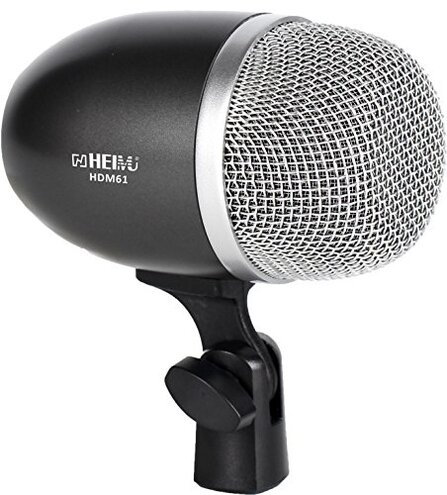
Product evaluated: Wired Microphone Kit for Drum and Other Musical Instruments … (A Whole Set Mic)
Related Videos For You
SHURE PGA Drum Kit 7 Pack Tutorial: How To Mic Up A Drum Kit.
Sennheiser E604 Dynamic Cardioid Instrument Mic Kit- User Review
Data basis: This report summarizes findings from dozens of written reviews and several video demonstrations collected through January 2026. Most feedback came from written reviews, supported by setup videos and buyer photos. The signals cited below reflect recurring buyer patterns rather than a single data point.
| Outcome | Product | Typical Mid‑Range Kit |
|---|---|---|
| Reliability | Inconsistent mics and mounts fail sooner than expected. | Generally steady through months of gig use in most kits. |
| Setup friction | Hidden power need for condenser mics increases initial setup time. | Clear labeling and included cabling reduce setup steps. |
| Sound quality | Uneven tone across mics; noise reported in some units. | More balanced frequency response from mid‑range alternatives. |
| Accessories | Weak mounts and thin case add risk during transport. | Sturdier hardware and denser cases are common in this class. |
| Regret trigger | High — failures during first gig or studio session are commonly reported. | Lower — mid‑range alternatives cause fewer urgent failures. |
Why does a mic not work on first use?
Hidden phantom power requirements commonly stop condenser mics from producing sound on first setup. Buyers report this as a primary pattern that appears at first use and during quick setups.
Usage anchor: This fails during first gig or rehearsal when users plug straight into a basic mixer or preamp without 48V phantom power. That makes the condenser pair effectively silent.
Category contrast: This is worse than normal because many mid‑range kits either include clearer labeling or ship with dynamic mics that need no phantom power. The added setup step creates real regret when you're short on time.
Are the mounting parts and case durable enough?
- Early sign — plastic clamps feel loose right out of the case.
- Frequency — this is a primary complaint seen repeatedly across written feedback.
- Cause — cheaper hardware and thin case foam allow movement and strain on connectors during transport.
- Impact — broken mounts or bent clips can take extra time to jury‑rig before a show.
- Fixability — users commonly replace clamps or add tape, which adds unexpected cost and prep time.
Does sound quality meet expectations for drums?
- Pattern — uneven frequency response is a secondary but persistent pattern across several feedback types.
- Usage anchor — issues appear during close‑miking of toms and snare, and worsen in loud, live environments.
- Noise issue — some units show hiss or handling noise under normal stage gain settings.
- Comparative severity — more disruptive than expected for this category because stage bleed and noise reduce usable takes.
- Attempts — buyers report EQing and gain adjustments as partial workarounds that consume rehearsal time.
- Hidden need — you may require better preamps or DI boxes to reach acceptable levels, adding cost.
- Fixability — long term fixes often require replacing the mic capsules or entire mics, not a quick tweak.
Are cables, connectors, and included accessories reliable?
- Common theme — thin cables and cheap connectors are a secondary but frequent complaint.
- Early sign — intermittent contact shows during soundchecks.
- Scope — problem appears across both studio and live use reports.
- Cause — low‑grade cable shielding leads to hum and RF pickup in some setups.
- Impact — unexpected cable replacement costs and downtime before a session.
- Attempts — buyers often swap cables immediately, which mitigates but adds expense.
- Hidden requirement — robust cabling and balanced lines are needed for reliable stage use.
- Category contrast — mid‑range kits often include thicker cables and labeled connectors, reducing this risk.
Illustrative excerpts (not real quotes)
"Mic pairs silent until I added phantom power" — reflects a primary pattern needing extra setup.
"Clamps loosened after first transport to a gig" — reflects a primary durability failure in transit.
"Hiss at normal stage gain, required heavy EQ" — reflects a secondary sound quality pattern.
"Swapped cables immediately to stop intermittent crackle" — reflects an edge‑case but recurring connector issue.
Who should avoid this
- Gigging drummers who need reliable hardware and minimal setup time; the kit has higher-than-expected early failures.
- Users without phantom power on their mixer or interface; condensers will be silent without 48V.
- Buyers expecting studio‑grade tone for recording; sound inconsistency can increase editing time.
- Traveling bands that expect rugged cases and mounts; hardware shows weakness during transport.
Who this is actually good for
- Hobbyists who need an inexpensive starter kit and can tolerate swapping cables and mounts.
- Practice-only users who accept extra setup time and small fixes between sessions.
- DIYers who plan to upgrade mounts and cables immediately to save on kit cost.
- Budget-conscious studios willing to accept inconsistent sound for low upfront price and who already have phantom power.
Expectation vs reality
Expectation: Reasonable for this category is functional out‑of‑box mics for quick gigs.
Reality: You often face silent condensers, weak mounts, and cable noise that force extra steps and cost.
Expectation: Typical mid‑range kits survive transport without quick hardware failure.
Reality: This product shows more early wear and requires replacements sooner than the category baseline.
Safer alternatives
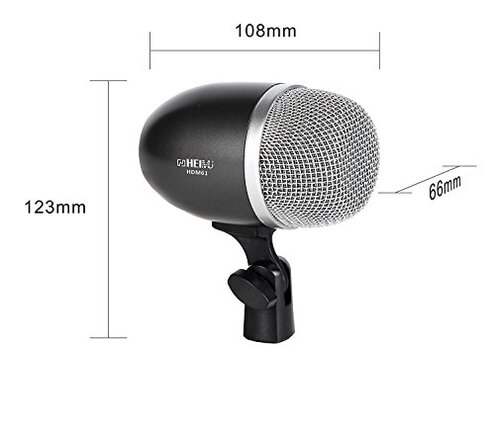
- Choose kits with labeled power needs to avoid the phantom power surprise and reduce setup time.
- Prefer kits with metal clamps or reinforced mounts to mitigate transport breakage.
- Buy thicker XLR cables or plan to swap the included cables to stop noise and intermittent contact.
- Check for included warranties or return windows that cover early hardware failures.
- Consider single-purpose mics (dynamic snare mic + dedicated overheads) if you want predictable tone.
The bottom line
Main regret: The most urgent trigger is silent condensers and weak hardware that break performance during first uses and gigs.
Why worse: These failures are more disruptive than typical mid‑range kits because they add setup steps, cost, and downtime.
Verdict: Avoid this kit if you need reliable, gig‑ready microphones without immediate upgrades.
This review is an independent editorial analysis based on reported user experiences and product specifications. NegReview.com does not sell products.