
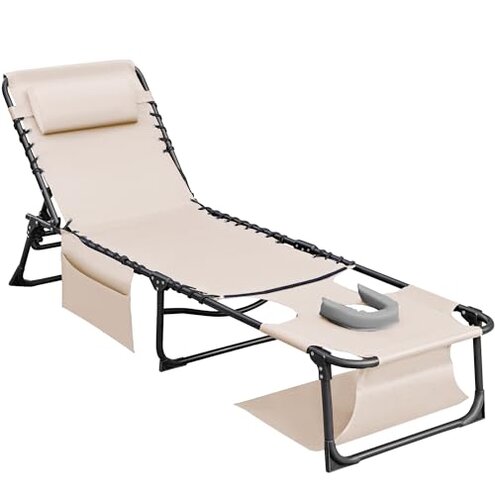
Product evaluated: Flamaker Face Down Chaise Lounge Chair 5-Position Adjustable Sunbathing, Foldable Tanning Chair with Face& Arm Holes, Outdoor Recliner Chair for Pool, Beach, Patio, Lawn (Beige, 1 Pcs)
Related Videos For You
5 Of The Best folding lounge chair You Can Buy On Amazon
Minndudu Tanning Chair with UPF 50+ 360° Adjustable Large Umbrella, Lounge Chair with Face/Arm Hole
Data basis This report uses dozens of shopper comments collected from written feedback and short video-style demonstrations between 2024 and 2026. Most feedback came from written reviews, with smaller support from photo and video posts showing setup, reclining, and face-down use in real settings.
| Buyer outcome | Flamaker chair | Typical mid-range alternative |
|---|---|---|
| Face-down comfort | Higher risk of awkward neck and arm positioning during longer sessions. | Usually better padded opening shape or more forgiving support. |
| Stability feel | Less confident when shifting position or getting on and off. | More predictable for everyday poolside lounging. |
| Back support | Mixed comfort across the 5 positions, especially when lying longer. | More even support across common recline angles. |
| Portability trade-off | Easier to move, but often feels less sturdy than buyers expect. | Heavier, but usually inspires more trust during use. |
| Regret trigger | Looks specialized, but repeated use can feel less relaxing than expected. | Simpler design, but fewer surprises in daily use. |
Does the face hole sound relaxing, but end up awkward?
This is a primary issue. The biggest regret moment shows up during the exact feature buyers paid for: face-down tanning or reading. What sounds convenient can become more disruptive than expected for this category once a session lasts beyond a quick rest.
The pattern appears repeatedly. It tends to show up on first use and becomes clearer during longer sunbathing sessions, especially when buyers expect the cushion opening to remove pressure instead of creating new pressure points.
Category contrast matters here. Face-hole loungers already ask buyers to accept some trade-offs, but this setup appears less forgiving than typical mid-range alternatives that do a better job supporting the head and shoulders.
- Early sign: discomfort often starts after settling in, when the neck angle or shoulder reach feels off.
- Pattern: this is a recurring complaint, not a universal one, but it ranks among the most common frustrations.
- Context: it gets worse during long sessions when reading, using a phone through the arm holes, or trying to fully relax.
- Impact: instead of staying still, buyers often need to reposition often, which defeats the point of a tanning chair.
- Fixability: small towels or added padding can help, but that creates a hidden setup step many buyers did not expect.
Does it feel flimsier than a pool chair should?
- Primary risk: stability concerns are among the most disruptive complaints because they affect basic confidence during use.
- When it shows: this usually appears after setup the first time buyers sit down, shift their weight, or change positions.
- Worsens when: the uneasy feeling tends to increase during entry and exit, especially when getting up from a reclined angle.
- Scope: the pattern appears across multiple feedback types, including comments focused on backyard and poolside use.
- Why it stings: folding loungers can feel lighter by nature, but this can seem less solid than normal for a chair meant to support repeated outdoor use.
- Buyer impact: even if it does not fail outright, a wobbly feel can make people use it less often.
- Mitigation: keeping it on a flatter surface helps, but that adds a placement requirement that is more limiting than many buyers expect.
Are the recline positions useful, or just there on paper?
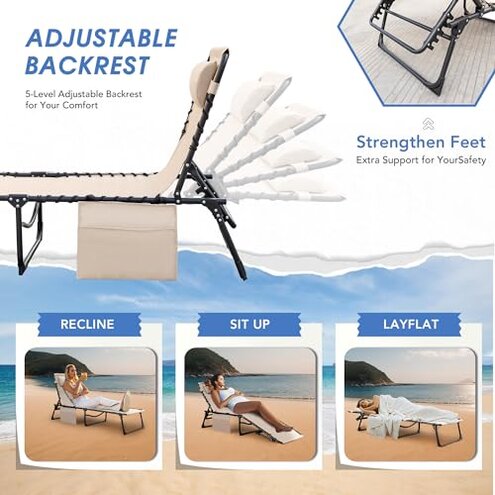
This is a secondary issue. Buyers like having 5 positions, but the comfort difference between them can feel less helpful in daily use than the feature list suggests.
The problem is persistent. It shows up during reading, tanning, and quick naps when one angle feels too upright and another feels too flat. That in-between sweet spot seems harder to find than with more balanced mid-range loungers.
- Pattern: complaints here are less frequent than face-hole comfort, but still persistent enough to matter.
- Usage moment: frustration usually appears during longer lounging, not a quick test sit.
- Trade-off: more positions sound flexible, but if the support feels uneven, the extra settings add choice without comfort.
- Category baseline: adjustable loungers normally have a few strong positions; this one can feel more finicky than expected.
Do the arm holes help, or do they create extra hassle?
- Secondary issue: the arm holes are a mixed-use feature that helps some buyers but frustrates others during normal relaxation.
- When noticed: the downside shows up during daily use when holding a phone, turning pages, or shifting from face-down to side-resting.
- Worsens when: it becomes more annoying during long sessions because arm placement can start to feel forced.
- Why worse than normal: specialized tanning chairs should reduce effort, but this can require more body adjustment than a plain lounge chair.
- Hidden requirement: buyers may need to accept a very specific posture to get the intended benefit.
- Fix attempts: changing towel placement or switching positions helps somewhat, but that adds extra fiddling.
- Frequency tier: this looks like a secondary pattern, not the lead complaint, yet it often appears beside comfort concerns.
Is the easy-fold design worth the comfort trade-off?
- Edge-case concern: portability is a clear benefit, but repeated feedback suggests the lightweight feel can read as cheap to some buyers.
- When it matters: this shows up after moving and unfolding it several times for patio, lawn, or beach use.
- Why it frustrates: buyers expecting a grab-and-go chair may still dislike the less sturdy feel once opened.
- Category contrast: folding loungers always trade some solidity for convenience, but here that trade-off can feel steeper than normal.
Illustrative excerpt: “I wanted a tanning chair, but my neck got tired fast.” Primary pattern tied to face-down comfort.
Illustrative excerpt: “It folds easily, but I do not trust it when shifting around.” Primary pattern tied to stability feel.
Illustrative excerpt: “The face hole works, just not for long reading sessions.” Secondary pattern tied to endurance comfort.
Illustrative excerpt: “More positions did not mean I found a better one.” Secondary pattern tied to recline usefulness.
Illustrative excerpt: “I needed towels to make it comfortable enough to keep using.” Edge-case pattern showing the hidden requirement.
Who should avoid this
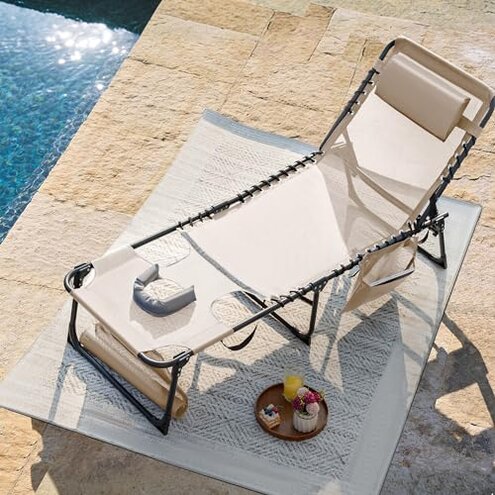
- Avoid it if you want long face-down tanning sessions without extra padding or frequent repositioning.
- Avoid it if a chair feeling stable during entry, exit, and weight shifts matters more than fold-and-carry convenience.
- Avoid it if you expect the special cutouts to feel natural right away instead of requiring trial and error.
- Avoid it if you want one lounge chair for naps, reading, and sunbathing without comfort compromises in each mode.
Who this is actually good for
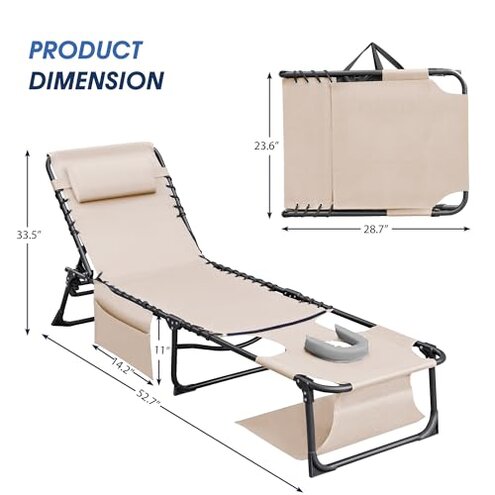
- Good fit for buyers who mainly want a portable outdoor lounger and can tolerate some comfort tweaking.
- Good fit for short tanning sessions where the face hole is used briefly rather than for extended reading or resting.
- Good fit for people using it occasionally on a flat patio, where the stability concern is easier to manage.
- Good fit for budget shoppers who accept a lighter, less confidence-inspiring feel to stay near the $54.99 price point.
Expectation vs reality
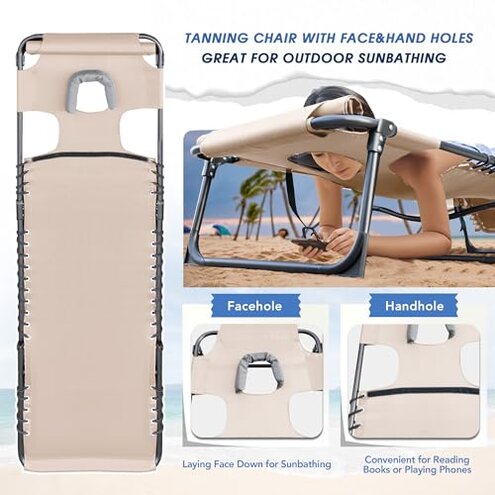
Expectation: a face-down lounge chair should make tanning and reading easier than a normal recliner.
Reality: the specialized openings can create new comfort limits, especially after the novelty wears off.
Reasonable for this category: a folding chair may feel a bit lighter than a fixed lounge.
Worse than expected: buyers commonly describe a bigger confidence drop than with typical mid-range folding loungers.
- Expectation: 5 positions should make it easy to find a comfortable angle.
- Reality: more settings do not always equal a better resting position.
- Expectation: arm holes add convenience for phone use or reading.
- Reality: they can also force a specific posture that becomes tiring.
Safer alternatives
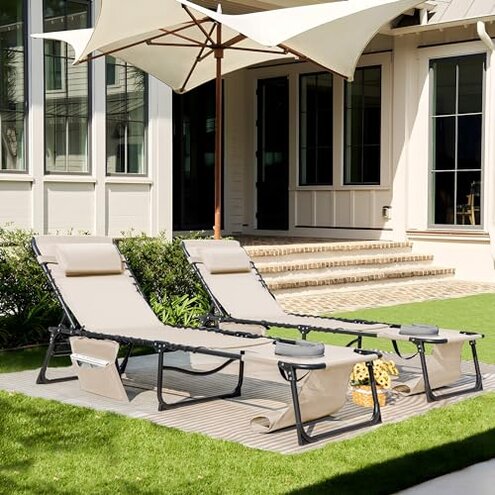
- Choose thicker cushioning around the face opening if your main concern is neck pressure during longer tanning sessions.
- Pick a heavier-frame lounger if you care more about a solid feel than easy carrying and storage.
- Look for flatter support reviews across multiple recline angles if you plan to nap or read for extended periods.
- Prefer a simpler chaise without arm cutouts if you do not want to manage a posture-specific setup.
- Check real-use videos showing people getting on, turning over, and standing up to screen for stability issues early.
The bottom line
Main regret trigger is that the special face-down design can feel less comfortable and less stable than buyers expect during real lounging. That exceeds normal category risk because the headline feature is also the area where trade-offs become most obvious. Verdict: skip it if you want dependable comfort first, and only consider it if portability and short-session tanning matter more than a refined lounging feel.
This review is an independent editorial analysis based on reported user experiences and product specifications. NegReview.com does not sell products.