
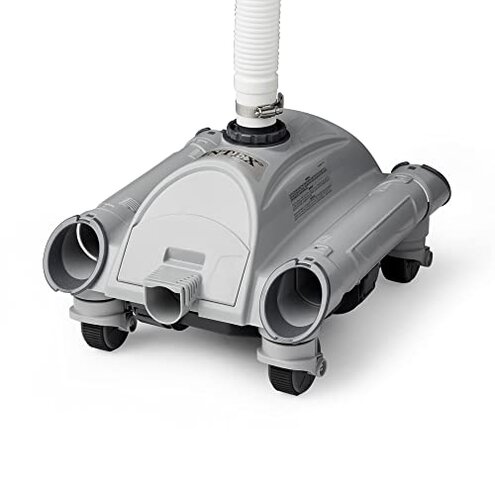
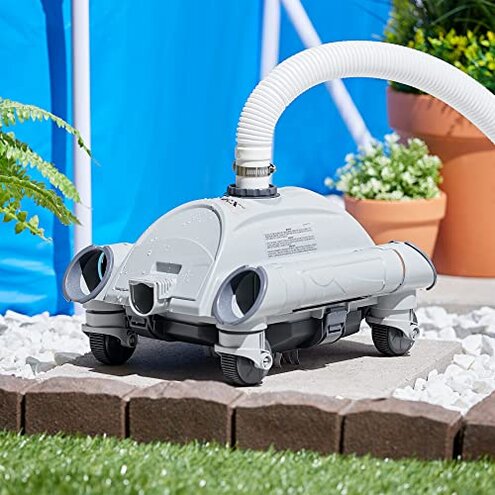
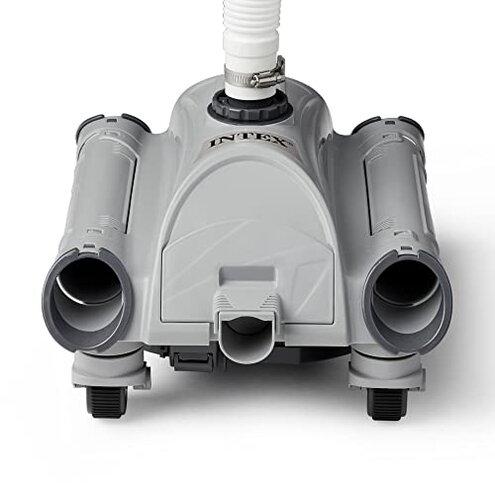
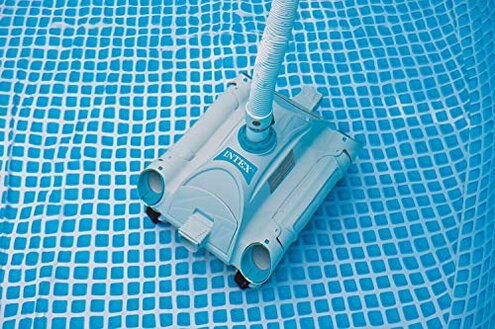
Product evaluated: Intex 28001E Above Ground Pool Automatic Pool Cleaner Pressure Side Vacuum Cleaner with 24 Foot 7 Inch Hose for Intex Pools Only w/ a 1.5 Inch Fitting
Related Videos For You
How-to Install a Polaris Pressure Side Pool Cleaner
How to clean a GREEN ABOVE GROUND POOL
Data basis: This report is based on dozens of customer reviews and video demonstrations collected between 2015 and 2025, with most feedback from written reviews and supported by visual demos.
| Outcome | Intex 28001E | Typical mid-range cleaner |
|---|---|---|
| Cleaning power | Often weak — performance often depends on exact pump flow and skimmer condition. | More reliable — many mid-range models clean across wider pump ranges. |
| Clogging | Clogs easily when baskets fill or large debris present. | Less frequent clogging thanks to larger debris traps or direct suction designs. |
| Setup friction | Hidden pump needs — needs a 1600–3500 GPH skimmer pump to work well. | Broader compatibility — works on more common pump flows out of the box. |
| Maintenance effort | High — frequent skimmer cleaning and hose attention required. | Lower — typical mid-range units need less ongoing fiddling. |
| Regret trigger | Pump mismatch — more likely to cause disappointment than most similar-priced cleaners. | Predictable — fewer unexpected hardware limits for casual buyers. |
Why does it barely pick up debris or stop moving?
Poor suction is the primary regret moment for buyers who expect floor-level cleaning on first use.
Usage anchor shows this happens immediately after setup, or when the skimmer basket partially fills during use.
Category contrast — this feels worse than normal because most mid-range pressure-side cleaners still move and collect light debris even with suboptimal pumps.
Why does it get stuck, reverse, or circle without cleaning?
- Early sign: Cleaner circles or stalls within the first few minutes of operation.
- Pattern: This is a recurring complaint across many written reports, not a rare edge case.
- Cause: Often caused by insufficient pump flow or a partially blocked skimmer basket.
- Impact: Leaves large patches of dirt and requires manual retrieval and repositioning.
- Fixability: Temporary fixes include clearing baskets and restarting, but problems often return.
Why does debris fill the bag or clog quickly?
- Primary pattern: Debris nets clog more frequently than with many competitors.
- When it shows: Clogging becomes noticeable after routine sessions or when pools have leaf-heavy conditions.
- Frequency tier: This is a secondary issue but more disruptive than expected for casual owners.
- Cause: Small net capacity and jet-driven blow of debris into the bag increases maintenance load.
- User effort: Requires stopping the system and emptying or rinsing the net every session in many cases.
- Hidden cost: Extra time and replacements add up over a single season compared to peers.
- Category contrast: Most mid-range cleaners have larger traps or better routing, reducing interruption frequency.
Why is a specific pump flow such a hidden problem?
- Hidden requirement: The cleaner requires a 1600–3500 GPH skimmer pump to perform acceptably.
- When noticed: This becomes obvious during first use when low-flow pumps provide poor or no suction.
- Scope signal: Many buyers discovered this after purchase, making it a common setup failure.
- Why worse than normal: Typical competitors tolerate a wider pump range, so this constraint is stricter than category norms.
- Impact: Owners with smaller or multi-purpose pumps must upgrade equipment or accept poor cleaning.
- Attempts: Users tried rearranging hoses or adding adapters with limited success.
- Fixability: Resolving it often requires buying a compatible pump or a different cleaner.
- Buyer regret: This hidden need is a common cause of returns and frustration for first-time buyers.
Illustrative excerpts
Illustrative: "Cleaner barely moved and the floor stayed dirty after first hour." — primary pattern.
Illustrative: "Bag filled quickly and needed emptying mid-clean every time." — secondary pattern.
Illustrative: "Worked fine once I upgraded pump, but that cost more than expected." — primary pattern.
Who should avoid this
- Low-flow pump owners: If your skimmer pump is weak, expect poor cleaning and extra cost.
- Leaf-heavy pools: If you have many leaves, the net clogs quickly and maintenance rises above normal.
- Hands-off buyers: If you want rarely to touch your pool, frequent emptying and resets will annoy you.
- In-ground pool owners: Product is not suitable for in-ground pools and will underperform.
Who this is actually good for
- Owners with 1600–3500 GPH pumps: Will tolerate the pump requirement because cleaning power can meet expectations.
- Small, low-debris pools: For pools under 24 feet with mostly fine debris, maintenance stays manageable.
- DIY upgraders: If you plan to swap pumps or already have a compatible pump, this cleaner can be cost-effective.
- Budget-conscious buyers: Accepts extra maintenance in exchange for lower upfront price.
Expectation vs reality
- Expectation: A plug-and-play pressure-side cleaner that cleans floors well for small pools.
- Reality: Often needs pump upgrades or frequent basket clearing to approach that expectation.
- Reasonable baseline: Mid-range cleaners usually tolerate a wider pump range and need less fiddling.
- Worse-than-expected: The combination of hidden pump needs and small debris net increases time and expense.
Safer alternatives
- Buy a cleaner rated for broader pump ranges: Neutralizes the hidden pump requirement and reduces returns.
- Choose a model with larger debris traps: Cuts frequency of mid-clean emptying and lowers maintenance time.
- Consider direct-suction units: These avoid skimmer-dependence and often handle leaves better.
- Verify pump specs before buying: Match your pump GPH to the cleaner’s required range to avoid immediate underperformance.
- Factor in replacement nets and extra parts: Budget for consumables when you expect heavy debris seasons.
The bottom line
Main regret: The cleaner’s reliance on a specific pump flow and small debris net leads to weak cleaning and frequent maintenance.
Why it matters: This exceeds normal mid-range risk because many competing models tolerate lower pump flows and need less fiddling.
Verdict: Avoid this unit unless you already have a compatible 1600–3500 GPH skimmer pump or accept extra upkeep and possible pump upgrades.
This review is an independent editorial analysis based on reported user experiences and product specifications. NegReview.com does not sell products.