
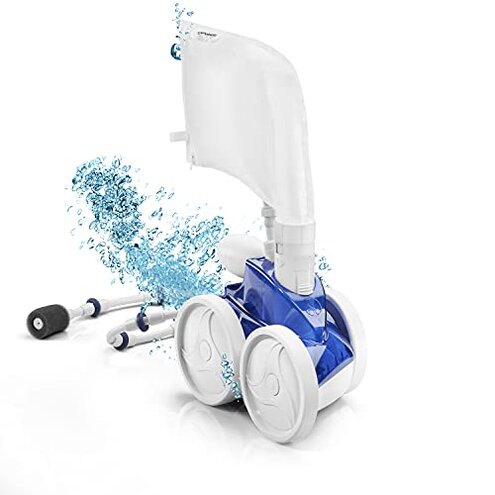
Product evaluated: Polaris Vac-Sweep 380 Pressure Inground Pool Cleaner, Triple Jet Powered, 31ft of Hose with a Single Chamber Debris Bag
Related Videos For You
Polaris 360 Setup, Review & Tips
How To VACUUM A POOL (Inground Pool)
Data basis: This report aggregates feedback from hundreds of written reviews and video demonstrations, collected between 2012 and 2024. Most feedback came from written reviews, supported by videos and buyer Q&A. The signals below emphasize commonly reported problems across both text and visual sources.
| Outcome | This product | Typical mid-range cleaner |
|---|---|---|
| Cleaning consistency | Patchy cleaning if hoses tangle or bag clogs; works well only when tuned. | Steady coverage in many mid-range models with fewer adjustments. |
| Setup complexity | Higher — requires a separate booster pump and correct pressure to work reliably. | Lower — many mid-range options run off standard return lines or include simpler hookups. |
| Maintenance burden | Frequent bag cleaning and hose checks reported after regular use. | Moderate for mid-range cleaners with larger onboard filters or simpler debris handling. |
| Durability risk | Elevated wear reported over seasons for moving parts and bag seams. | Average lifespan for mid-range models when maintained. |
| Regret trigger | Requires extra equipment and hands-on tuning; buyers often regret the added cost and time. | Regret is lower when the cleaner is simpler to set up and maintain. |
Will this actually clean without constant babysitting?
Real regret often happens when the cleaner circles or stalls and misses areas during a normal cleaning session.
Pattern: This is a commonly reported issue that appears during first use and continues unless adjustments are made.
Usage anchor: Buyers notice this on first runs and again after heavy debris loads or long sessions.
Category contrast: This is worse than normal for mid-range pressure cleaners, which usually track more reliably without repeated tuning.
Do I need extra parts or a special pump?
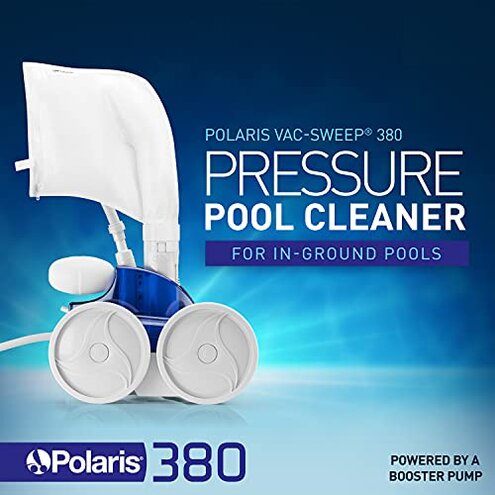
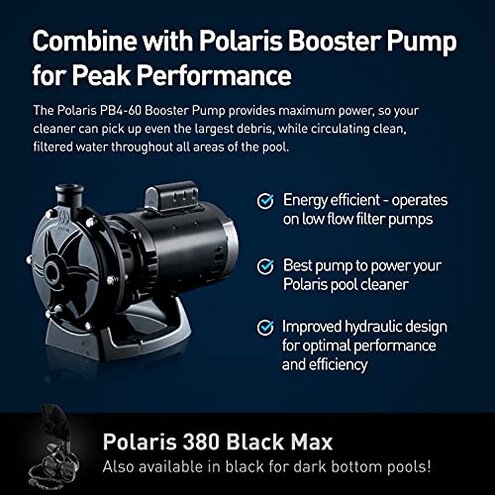
- Booster required: The unit is powered by a separate Polaris booster pump, a hidden requirement many users missed before buying.
- Pressure sensitivity: Performance depends on correct pressure and hose layout, which takes extra setup time.
- Compatibility note: Some buyers found their existing return lines were insufficient without a dedicated booster pump.
- Cost impact: The additional pump adds purchase and installation cost beyond the cleaner price.
- Scope signal: These setup complaints are commonly reported across written reviews and videos.
How much upkeep and breakdown risk will I face?
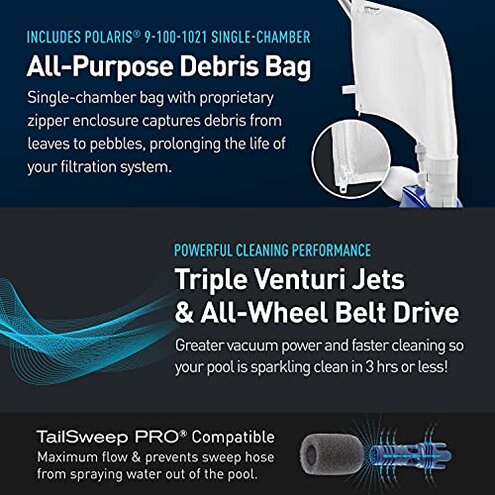
- Bag clogging: The single-chamber debris bag fills quickly with leaves and requires frequent emptying.
- Seam wear: Bag seams and zipper points are reported to wear after seasonal use.
- Valve fatigue: Moving valves near jets show early wear in many buyer accounts.
- Frequent checks: Owners say they must inspect hoses and connections regularly to avoid stalls.
- Seasonal failures: Problems are more likely over time with frequent or heavy-use pools.
- Fixability: Many issues require replacement parts or time-consuming adjustments rather than a quick fix.
- Comparative note: This level of upkeep is higher than most mid-range cleaners and causes real regret for buyers expecting low maintenance.
Is the price justified by performance?
- High price: The listed price represents a premium tier for a cleaner that needs extra equipment for reliable use.
- Performance gap: Buyers report uneven cleaning despite the cost, making the value questionable.
- Added spending: Factor in booster pump and possible replacement bags or parts over seasons.
- Expectation mismatch: Many purchasers expected a plug-and-play experience but found more setup and maintenance instead.
- Value signal: This is a primary complaint compared with similarly priced alternatives that need less tuning.
- Context risk: The regret increases when the pool has heavy leaf loads or irregular shapes that demand extra attention.
- Buyer trade-off: The cleaner may be fine if you accept ongoing costs and time for tuning.
Illustrative excerpts
"Stopped moving across deep end; I had to reset hoses multiple times." — Illustrative; reflects a primary pattern of navigation failures.
"I bought a booster pump later — unit wouldn’t run properly without it." — Illustrative; reflects a primary pattern of hidden equipment needs.
"Bag tore after one season of heavy leaves." — Illustrative; reflects a secondary pattern of wear and maintenance.
Who should avoid this
- Low-maintenance buyers: Avoid if you want a hands-off cleaner because the unit needs frequent tuning and bag emptying.
- Budget-conscious buyers: Avoid if you cannot budget for a separate booster pump plus replacement parts.
- Large debris pools: Avoid if your pool collects heavy leaves or large debris that make the bag clog quickly.
Who this is actually good for
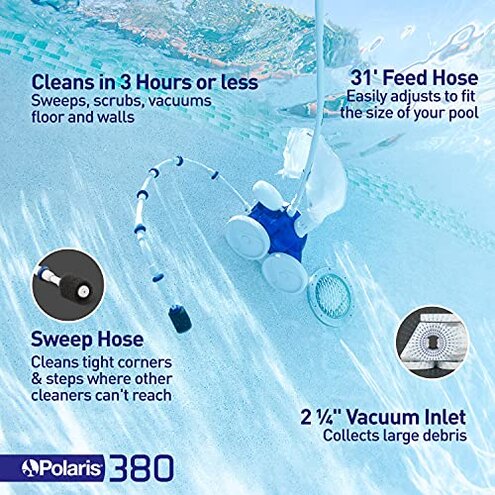
- DIY tuners: Good for owners comfortable with pump tuning and hose layout who can accept ongoing adjustments.
- Booster-equipped pools: Good if you already own the required booster pump and want a pressure-side cleaner.
- Small, tidy pools: Good for pools with minimal debris where the cleaner tracks better and needs less emptying.
Expectation vs reality
Expectation (reasonable): Most mid-range pressure cleaners deliver reliable coverage with modest setup.
Reality: This unit requires a separate booster, hands-on tuning, and frequent bag maintenance, which is worse than expected for the category.
Expectation (buyers often state): Plug-and-play installation from the box.
Reality: Many buyers report needing additional parts and time to reach acceptable performance.
Safer alternatives
- Choose sealed filters: Look for cleaners with larger onboard filter canisters to avoid frequent bag emptying.
- Avoid hidden pumps: Prefer models that run directly off pool returns or include the necessary pump.
- Read setup notes: Verify required pressure ranges and hose layouts to prevent compatibility surprises.
- Prioritize reliability: Pick cleaners with documented consistent navigation in real-world tests and videos.
- Spare parts access: Favor brands with easy replacement bags and valves available locally.
The bottom line
Main regret: Buyers most commonly regret the booster pump requirement and frequent bag clogs that demand hands-on maintenance.
Why worse: These problems create a higher-than-normal setup and upkeep burden compared with typical mid-range pressure cleaners.
Verdict: Avoid this model if you need a low-maintenance, plug-and-play pool cleaner; consider alternatives if you can’t accept extra cost and tuning.
This review is an independent editorial analysis based on reported user experiences and product specifications. NegReview.com does not sell products.