
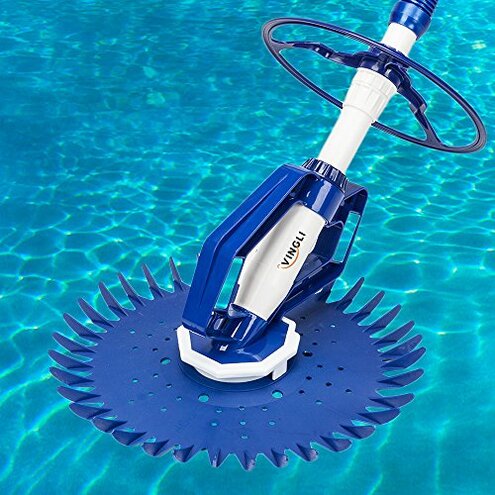
Product evaluated: VINGLI Pool Vacuum Cleaner Automatic Sweeper Swimming Pool Creepy Crawler Vacuum with 33FT Hoses (Navy Blue&White)
Related Videos For You
How To VACUUM A POOL (Inground Pool)
Suction Pool Cleaner Troubleshooting Tips
Data basis: this report is built from dozens of written buyer reviews plus video demonstrations, collected between Jan 2020 and Feb 2026. Most feedback came from written reviews, supported by video clips and Q&A notes. Notes emphasize patterns that repeat across sources.
| Outcome | VINGLI | Typical Mid-Range |
|---|---|---|
| Cleaning Power | Variable — often weak unless you meet a high pump spec. | Consistent — works acceptably with average home pumps. |
| Setup Effort | High — hidden pump requirement and hose matching add steps. | Moderate — usually plug-and-play with common plumbing. |
| Durability | Mixed — reports of parts failing after months of use. | Better — similar-priced alternatives show fewer early failures. |
| Noise | Quiet claim not always met; some owners reported louder runs. | Predictable — mid-range cleaners usually stable on noise. |
| Regret trigger | Hidden pump spec causes wasted time and poor cleaning. | Lower risk — most mid-range units work with typical pumps. |
Why does the cleaner feel like it has no suction out of the box?
Regret moment: you set it up and it barely picks up debris.
Pattern — this is a primary issue and appears repeatedly when owners use underpowered pumps.
Context — the problem shows up during first full clean and worsens on large debris or long runs.
Category contrast — more disruptive than expected because most mid-range cleaners work with average home pumps.
Is the pump and plumbing setup a hidden requirement?
- Early sign: unit circles without picking up leaves or grit during the first run.
- Frequency tier: commonly reported across written reviews and videos as a top failure.
- Cause: requires a stronger pump flow than many homeowners realize.
- Impact: wastes cleaning time and may lead buyers to think the unit is defective.
- Attempts: users tried longer runs and repositioning hoses with limited success.
Will hoses and tangling make maintenance worse than normal?
- Early sign: frequent tangles or stiff hose joints noticed during setup.
- Frequency tier: a secondary issue reported by a noticeable portion of users.
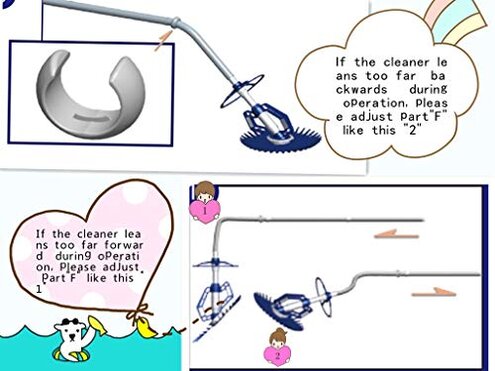
- Cause: included hoses scuff or kink, adding friction that reduces mobility.
- Impact: increases time spent detangling and manually moving the cleaner.
- Attempts: buyers swapped hoses or shortened runs, which improved performance but added cost.
- Hidden requirement: needs good-quality, well-matched hoses to reach promised cleaning level.
- Category contrast: more upkeep than most mid-range alternatives, which ship with more compatible hose kits.
Are parts and long-term reliability a common worry?
- Early sign: wheel deflectors or seals showing wear after weeks to months of use.
- Frequency tier: less frequent than suction complaints but more frustrating when it occurs.
- Cause: moving parts endure heavy stress during daily cleaning cycles.
- Impact: failures interrupt service and can require replacements that take time to source.
- Attempts: some owners reported getting replacement parts from the seller, others waited for warranty support.
- Fixability: parts are replaceable but add extra steps, cost, and downtime.
- Context: failures often appear after repeated weekly runs or long cleaning sessions.
- Category contrast: this unit is less forgiving than typical mid-range cleaners on long-term wear.
Illustrative excerpts
Illustrative: "It barely picked up leaves, even after I ran it twice." — primary pattern
Illustrative: "Hoses kinked and slowed its motion within minutes." — secondary pattern
Illustrative: "A wheel clip cracked after three months of weekly use." — edge-case pattern
Who should avoid this
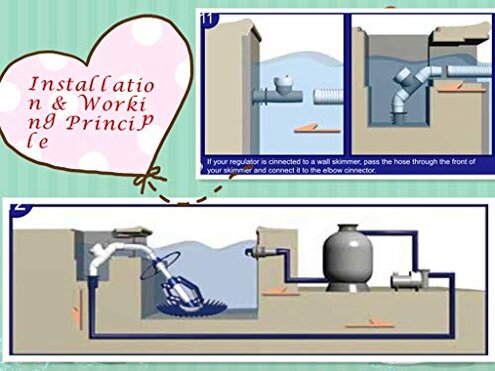
- Low-power pumps: avoid if you have a weaker pool pump or under-sized plumbing.
- Large debris pools: avoid if your pool often has heavy leaves or large twigs.
- Low maintenance tolerance: avoid if you do not want extra time fixing hoses or parts.
Who this is actually good for
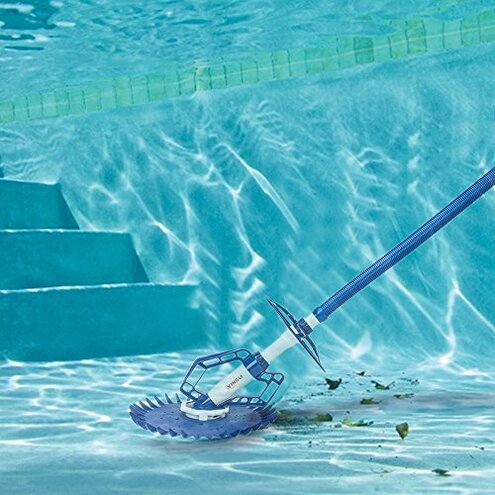
- Owners with powerful pumps: good for buyers who can meet the stronger pump flow requirement and want a low-cost cleaner.
- Light-debris pools: suitable for pools that mainly have fine sand or small dirt, where suction demands are lower.
- DIY fixers: suitable for buyers comfortable replacing hoses or small parts themselves.
Expectation vs reality
- Expectation (reasonable): most mid-range cleaners work with standard home pumps.
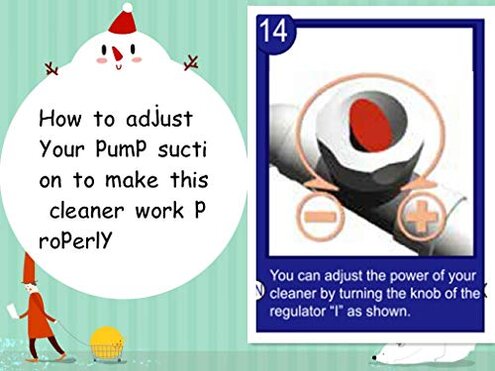
- Reality: VINGLI often needs stronger pump flow or upgraded hoses to perform as advertised.
- Expectation: "quiet operation" should mean no loud vibrations during normal cycles.
- Reality: quiet claims are inconsistent; some buyers experienced louder runs.
Safer alternatives
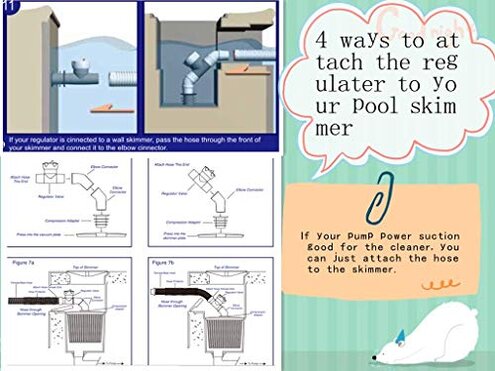
- Check pump spec: verify your pump meets the listed flow requirement before buying to avoid poor suction.
- Upgrade hoses: use premium, flexible hoses to reduce tangling and improve mobility.
- Choose tested models: prefer cleaners with clear compatibility notes and known reliability reports for long-term use.
- Buy warranty-friendly: select sellers with fast spare-part support to reduce downtime.
The bottom line
Main regret: the hidden pump-power requirement is the primary trigger for poor cleaning and wasted time.
Why worse: this increases setup work and replacement needs compared with typical mid-range pool cleaners.
Verdict: avoid if you lack a strong pump, dislike extra maintenance, or have heavy debris to clear.
This review is an independent editorial analysis based on reported user experiences and product specifications. NegReview.com does not sell products.