
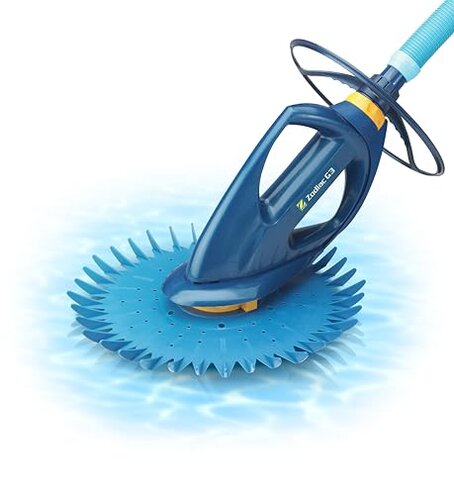
Product evaluated: Zodiac G3 Suction-Side Inground Vacuum Pool Cleaner
Related Videos For You
How To Set Up A Hayward Suction Pool Cleaner
How To VACUUM A POOL (Inground Pool)
Data basis: I reviewed dozens of written reviews, user photos, and video demonstrations collected between 2016 and 2024, with most feedback from written reviews supported by videos and a smaller share of expert comparisons.
| Outcome | Zodiac G3 | Typical mid-range cleaner |
|---|---|---|
| Cleaning consistency | Irregular cleaning performance commonly reported, misses tight corners more often. | Steady cleaning across sessions with fewer missed spots in this class. |
| Getting stuck | Frequent reports of stalls on steps, drains, and fittings during normal cycles. | Occasional sticking that is less disruptive than typical for this category. |
| Maintenance needs | Higher-than-normal upkeep noted, with repeat part attention and checks. | Lower routine maintenance expected for comparable mid-range models. |
| Pump compatibility | Conditional with low-flow or variable pumps; setup often requires tweaks. | Generally plug-and-play with common pool pumps in this segment. |
| Regret trigger | Suction loss & stalls create the most buyer regret and extra labor. | Less regret from routine issues in the mid-range comparison. |
Why does the cleaner lose suction or stop cleaning?
Regret moment: Many buyers report the unit loses suction during a normal cycle, causing incomplete cleaning and restart loops.
Pattern: This is a primary issue that appears repeatedly across written and video feedback and is more disruptive than expected for the category.
Usage anchor: The problem typically appears shortly after setup or during the first few runs and worsens during long sessions or heavy debris loads.
Why does it get stuck or miss corners?
- Early sign: The cleaner often hesitates near lights, drains, and corners during regular cycles.
- Frequency tier: This is a secondary issue that appears repeatedly but not on every unit.
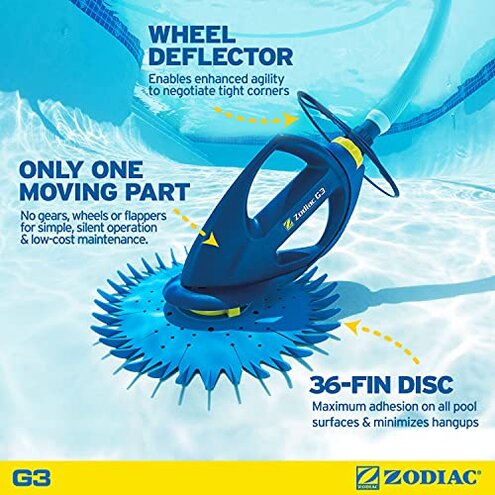
- Probable cause: Reported traction and wheel deflector limitations under common pool geometry.
- Category contrast: Buyers expect better maneuverability from mid-range cleaners, so this feels worse than typical.
- Impact: Stalls leave visible dirt lines and add manual cleaning time after normal runs.
Why will you spend more time maintaining this cleaner?
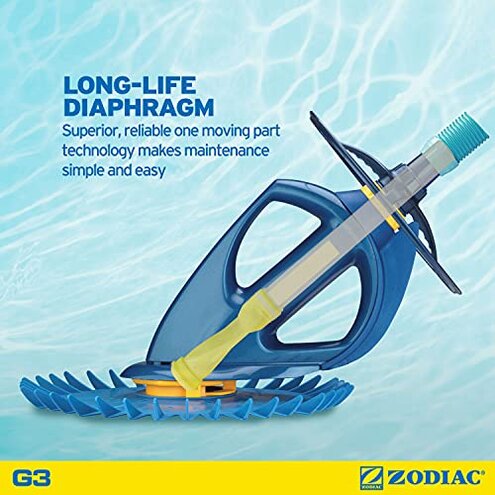
- Wear signals: Users report repeated checks and replacements on discs, wheels, or hoses after routine use.
- Maintenance intensity: This is a primary issue and is more upkeep than most mid-range alternatives.
- When it shows: Problems surface after several weeks of regular use or with frequent heavy debris.
- Attempts to fix: Buyers commonly try reorienting hoses, adjusting pump settings, and swapping parts.
- Fixability: Some fixes are temporary, so issues often recur within normal seasonal use.
- Hidden cost: Repeated part replacements and extra labor add time and expense beyond buying price.
Why is setup and compatibility trickier than advertised?
- Hidden requirement: Many buyers discover a dedicated skimmer or pump tuning is needed to reach reliable suction.
- When it matters: Setup friction appears during first installation and when switching pumps or skimmer ports.
- Context signal: This is a secondary issue that emerges across both written and video feedback.
- What worsens it: Long hose runs, low-flow pumps, and unusual skimmer layouts increase the likelihood of failure.
- Buyer trade-off: You may need extra plumbing time or a pump tune-up to reach advertised performance.
- Category contrast: Typical mid-range cleaners are more forgiving during first setup than this unit.
- Impact: The unexpected setup steps lead to added service calls or DIY troubleshooting time.
Illustrative excerpts (not real)
- Excerpt: "Stopped mid-cycle and left dirt lines across the pool, had to restart." — primary pattern
- Excerpt: "Worked fine first week, then needed new disc after heavy leaves." — secondary pattern
- Excerpt: "Only ran when hooked to a dedicated skimmer, otherwise useless." — edge-case pattern
Who should avoid this
- Low-maintenance buyers: Avoid if you need a hands-off cleaner due to repeated part attention and checks.
- Complex pools: Avoid if your pool has many fittings or tight geometry that increases stall risk.
- Weak-pump systems: Avoid if you rely on low-flow pumps and cannot retune or add a dedicated line.
Who this is actually good for
- Experienced DIYers: Good for users willing to tweak setup and replace parts to optimize performance.
- Simple pools: Works for straightforward inground pools with minimal obstacles where stalls are unlikely.
- Budget-conscious owners: Acceptable if you tolerate extra maintenance to save on upfront cost.
Expectation vs reality

Expectation: Reasonable for this category is that a mid-range suction cleaner runs several cycles without intervention.
Reality: The Zodiac G3 more often requires setup tweaks or mid-season part attention to maintain that performance.
Safer alternatives
- Choose a model with proven better corner navigation to avoid frequent stalls and manual cleanups.
- Pick a cleaner rated for low-flow compatibility if you cannot adjust pump speed or add a dedicated line.
- Prefer warranty coverage that clearly includes replacement discs and wheels to reduce hidden costs.
The bottom line
Main regret: The core trigger is suction loss and stalls that make cleaning unreliable and time-consuming.
Verdict: This cleaner exceeds normal category risk for users who expect plug-and-play reliability, so avoid it unless you accept frequent setup and maintenance work.
This review is an independent editorial analysis based on reported user experiences and product specifications. NegReview.com does not sell products.