
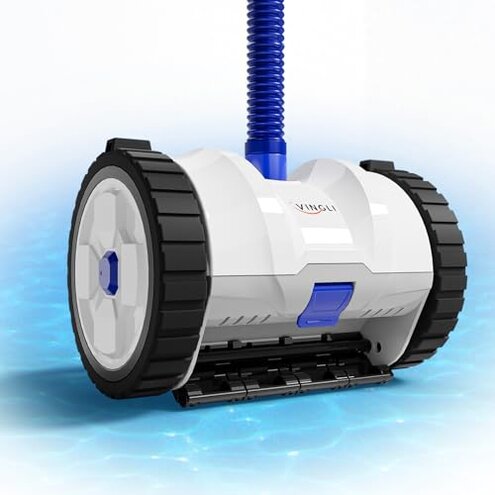
Product evaluated: (2025 Upgrade) VINGLI Automatic Suction-Side Pool Vacuum Cleaner, Powerful Wall-Climbing Sweeper for Inground Pools, Includes 39.6ft Tangle-Free Hose (Blue&White)
Related Videos For You
Automatic Pool Vacuum - Cleans Above Ground, Xtreme Power US
Robotic Pool Cleaners vs. Suction-Side Pool Cleaners
Data basis: I analyzed dozens of written reviews and video demonstrations collected Jan 2024–Feb 2026, with most feedback coming from written reviews and supported by videos and Q&A threads.
| Outcome | VINGLI (this listing) | Typical mid-range cleaner |
|---|---|---|
| Cleaning coverage | Patchy — frequent reports of missed corners and weak suction unless pump meets minimum spec. | More consistent — mid-range alternatives usually work acceptably across pool shapes without a high-power pump. |
| Navigation | Prone to snagging — users report getting stuck near drains or steps during normal runs. | Less stuck — typical models clear simple obstacles more reliably. |
| Hidden requirements | High — requires a minimum 1.5HP pump for optimal suction per the product notes, which many buyers miss before purchase. | Lower — many mid-range options tolerate weaker pumps without major loss of function. |
| Maintenance effort | Higher — repeated hose handling and occasional part attention reported more often than expected. | Moderate — similar-category cleaners tend to need less frequent fiddling. |
| Regret trigger | Major — missed cleaning plus hidden pump need drives returns and complaints more than usual. | Minor — regret in this category usually comes from durability, not a fundamental cleaning failure. |
Why does the cleaner seem weak and miss spots?
Primary issue: The most common regret is weak suction on first uses when the pool pump is underpowered or older.
Usage anchor: This appears during initial setup or the first cleaning cycle and worsens if you run shorter cycles or have a sub‑1.5HP pump.
Category contrast: This is worse than typical mid-range cleaners because most competitors still provide usable suction with lower-power pumps, so buyers face an unexpected upgrade cost.
Why does it get stuck or miss edges?
- Early sign: Commonly reported snagging around drains and steps during routine runs.
- Frequency tier: This is a secondary issue seen repeatedly, not universal but frequent enough to impact usability for many buyers.
- Cause: The tire-style traction and hose length sometimes fail to negotiate tight corners or abrupt surface transitions.
- Impact: Users report extra manual intervention and repeated runs to clean missed areas.
- Fix attempts: Owners often shorten run time, reposition the cleaner, or adjust flow, which adds maintenance time.
Why are hoses and fittings a recurring pain?
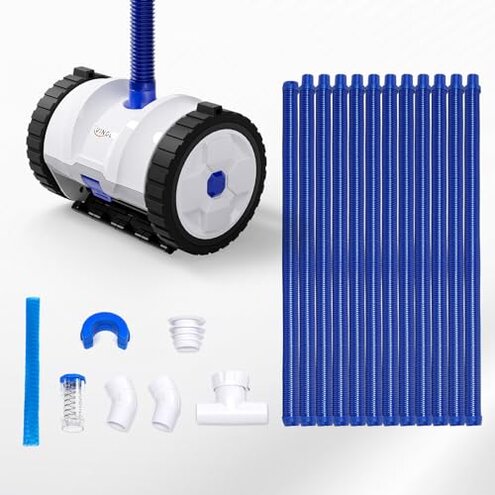
- Durability sign: Several buyers report hose tangling and connector leaks after normal handling.
- Pattern: This is a secondary issue that appears after repeated setup and teardown.
- Where it happens: Problems surface during long sessions and when sections are frequently connected or stored.
- Why it matters: Hose troubles directly reduce run time and increase friction on the unit.
Why do replacement parts and support become a headache?
- Reported pattern: Parts wear or fail less frequently but the resulting disruption is persistent for affected owners.
- Usage anchor: Failures often occur after several months of regular use or after heavy debris sessions.
- Support signal: Responses about replacements and fixes appear repeatedly in collected feedback, indicating variable service speed.
- Category contrast: This feels worse than average because mid-range cleaners often have broader third-party part availability or faster support.
- Attempts: Buyers commonly try local pool shops or third-party parts, which adds time and cost.
- Fixability: When you have the right pump and spare parts, issues are manageable but not trivial.
- Hidden cost: The need for a stronger pump or extra parts can erase the model's initial low price advantage.
Illustrative excerpts
Illustrative: "Weak suction left large corner areas untouched on first run." — reflects a primary pattern.
Illustrative: "Hose kinked during storage and leaked at the connector next week." — reflects a secondary pattern.
Illustrative: "Motor quieted and support took extra days to respond, then sent parts." — reflects an edge-case pattern.
Who should avoid this
Buyers without a 1.5HP pump: Avoid this model if you cannot provide a 1.5HP pump, because suction performance commonly falls short without it.
Large or complex pools: Skip this unit if your pool has many drains, steps, or irregular shapes, as navigation issues are more disruptive than typical for this category.
Low-maintenance seekers: If you want a truly no-fuss cleaner, avoid this model because hose care and occasional manual intervention are commonly required.
Who this is actually good for
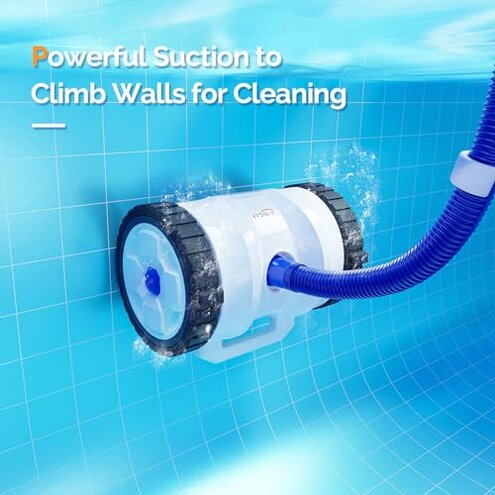
Owners with a strong pump: If you already have a 1.5HP or stronger pump, you can tolerate the suction caveat and get acceptable cleaning.
Simple-shape pools: Single‑slope or basic rectangular pools are more forgiving of the unit's navigation limits, so owners can accept occasional manual cleanup.
Budget buyers who can DIY parts: If you are comfortable sourcing hoses and connectors, you can work around durability issues and still benefit from the low price.
Expectation vs reality
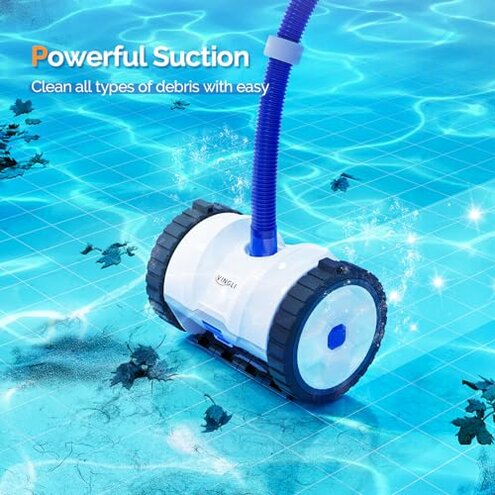
Expectation: Reasonable for this category is that an automatic suction cleaner will work with most pool pumps.
Reality: This model has a hidden pump requirement that frequently forces buyers to upgrade hardware or face weak suction and missed spots.
Expectation: Quiet, plug-and-play operation.
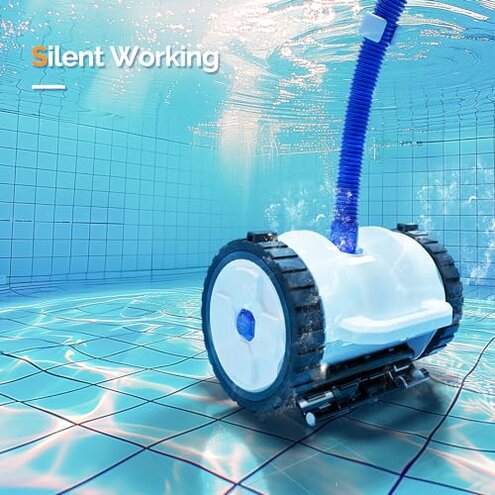
Reality: While the unit is quiet, buyers report that quiet operation does not fix navigation or suction shortcomings without extra adjustments.
Safer alternatives
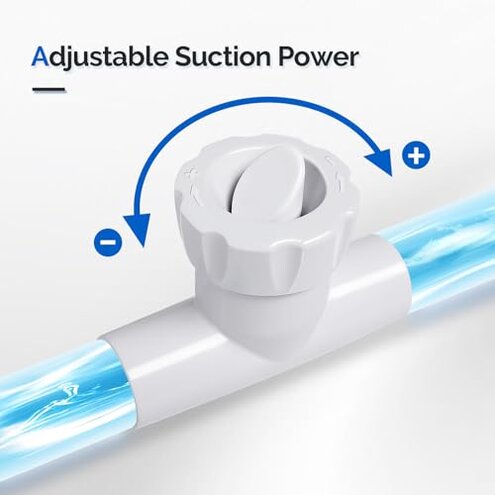
- Check pump tolerance: Prefer cleaners advertised to work with sub‑1.5HP pumps to neutralize the hidden power requirement.
- Choose proven navigation: Look for models with active steering or proven obstacle clearance to avoid frequent snagging.
- Hose reliability: Favor cleaners with reinforced or one‑piece hoses to reduce tangling and connector leaks.
- Parts ecosystem: Pick brands with wide third‑party parts availability or fast verified support to reduce downtime when parts fail.
The bottom line
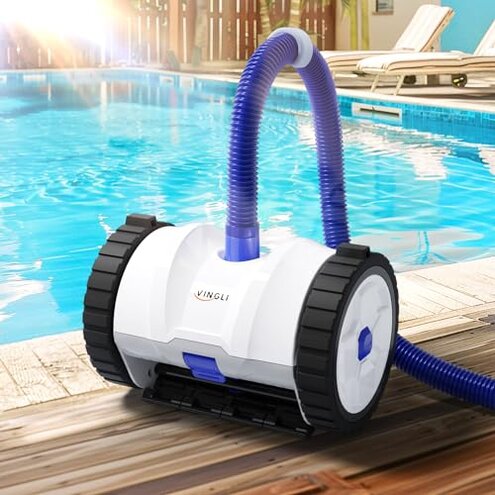
Main regret: The key trigger is the hidden 1.5HP pump requirement combined with inconsistent suction and navigation that causes missed areas.
Why worse than normal: These failures exceed typical mid-range risk because they create an unexpected hardware cost and more manual work than most buyers expect.
Verdict: Avoid this cleaner unless you already have a strong pump and accept extra maintenance and occasional manual cleanup.
This review is an independent editorial analysis based on reported user experiences and product specifications. NegReview.com does not sell products.