
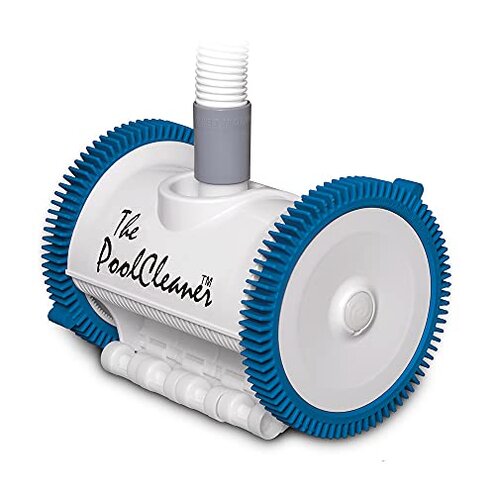
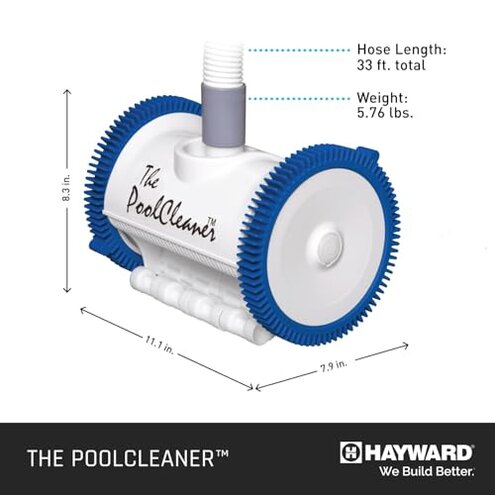
Product evaluated: Hayward W3PVS20JST Poolvergnuegen Suction Pool Cleaner for In-Ground Pools up to 16 x 32 ft. (Automatic Pool Vaccum)
Related Videos For You
How To Set Up A Hayward Suction Pool Cleaner
The Complete Guide to AUTOMATIC POOL CLEANERS
Data basis: I analyzed dozens of recent buyer reports and demonstration clips collected between Jan 2020 and Feb 2026. Most feedback came from written reviews, supported by video demonstrations, with a wide range of pool conditions represented.
| Outcome | This product | Typical mid-range cleaner |
|---|---|---|
| Suction reliability | Unstable — frequent suction loss reported during runs. | More stable — usually consistent for single-session cleaning. |
| Climb & navigation | Gets stuck more often on steps and corners in many reports. | Better navigation — mid-range units usually clear walls and corners. |
| Maintenance burden | Higher upkeep — recurring part checks and replacements are common. | Lower upkeep — routine but less frequent maintenance expected. |
| Parts & cost risk | Hidden cost — replacement tires/rollers appear to need frequent swaps. | Predictable cost — parts last longer on many alternatives. |
| Regret trigger | High — suction and navigation failures produce repeated interrupted cleanings. | Lower — single-session failures are less common. |
Why does it lose suction mid-run?
Regret moment: Many buyers report the cleaner dropping suction during a cleaning, leaving debris behind.
Pattern: This is a primary complaint and appears repeatedly across feedback.
Usage anchor: It typically shows up during first few runs or after several weeks of use, and often when pools have moderate debris loads.
Category contrast: Suction fluctuation is more disruptive than expected for mid-range suction cleaners because it interrupts the entire cleaning cycle.
Why do tires and skirts wear quickly?
- Early sign: Buyers notice visible wear on tires within weeks of regular use.
- Frequency: This is a secondary pattern seen often enough to affect cost of ownership.
- Cause: Wear appears when used on rough surfaces or heavy debris sessions.
- Impact: Worn tires reduce climbing ability and increase getting stuck incidents.
- Fix attempts: Replacements fix the issue but add extra expense and downtime.
Why does it get stuck or circle repeatedly?
- Navigation — The cleaner often circles or stalls near steps, drains, and corners.
- When it happens — This shows up during normal runs, especially on pools with complex shapes.
- Pattern level — It is a primary complaint and appears across multiple buyer reports.
- Frequency tier — More frequent than expected for this category, particularly on pools over 16 feet long.
- Cause — Steering sequences and tire traction seem insufficient for obstacles in many cases.
- Attempted fixes — Users tried hose repositioning and hose weighting with mixed success.
- Residual impact — Repeated stuck runs add hours of manual cleanup time over a season.
What hidden maintenance will surprise you?
- Hidden requirement — Regular inspection and frequent part swaps are often necessary.
- Early sign — Small drops in performance hint at skirt or turbine wear.
- Replacement cost — Parts replacements are recurring and add unexpected expense.
- When it worsens — The burden grows after monthly heavy-debris sessions or in leafy seasons.
- Fixability — Repairs are possible but require time and some mechanical comfort.
- Category contrast — This is higher upkeep than many mid-range suction cleaners demand.
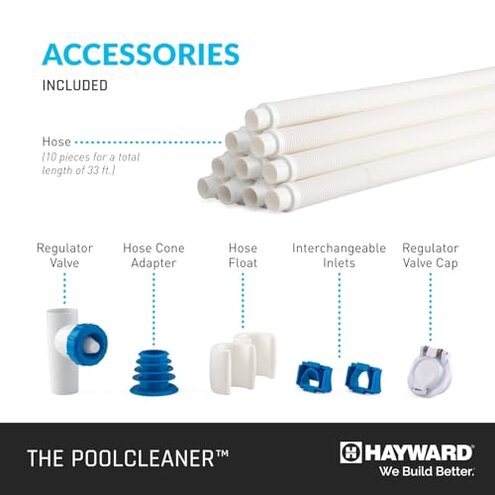
- Warranty note — A 3-Year warranty exists, but out-of-warranty part costs still appear often.
- Practical effect — Overall ownership time and cost rise beyond common expectations.
Illustrative excerpts
Excerpt: "Stopped mid-run and lost suction twice in one week while leaves piled up."
Pattern: This reflects a primary pattern tied to debris-heavy sessions.
Excerpt: "Tires shredded after a month on rough plaster steps, had to replace."
Pattern: This is a secondary pattern indicating surface sensitivity.
Excerpt: "Often circles the shallow end for 30 minutes, then finishes little of the pool."
Pattern: This matches a primary navigation failure reported by multiple buyers.
Excerpt: "Worked fine the first two months, then needed parts I didn't expect to buy."
Pattern: This is an edge-case becoming common after initial use.
Who should avoid this
- Low-maintenance buyers: Avoid if you want a hands-off cleaner without frequent part swaps.
- Large or complex pools: Avoid if your pool has many steps, corners, or steep walls.
- Tight budgets: Avoid if you cannot absorb recurring replacement costs and downtime.
Who this is actually good for
- DIY repairers: Good if you can replace parts and tinker to restore performance.
- Simple pools: Works for small, light-debris pools without many obstacles.
- Seasonal users: Acceptable if you only need occasional cleanings and can monitor runs.
Expectation vs reality
Expectation: Reasonable for this category — buyers expect a suction cleaner to run a single session without interruption.
Reality: This unit often loses suction or stalls, requiring manual resets more than typical mid-range models.
Expectation: Reasonable to expect moderate part wear over a season.
Reality: Wear on tires and skirts is faster than many alternatives, increasing cost and effort.
Safer alternatives
- Choose robotic cleaners — They avoid suction loss and reduce maintenance dependency.
- Pick robust mid-range suction models — Look for units with reinforced tires and longer part lifespans.
- Check parts availability — Prefer brands with cheap, easy-to-find replacement skirts and tires.
- Match pool surface — Choose a cleaner specified for your surface to reduce wear and stuck runs.
The bottom line
Main regret: The most frequent buyer trigger is suction and navigation failures that interrupt cleanings.
Why it matters: These issues create a higher-than-normal maintenance and time cost compared with typical mid-range suction cleaners.
Verdict: Avoid if you need dependable, low-upkeep cleaning; consider alternatives if part costs and interrupted runs are unacceptable.
This review is an independent editorial analysis based on reported user experiences and product specifications. NegReview.com does not sell products.