
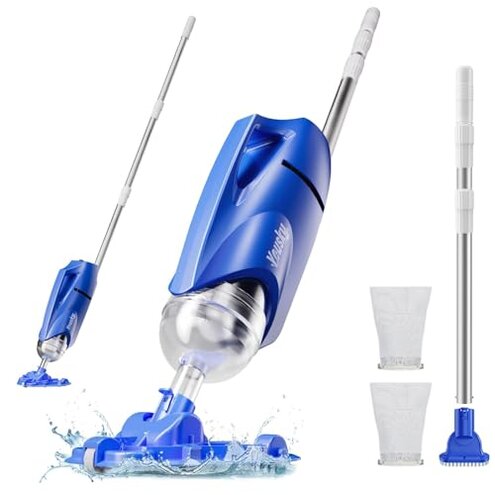
Product evaluated: 2025 Upgraded Handheld Pool Vacuum Cleaner for Above Ground & Inground Pools - Cordless Pool Cleaner w/18.5GPM Suction, Telescoping Pole(20-69in), 2 Brush Heads - Ideal for Spas & Hot Tubs
Related Videos For You
Bestway Pool Vacuum Setup and Review - Costco Pool Vacuum Pros and Cons
Aiper Handheld Pool Vacuum Instruction
Data basis: This report aggregates findings from dozens of buyer reviews and video demonstrations collected Dec 2024–Feb 2026, with most feedback from written reviews supported by visual walk‑throughs.
| Comparison | This product | Typical mid‑range alternative |
|---|---|---|
| Suction consistency | Inconsistent — power drops reported during long sessions, commonly reported across feedback. | Steady — mid‑range models usually keep steady flow for typical cleanups. |
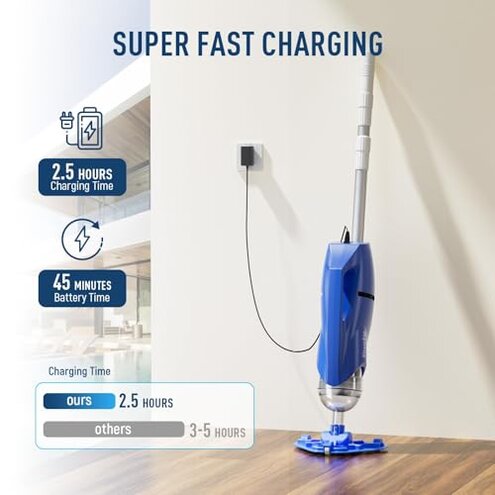
| Battery runtime | Shorter than claimed — several buyers saw reduced runtime after a few uses. | Reliable — typical alternatives offer predictable session length or replaceable packs. |
| Maintenance effort | High — filter bag clogging and messy emptying appear repeatedly. | Moderate — most mid‑range vacuums have easier filter access and less frequent emptying. |
| Durability risk | Elevated — pole joints and plastic parts reported fragile after repeated use. | Average — mid‑range units often use sturdier fittings or metal reinforcements. |
| Regret trigger | Session failure — power loss or clog mid‑cleaning causes abandoned jobs. | Minor interruption — alternatives usually allow restart with less hassle. |
Top failures
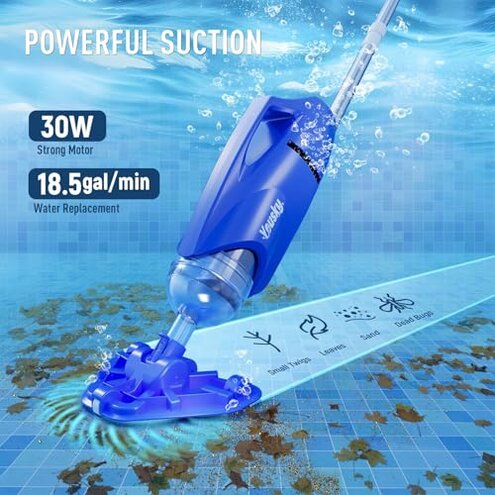
Why did my clean stop halfway through?
Power drop often happens during a single cleaning session, creating a clear regret moment when you must stop and recharge.
Pattern: This is a primary issue that appears repeatedly in buyer feedback.
Use context: It usually shows up after 20–40 minutes of continuous use or during heavy debris pickup.
Category contrast: Battery instability is worse than typical mid‑range cordless vacuums, which usually maintain steady suction for a single pool session.
Why is the filter bag always clogged or leaking?
- Early sign: Bag fills quickly with fine sand and needs emptying far sooner than expected.
- Frequency tier: This is a secondary issue that appears repeatedly across written and video reports.
- Cause: Fine mesh plus high suction concentrates debris at the zipper and seam areas.
- Impact: Emptying becomes messy and interrupts cleaning, increasing total job time.
- Attempts: Buyers commonly rinse the bag mid‑session or switch to smaller loads to cope.
Why does the pole or head feel fragile?
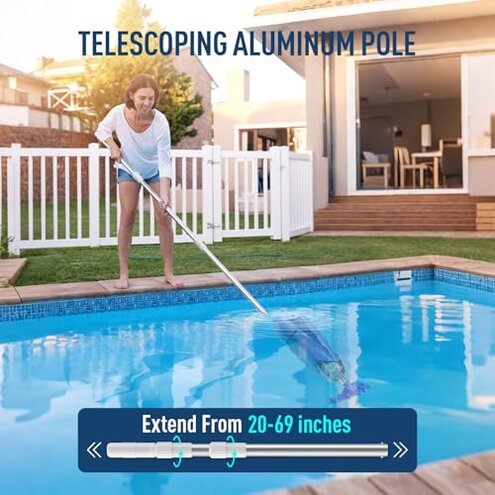
- Wear signs: Joints loosen or plastics crack after several uses, seen across multiple feedback sources.
- Frequency tier: This is a secondary complaint but more disruptive than expected for the category.
- When it shows: Problems appear after repeated assembly, transport, or bending over steps.
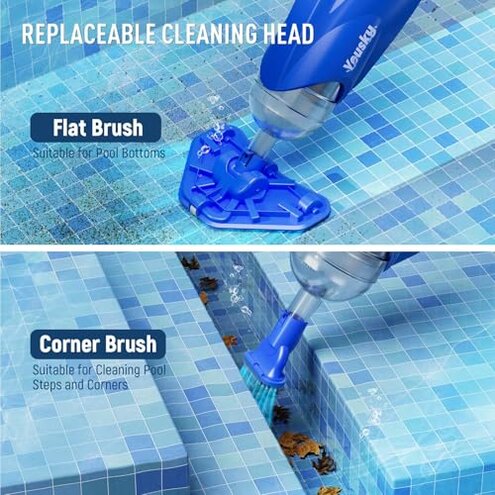
- Why worse: Mid‑range competitors often use stronger metal fittings; this model feels less durable.
- Fix attempts: Users tape joints or avoid full extension, adding hidden effort and limits to reach.
- Hidden requirement: You likely need to treat it gently and store carefully to avoid damage.
- Repairability: Replacement parts are not commonly available, which raises long‑term ownership cost.
Why does suction feel lower than advertised?
- Immediate sign: Leaves and grit require multiple passes to remove, which prolongs cleaning.
- Pattern: This is a primary issue and among the most common complaints about performance.
- When it occurs: Suction weakens when the filter bag partially fills or during long sessions.
- Environmental factor: Heavy sand and wet debris worsen suction loss compared with light leaf pickup.
- Category contrast: More disruptive than mid‑range options that retain flow longer under load.
- Attempted fixes: Buyers shake or tap the head and empty the bag mid‑cleaning, adding extra steps.
- Residual risk: Repeated clearing needs more time and sometimes a second device to finish the job.
- Outcome: The claimed 18.5GPM performance often feels optimistic in real conditions.
Illustrative excerpts
Illustrative: “Stopped after half the pool; battery looked full but power dropped.” — primary
Illustrative: “Filter bag leaked sand when I tried to empty it mid‑clean.” — secondary
Illustrative: “Pole joint cracked after moving around steps carefully.” — edge‑case
Who should avoid this
- Large pools: Avoid if you need uninterrupted long sessions; battery and suction drops cause abandoned jobs.
- Heavy debris: Avoid if your pool has lots of sand or dense leaves that clog the bag quickly.
- Rough handling: Avoid if you expect rugged daily use or frequent transport; joints show fragility.
Who this is actually good for
- Small pools or spas: Good if you clean short sessions and can finish within one battery cycle.
- Light debris buyers: Good if your pool has mostly floating leaves and fine debris only.
- Gentle users: Good if you store carefully and avoid heavy torque on the pole joints.
Expectation vs reality
Expectation: Reasonable for this category is a cordless vacuum that completes a single small pool session without recharging.
Reality: The unit often needs mid‑session emptying or recharging, making single‑session completion less reliable.
Expectation: Reasonable for mid‑range vacuums is durable pole fittings for occasional transport.
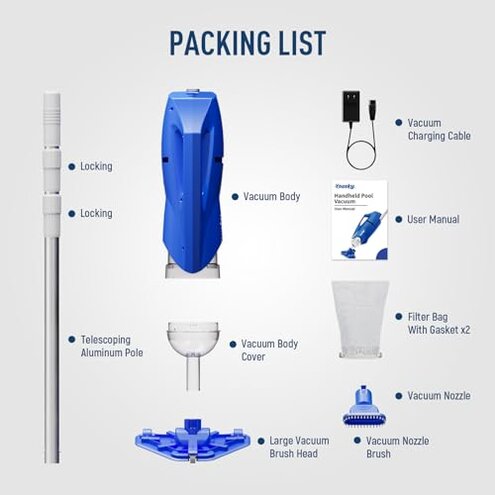
Reality: Pole joints here may loosen or crack after repeated assembly, increasing hidden maintenance time.
Safer alternatives

- Choose replaceable packs: Look for models with user‑replaceable batteries to avoid session failures.
- Prefer sealed filters: Opt for vacuums with easier, sealed cartridge filters to reduce messy emptying.
- Metal fittings: Pick poles with metal locking collars to prevent joint breakage under normal use.
- Real‑world tests: Favor products with many independent video tests showing sustained suction on sand.
The bottom line
Main regret: The combination of battery instability and filter maintenance causes interrupted cleanings and extra work.
Why worse: These problems are more disruptive than typical mid‑range cordless pool vacuums, especially for larger or sandier pools.
Verdict: Avoid this model if you need reliable, uninterrupted cleaning or heavy‑duty performance.
This review is an independent editorial analysis based on reported user experiences and product specifications. NegReview.com does not sell products.