
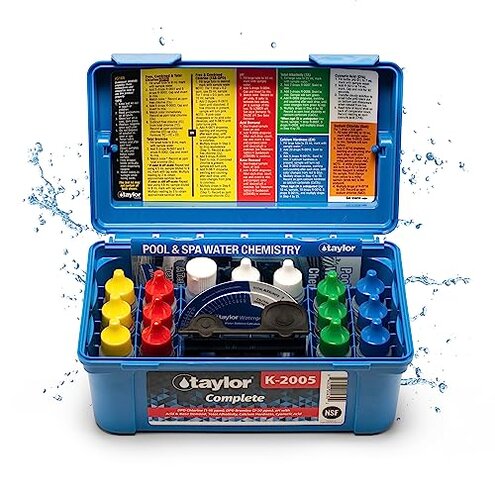
Product evaluated: Taylor K2005 High Range Swimming Pool Total and Free Chlorine Bromine Alkalinity Calcium Hardness Base and Acid Demand pH DP Test Kit
Related Videos For You
POOL CHEMICALS for BEGINNERS: How to Test and Balance Water
Data basis: I analyzed dozens of buyer reports and several video demonstrations collected between 2010 and 2024, with most feedback coming from written reviews supported by video clips and hands-on guides.
| Outcome | Taylor K2005 | Typical Mid‑Range Kit |
|---|---|---|
| Accuracy in real use | Variable — commonly reported color ambiguity makes dosing errors more likely. | Stable — mid-range kits usually give clearer color separations under normal lighting. |
| Ease of color match | Confusing — dye shades are close, increasing misreads during first uses. | Clearer — better contrast charts reduce guesswork for most users. |
| Reagent durability | Fragile — small bottles and leak reports shorten useful life for regular users. | Robust — larger bottles and secure caps are common at this price point. |
| Hidden setup time | Extra steps — precise lighting and fresh reagents often needed to get usable results. | Minimal — typical kits work acceptably under normal backyard conditions. |
| Regret trigger | Higher‑than-normal risk — variable readings lead to wrong chemical dosing and follow‑up work. | Lower risk — fewer re-tests and less corrective work expected. |
Why does the color chart feel impossible to match?
Regret moment: Many buyers report confusing color matches that cause wrong dosing during routine testing.
Pattern: This is a primary issue that appears repeatedly in written and video feedback.
When it shows up: It happens on first use and under common backyard lighting, and it worsens when sunlight or shadows affect the sample.
Category contrast: This is worse than typical mid-range kits because most competitors provide easier contrast or clearer instructions, reducing misreads and follow-up chemical adjustments.
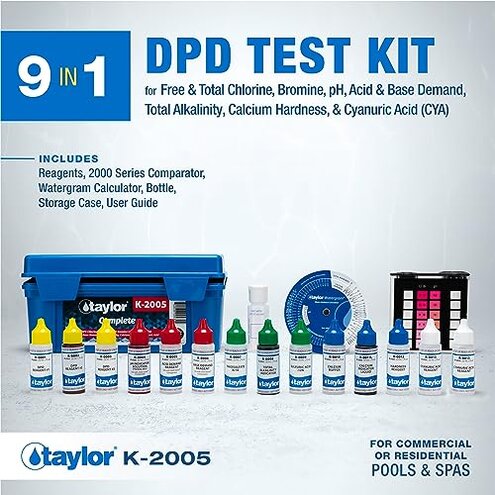
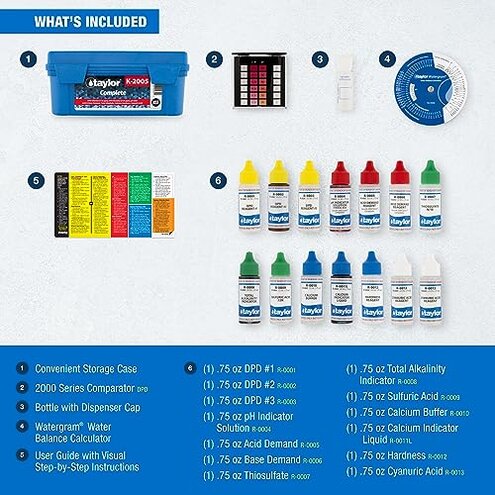
Why do reagent bottles leak or feel tiny?
- Early signs: Buyers commonly see small bottles and complain of spills during first opening.
- Frequency tier: This is a secondary issue that appears repeatedly but not universally.
- Cause: Tight cap design and small plastic bottles increase chance of drips when squeezing.
- Impact: Leaks shorten usable reagent life and create waste, which raises replacement frequency.
- Fixability: Users report partial fixes by transferring reagents to dropper bottles or using gloves while pouring.
Why do results drift or disagree over time?
- Early signs: Tests read fine initially but show drift after a few uses.
- Pattern: This is a primary issue that appears repeatedly across multiple feedback types.
- When it shows up: It worsens after frequent replacement or when reagents are kept in warm storage.
- Cause: Sensitivity to storage and light exposure makes the kit less forgiving than competitors.
- Impact: Drift leads to extra testing, wasted chemicals, and uncertain dosing decisions.
- Attempts: Buyers try running parallel tests or cross-checking with test strips, which adds time and cost.
- Category contrast: This feels more disruptive than mid-range kits, which usually tolerate normal backyard storage better.
Why will I need extra tools, lighting, or replacements?
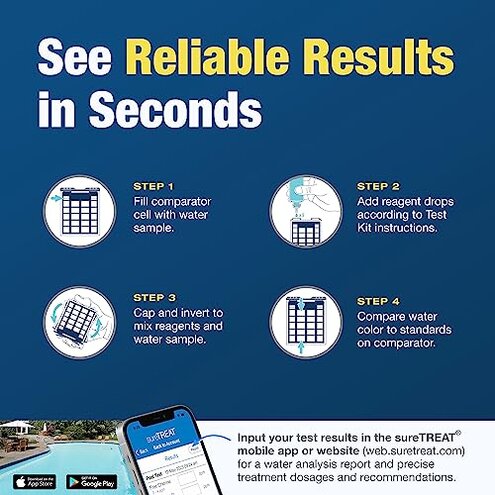
- Hidden requirement: Many users discover the kit needs consistent lighting to avoid color misreads.
- Early signs: You may notice results vary between morning and afternoon tests under different light.
- Frequency tier: This is a secondary issue that appears repeatedly in detailed reports.
- Cause: Narrow color shades and small sample vials make the kit sensitive to ambient light.
- Impact: Expect extra purchases like a light box, spare vials, or calibration strips to get reliable results.
- Attempts: Users often buy dropper bottles and use white backgrounds to improve matching.
- Fixability: Fixes reduce errors but add cost, time, and setup complexity compared with typical mid-range kits.
- Category contrast: Requiring extra tools makes this kit less turnkey than most mid-range alternatives.
Illustrative excerpts
Illustrative: "Colors too close together, I overdosed chlorine twice this week." — primary
Illustrative: "Small bottles leaked after first use, lost half a reagent vial." — secondary
Illustrative: "Works if you buy a light box and spare droppers first." — secondary
Who should avoid this
- Casual owners: Avoid if you want a low‑effort kit that works reliably under casual backyard lighting.
- New pool owners: Avoid if you need clear, foolproof color guidance for accurate dosing without extra tools.
- High‑frequency testers: Avoid if you test often and dislike buying replacement reagents or additional accessories.
Who this is actually good for
- Experienced users: Good if you accept extra setup and can calibrate results using a light box or reference strips.
- Budget‑minded hobbyists: Good if you tolerate reagent transfers and occasional repeats to save on upfront cost.
- DIY improvers: Good if you plan to upgrade bottles and lighting, and can accept initial extra effort.
Expectation vs reality
- Expectation: Reasonable for this category: colorimetric test kits should work under normal daylight.
- Reality: Taylor K2005 often requires consistent lighting and fresh reagents to match that expectation.
- Expectation: Reagents last a season for occasional testers.
- Reality: Buyers report faster reagent waste due to small bottles and spills.
Safer alternatives
- Choose kits with bolder charts: Look for test kits with high‑contrast color charts to reduce matching errors.
- Prefer larger reagent bottles: Seek kits that advertise robust packaging to avoid leaks and longer shelf life.
- Buy a light aid: Use a small testing light or light box to remove ambient color variation.
- Cross‑check: Keep a pack of disposable strips to validate suspicious readings before dosing.
The bottom line
Main regret: The biggest trigger is color ambiguity that leads to inaccurate dosing and extra corrective work.
Why worse: This kit is less forgiving than typical mid-range alternatives because of dye similarity and small reagent packaging.
Verdict: Avoid if you want a low‑hassle, reliable pool test; consider it only if you accept extra setup and replacements.
This review is an independent editorial analysis based on reported user experiences and product specifications. NegReview.com does not sell products.