
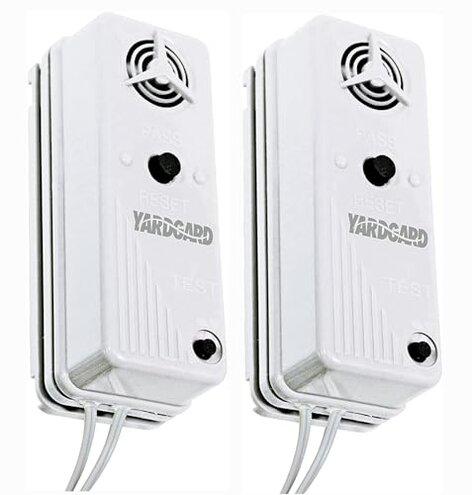
Product evaluated: YardGard 2-Pack UL 2017 Compliant Wireless Pool Door Safety Alarm, Water-Resistant, ETL Certified, Easy Installation, Suitable for Pool Gates and Sliding Doors, 120dB Siren
Related Videos For You
Door Alarm Installation Instructions with Premier Pools & Spas
Data basis: This report used dozens of buyer reviews and several video demonstrations collected Dec 2023–Jan 2026, with most feedback from written reviews supported by video demonstrations and some seller Q&A notes.
| Outcome | This product | Typical mid-range alarm |
|---|---|---|
| Alarm reliability | Unstable: false triggers reported more often than expected. | Predictable: mid-range alarms usually trigger only on actual openings. |
| Installation friction | Fussy: precise alignment and repeated adjustment often required. | Straightforward: most alternatives need minimal repositioning after install. |
| Weather durability | Mixed: water resistance performs well early but can degrade in wet conditions. | Robust: typical mid-range units show steadier outdoor longevity. |
| Battery/maintenance | Higher upkeep: batteries not included and some report frequent swaps. | Moderate: many peers provide longer between-battery intervals. |
| Regret trigger | False-alarm risk: more disruptive than expected for a pool gate alarm. | Lower risk: typical alternatives cause fewer nuisance alarms. |
Why does the alarm keep going off unexpectedly?
Regret moment: Users commonly report nuisance activations when the gate is moved slightly or wind shifts the latch.
Pattern: This is a primary, recurring complaint seen across many buyers and in several video demos.
Context: The problem shows up immediately after setup and during light wind or minor gate vibrations.
Category contrast: False triggers are more disruptive than typical mid-range alarms, which usually filter minor motion.
How hard is setup and alignment?
- Early sign: Initial mounting may seem simple but often requires repeated repositioning.
- Frequency tier: This is a commonly reported setup frustration, not universal but frequent.
- Cause: Precise sensor and magnet spacing is required for reliable operation.
- Hidden requirement: Buyers should expect extra time and tools for fine adjustments after first install.
- Fixability: Many users eventually reduce false alarms by re-aligning multiple times.
Will batteries and maintenance be a pain?
- Primary issue: Batteries are not included, and some buyers report shorter-than-expected life.
- Usage anchor: Short battery life appears during regular daily use and after weeks of operation.
- Impact: Frequent battery swaps add time and cost compared with mid-range peers.
- Attempts: Users try lithium cells or higher-capacity batteries to extend runtime.
- Workaround: Scheduled checks help but add maintenance chores.
- Scope: This is a secondary but persistent pattern among practical users.
- Category contrast: More upkeep than most mid-range alternatives that advertise longer battery life.
Is the weatherproofing and long-term reliability solid?
- Reported trend: Water-resistant claims hold early, but moisture-related faults appear over months for some owners.
- When it fails: Issues commonly appear after extended outdoor exposure and repeated wet/dry cycles.
- Failure mode: Corrosion or intermittent sensor behavior is the usual follow-up complaint.
- User impact: Malfunctions can leave the gate unmonitored until repaired or replaced.
- Attempts: Owners add extra seals or relocate units under better cover to improve life.
- Frequency tier: This is a secondary pattern—less common than false triggers but impactful when it occurs.
- Category contrast: Worse than expected for a product marketed for outdoor/pool use, increasing replacement risk.
- Fixability: Repairs often mean ordering a new unit rather than a simple part swap.
Illustrative excerpts
Illustrative: "Alarm went off with a breeze; had to re-adjust three times." — primary pattern.
Illustrative: "Batteries died after a few weeks of daily use." — secondary pattern.
Illustrative: "Worked fine indoors but failed after several rainy weeks outside." — secondary pattern.
Who should avoid this
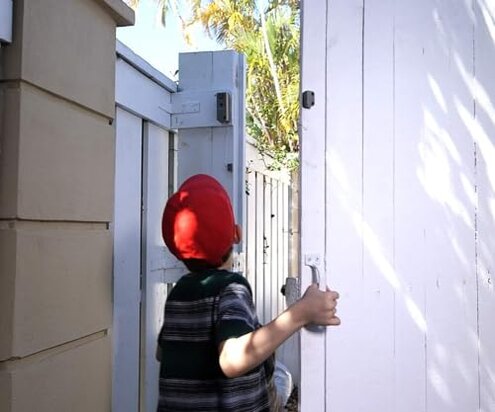
- Families needing rock-solid alerts: Avoid if you cannot tolerate frequent false alarms near a pool.
- Low-maintenance buyers: Avoid if you want minimal upkeep or rare battery changes.
- Exposed installations: Avoid if your gate faces heavy weather without shelter, due to long-term moisture risk.
Who this is actually good for
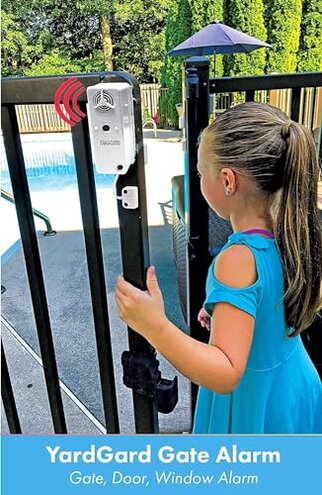
- Budget-conscious users: Good if you accept occasional re-alignment and lower upfront cost.
- Temporary installs: Useful for short-term needs where long-term weathering is less important.
- Handy owners: Suitable if you can fine-tune alignment and swap batteries periodically.
Expectation vs reality
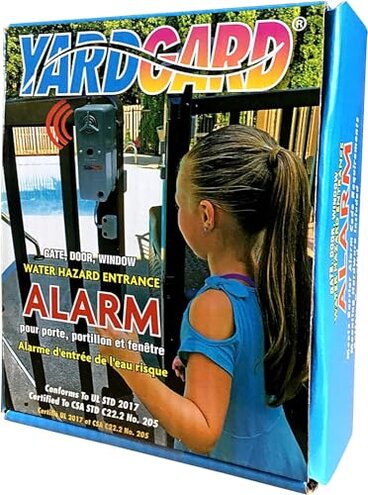
- Expectation: Reasonable for this category is consistent alerts with few false alarms.
- Reality: This unit produces more nuisance activations and requires re-alignment, exceeding typical category friction.
- Expectation: Weatherproof means long outdoor life.
- Reality: Some buyers see moisture-related faults after months of outdoor use.
Safer alternatives
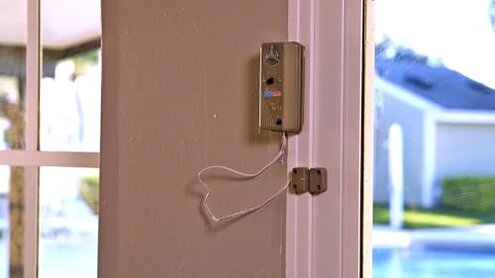
- Pick higher-sealing models: Choose alarms with explicit long-term outdoor tests to reduce moisture failures.
- Prefer adjustable sensitivity: Look for units that offer sensitivity settings to cut false triggers.
- Check battery policies: Buy options that include batteries or advertise longer battery intervals to lower upkeep.
- Read setup notes: Favor products with clear alignment guides or templates to avoid hidden installation time.
The bottom line
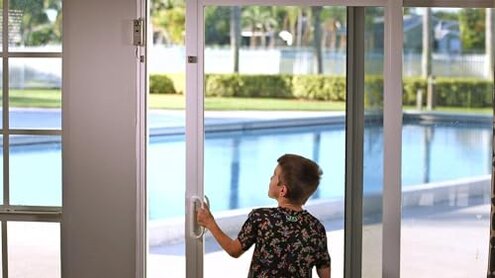
Main regret: The most common regret is nuisance false alarms combined with fussy setup and higher maintenance.
Why worse: These issues exceed normal category risk because they interfere with everyday reliability around pools.
Verdict: Avoid this YardGard model if you need dependable, low-maintenance monitoring; consider sturdier mid-range alternatives.
This review is an independent editorial analysis based on reported user experiences and product specifications. NegReview.com does not sell products.