
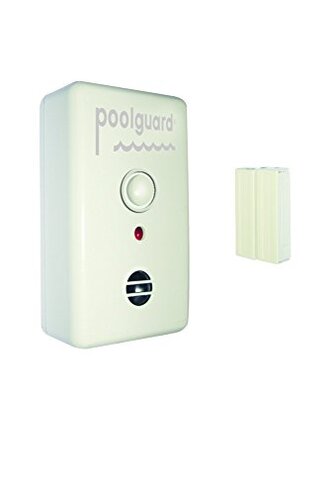
Product evaluated: PoolGuard DAPT-2 Water Hazard Pool Door Alarm, White
Related Videos For You
Door Alarm Installation Instructions with Premier Pools & Spas
Data basis Dozens of buyer comments and several video demonstrations were reviewed, collected across multiple years through January 2026; most feedback came from written reviews, supported by demonstration clips and Q&A posts.
| Outcome | PoolGuard DAPT-2 | Typical mid-range alarm |
|---|---|---|
| Alarm reliability | Unstable — more reports of unexpected triggers during normal use. | Stable — usually stays silent unless real entry detected. |
| False alarm frequency | Higher-than-normal — commonly reported as the main complaint. | Lower — fewer nuisance activations in comparable models. |
| Battery & upkeep | Maintenance-heavy — several buyers needed frequent replacements or resets. | Moderate — typical battery life and occasional checks. |
| Install friction | Precise — needs exact alignment and door conditions to avoid issues. | Forgiving — easier to mount and tolerate slight misalignment. |
| Regret trigger | Nuisance alarms that erode trust and require babysitting. | Annoyance only rarely; less impact on long-term use. |
Top failures
Why does the alarm go off for no reason?
False alarms are the primary regret moment buyers report, often causing users to ignore alerts over time.
Pattern This is a commonly reported issue and appears repeatedly across written feedback and demo clips.
Context It usually appears during daily use when doors are opened quickly, when wind moves the door, or after setup adjustments.
Why is installation so picky?
- Mount precision Needs exact sensor alignment to arm properly; small offsets trigger errors.
- Early signs Light chirps or intermittent arming failures right after mount are common.
- Frequency tier Secondary issue — fewer than the false alarms but persistent for new installs.
- Fix attempts Buyers report re-mounting, shimming, or extra tape to achieve reliable alignment.
- Category contrast More upkeep than most mid-range alarms, which usually accept slight misalignment.
Why do batteries and daily maintenance become annoying?
- Battery drain Several buyers mentioned replacing batteries more often than expected.
- Maintenance steps Frequent resets and testing were reported after false triggers.
- Impact This is a secondary complaint but compounds distrust in the alarm.
- Worse when units are outdoors or exposed to temperature swings, which many buyers noted.
- Attempted fixes Changing battery brands or moving the transmitter were commonly tried.
- Category contrast Less forgiving than typical mid-range alarms that usually need fewer interventions.
- Hidden cost Ongoing battery and troubleshooting time raise true ownership cost compared to peers.
Why won’t the adult pass-through behave reliably?
- Pass-through quirks The adult pass-through feature sometimes fails, causing unexpected alarms.
- When it shows up Problem appears during normal household use when adults quickly open and close the door.
- Cause Requires precise timing or button use that many buyers did not expect.
- Frequency tier Secondary but emotionally frustrating because it interrupts routines.
- Impact Results in loud false alerts, which erode trust and increase monitoring.
- Attempts Some users slowed door motion or practiced specific pass-through steps to avoid triggers.
- Category contrast Less user-friendly than alternatives with clearer pass-through modes or smarter sensors.
- Hidden requirement Buyers discovered a need to adjust door-close speed or hold a control — an unexpected behavior requirement.
Illustrative excerpts (not real quotes)
"Alarm kept going off with the breeze through the door." — reflects a primary pattern (false alarm).
"I had to remount it three times to stop chirping." — reflects a secondary pattern (installation).
"Replaced batteries more than once in two months." — reflects a secondary pattern (battery drain).
"Adult pass-through still alarms unless I hold the door." — reflects an edge-case pattern (hidden requirement).
Who should avoid this
- Families needing reliable alerts Avoid if you cannot tolerate frequent false alarms that reduce safety trust.
- Low-maintenance buyers Avoid if you want a set-and-forget alarm without regular battery or alignment checks.
- Windy/outdoor doors Avoid if your door faces wind or drafts that commonly trigger the unit.
Who this is actually good for
- Handy owners Good if you can tolerate re-mounting and tweaks to reduce false triggers.
- Short-term use Reasonable if you need a temporary alarm and will monitor it closely.
- Budget-minded Acceptable if you prioritize price over friction and can live with added maintenance.
Expectation vs reality
Expectation Reasonable for this category: a pool door alarm should trigger only for actual entries.
Reality This model more often triggers from wind, quick opens, or misalignment, making it more disruptive than expected.
Expectation Reasonable: adult pass-through should be simple and reliable.
Reality Pass-through can require precise timing or extra steps, which many buyers did not expect.
Safer alternatives
- Look for adjustable sensitivity Choose alarms that advertise sensitivity settings to reduce wind/chatter triggers.
- Pick forgiving mounts Prefer models with larger contact tolerances to avoid repeated remounting.
- Prioritize longer battery life Buy alarms with clear battery-life specs or rechargeable options to cut upkeep.
- Check pass-through modes Seek alarms with explicit, easy adult-pass features or pause buttons.
- Read demo videos Watch setup clips to confirm real-world behavior on doors like yours before buying.
The bottom line
Main regret Frequent false alarms and picky installation are the core triggers of buyer regret.
Why worse These issues exceed normal category risk because they reduce trust and add ongoing maintenance.
Verdict Avoid if you need a low-maintenance, highly reliable pool-door alarm; consider alternatives with adjustable sensitivity and clearer pass-through controls.
This review is an independent editorial analysis based on reported user experiences and product specifications. NegReview.com does not sell products.