
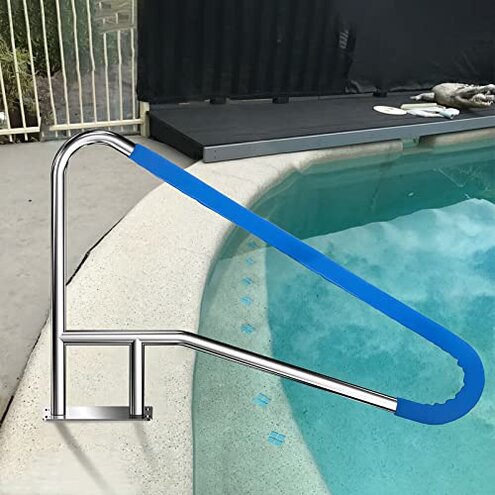
Product evaluated: Pool Rail for inground Pools (54x32), 304SS Pool handrail with Nonslip Blue Cover.
Related Videos For You
How to install a pool handrail
Swimming Pool Handrails, a Quick Overview
Data basis: This report aggregates dozens of written reviews and product videos collected between Jan 2023 and Jan 2026. Most feedback came from written reviews, supported by video demonstrations, with a smaller share of installation photos and customer Q&A.
| Feature | Coocure 54x32 Rail | Typical mid-range rail |
|---|---|---|
| Stability | Reported wobble during entry/exit for some users after install. | More solid feel right after standard deck anchoring in most models. |
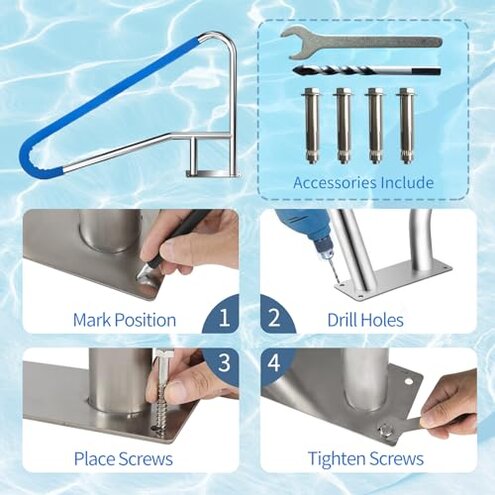
| Installation effort | Requires drilling and anchor alignment that commonly adds time and fiddly adjustments. | Often simpler anchor templates and clearer instructions reduce install time. |
| Grip cover durability | Cover frays or loosens with repeated use in reported cases. | Higher longevity covers and better fasteners are common in mid-range alternatives. |
| Corrosion risk | Mixed reports of finish discoloration over months in pool environments. | Better passivation or coatings reduce visible wear for many competitors. |
| Regret trigger | Installation instability that becomes obvious during normal pool use and forces rework. | Lower risk of early rework under typical mid-range products. |
Top failures
Why does the rail feel wobbly after I install it?
Immediate regret: Many buyers notice a wobble when first using the rail, which undermines confidence during pool entry. This is a primary issue and more disruptive than expected for a product claiming solid anchoring.
Pattern: The wobble is commonly reported and appears across written reviews and video installs. It typically shows up right after setup and can worsen with heavy or repeated use.
Category contrast: Unlike most mid-range rails that feel secure after one install, this unit often needs re-tightening or re-drilling, adding extra time and cost.
How durable is the nonslip blue cover?
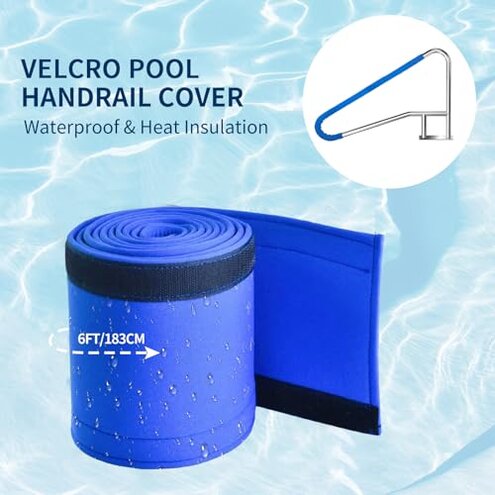
- Early sign: Buyers report the cover loosens or the Velcro frays after several weeks of regular use.
- Frequency: This is a secondary issue seen repeatedly enough to be notable but not universal.
- Cause: The Velcro fastening and thin material show wear under sun, chlorine, and frequent hands-on use.
- Impact: A torn cover reduces grip safety and needs replacement to restore non-slip function.
Will the finish and bolts hold up near pool chemicals?
- Pattern: Reports of discoloration and bolt loosening are a persistent secondary pattern across review types.
- When it appears: Problems show up after weeks or months of exposure and frequent use.
- Worse conditions: High chlorination, salt pools, and heavy use make the issue worsen over time.
- Why it feels worse: Compared to typical mid-range rails, this model requires more upkeep to remain visually clean and tight.
- Attempts: Buyers often re-tighten anchors or replace bolts, which adds labor and possible professional costs.
- Fixability: The issue is partly fixable but persists unless better fasteners or coatings are used.
Will it fit my deck and come with everything needed?
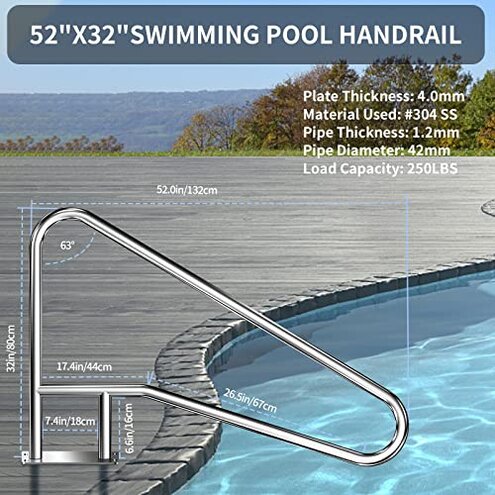
- Hidden requirement: Several buyers found they needed specific concrete thickness or professional drilling, a step not obvious at purchase.
- Usage anchor: Fit issues surface during installation when anchors don't seat or bolt lengths are wrong.
- Frequency tier: This is a primary issue for buyers with older or thin decks, less common for new concrete.
- Cause: Pre-drilled hole spacing and anchor length assume a standard deck that some users do not have.
- Impact: Mismatch forces extra drilling, hardware purchases, or hiring a pro.
- Attempts: Users report aligning and re-drilling holes multiple times to get the rail square.
- Why worse than usual: Many competitors provide clearer deck specs or templates; this product's guidance feels less forgiving.
Illustrative excerpts
Illustrative: "Rail wobbled on first use; needed re-drilling to feel safe." — primary
Illustrative: "Velcro cover frayed after a month of family swims." — secondary
Illustrative: "Bolts showed surface spots after heavy chlorine weeks." — secondary
Illustrative: "My shallow deck needed longer anchors; had to buy extras." — edge-case
Who should avoid this
- Thin-deck owners: If your pool deck is shallow or old, the fit requirements here exceed normal DIY expectations.
- Low-maintenance buyers: If you want a cover and rail that remain problem-free, the cover durability reports are a deal-breaker.
- Salt/chlorine-heavy pools: If you have aggressive water chemistry, the corrosion concerns mean higher upkeep than typical.
Who this is actually good for
- Handy DIYers: If you can re-drill, buy anchors, and re-tighten bolts, you can tolerate the installation rework.
- Budget-conscious buyers: If you accept occasional maintenance and cover replacement, the lower price can be acceptable.
- Low-use home pools: For pools with light family use, the wear timeline may be long enough to avoid issues.
Expectation vs reality
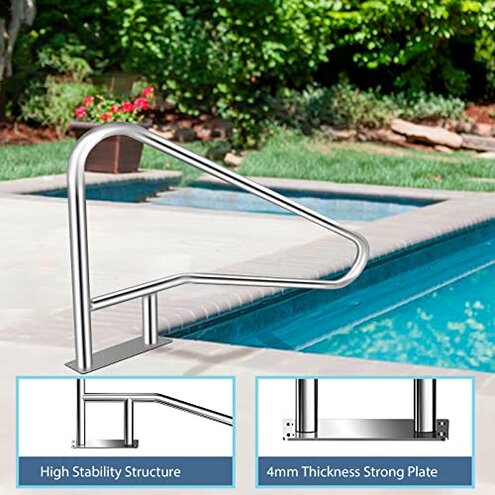
Expectation: A pool rail should feel secure after one install, which is a reasonable category baseline.
Reality: This rail often needs rework or extra hardware to reach that baseline, adding time and cost.
- Expectation: A nonslip cover should last through seasons.
- Reality: The cover frays sooner than expected, requiring replacements for safe grip.
Safer alternatives
- Look for deck specs: Choose rails that provide explicit concrete thickness and hole templates to avoid hidden fit work.
- Prefer bolt kits: Pick models with longer or varied anchors included to avoid an extra trip to buy hardware.
- Higher-grade covers: Seek rails with reinforced Velcro or molded grips to neutralize cover wear.
- Passivation/coating: Favor rails that state improved finish or coatings to reduce visible corrosion.
The bottom line
Main regret: The most common buyer trigger is installation instability that becomes obvious during normal pool use and forces rework.
Why worse: This exceeds normal category risk because it often requires extra drilling or hardware purchases and ongoing maintenance.
Verdict: Avoid this rail if you need a plug-and-play, low-maintenance solution; consider it only if you accept DIY rework and upkeep.
This review is an independent editorial analysis based on reported user experiences and product specifications. NegReview.com does not sell products.