
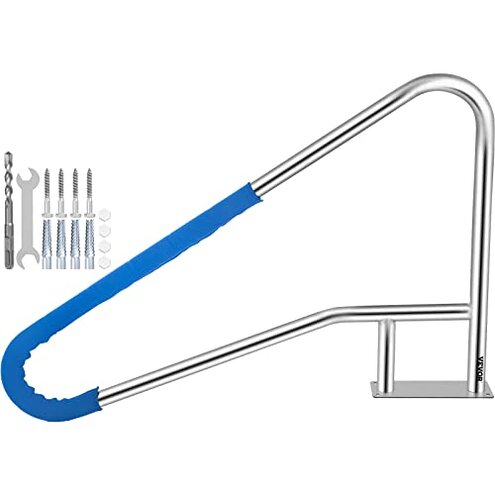
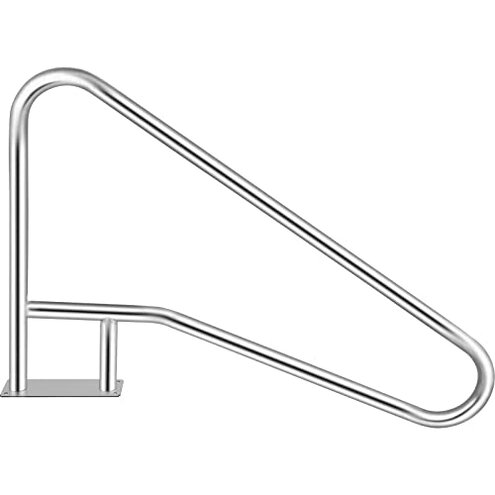
Product evaluated: VEVOR Pool Rail 54x36 Pool Railing 304 Stainless Steel 250LBS Load Capacity Silver Rustproof Pool Handrail Humanized Swimming Pool Handrail with Blue Grip Cover & M8 Drill Bit & Self-Taping Screws
Related Videos For You
How to install a pool handrail
Pool Bonding 101: Why Handrails, Coping, and Water Could Shock You
Data basis: I analyzed dozens of written reviews and several video demonstrations collected between Feb 2022 and Jan 2026. Source mix: most feedback came from written buyer reviews, supported by demo videos and product Q&A. Scope: reports are concentrated on first-install and first-season use.
| Outcome | VEVOR 54x36 Rail | Typical mid-range rail |
|---|---|---|
| Durability | Variable finish: some buyers saw surface wear within months, commonly reported across reviews. | Steadier finish: mid-range rails usually keep appearance through at least one season. |
| Corrosion risk | Higher-than-normal rust risk: saltwater users reported early pitting despite 304 labeling. | Lower rust tendency: many alternatives specify 316 or extra coatings for saltwater pools. |
| Installation | Tricky alignment: anchors and pre-drilled holes often need rework during setup. | Smoother install: mid-range options tend to include clearer anchors or thicker base plates. |
| Included hardware | Incomplete fit: supplied screws and bit sometimes mismatch common pool decks. | More complete: alternatives typically match concrete or tile anchors out of box. |
| Regret trigger | Rapid rust or loose rail: buyers most often regret corrosion or unstable mounting within months. | Delayed regret: mid-range rails usually show problems later or require fewer fixes. |
Why is the rail showing rust so soon?
Regret moment: Rust or brown staining appears during first season of use for many buyers. Pattern: this is a commonly reported issue across written feedback and demos.
When it shows: buyers notice spots after repeated pool sessions and after winter storage. Contrast: worse than the category baseline because mid-range rails usually resist surface staining for at least one season.
Why does installation feel harder than expected?
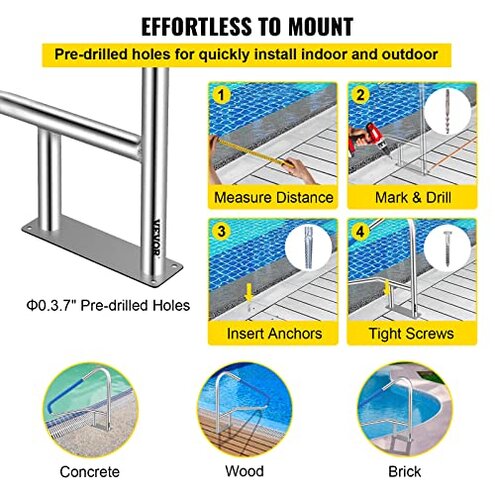
- Alignment surprises: installers often find the pre-drilled holes don’t match their deck tile spacing, a recurring pattern during first setup.
- Drill compatibility: the included M8 drill bit sometimes doesn’t match local anchors, seen repeatedly in video demos and write-ups.
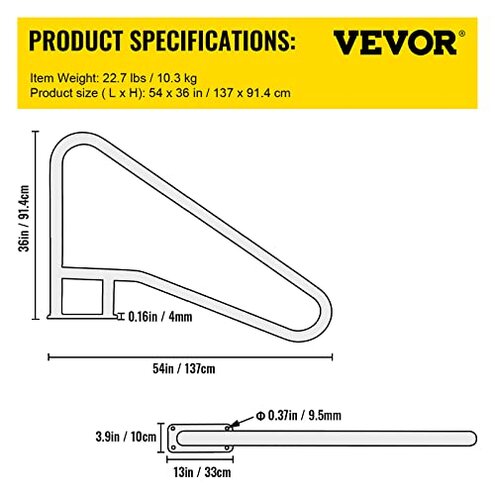
- Base fit requires extra measuring and re-drilling on uneven or tiled decks, which is more work than typical mid-range rails.
- Anchor mismatch: supplied anchors are reported as weak on hollow or old concrete, a secondary installation failure.
- Time cost: expect extra hours or a pro visit if you lack concrete tools, which many buyers noted.
Why is the handgrip and finish disappointing?
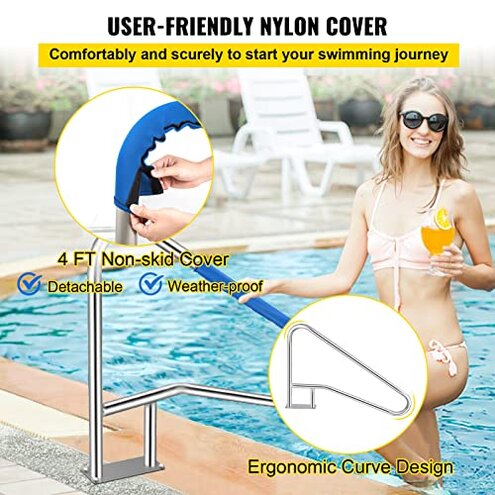
- Grip cover fit: the blue nylon cover can feel loose or shift, reported often in initial use.
- Cold-to-touch: the cover reduces temperature shock but some buyers still reported exposed metal edges.
- Peeling risk: the grip material shows wear after repeated use, a secondary wear pattern.
- Cosmetic flaws: welding marks and finish blemishes are visible out of the box for several buyers.
- Sensory impact: visible flaws lower perceived quality more than expected for this price tier.
- Fix attempts: buyers tried adhesive sleeves or replacement covers, which adds cost and effort.
- Replacement need: durable grip replacements are an extra purchase many did not expect.
Do hidden maintenance or material requirements raise costs later?
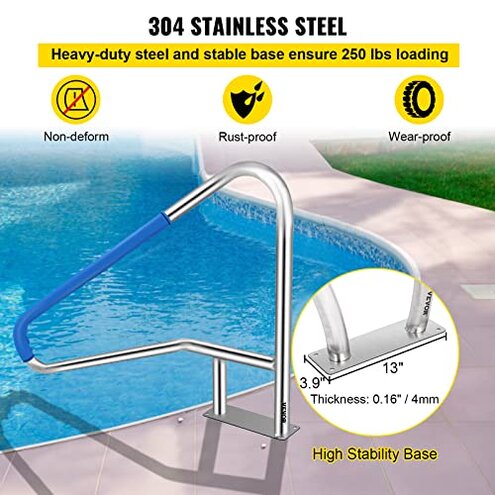
- Saltwater warning: several buyers discovered the product needs 316-grade steel for reliable saltwater use, a hidden requirement mentioned in product notes.
- Ongoing upkeep: rust spots required regular scrubbing with a Scotch-Brite pad, reported repeatedly during seasonal use.
- Patch fixes: buyers used touch-up products or covered blemishes, which is more upkeep than typical mid-range rails.
- Warranty friction: some buyers reported limited help when corrosion was discovered, a secondary support issue.
- Load anxiety: welding joints and base welds caused concern for heavier users, a less frequent but notable pattern.
- Replacement timeline: visible corrosion or loosened anchors often led to replacement within months for some buyers.
- Cost impact: total ownership time and extra parts made this product less cost-effective than similar rails.
- Fixability: many problems are fixable but require tools, time, and extra purchases.
Illustrative excerpts
Illustrative: “Rust spots appeared after a few months in a salt pool; had to scrub constantly.” — primary pattern
Illustrative: “Holes didn’t line up with tile; I re-drilled and bought new anchors.” — secondary pattern
Illustrative: “Grip cover slipped after heavy use, I replaced it.” — edge-case pattern
Who should avoid this
- Saltwater pool owners: avoid if you want low rust risk without buying 316 steel or doing frequent maintenance.
- Tile or uneven decks: avoid if you cannot re-drill or adjust anchor positions during installation.
- Buyers wanting turnkey install: avoid if you expect fully matched hardware and no extra tools.
Who this is actually good for
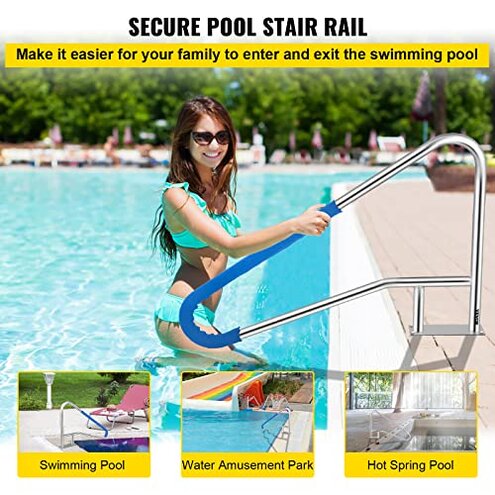
- Budget DIY installers: good if you accept extra drilling and can fix anchor alignment yourself.
- Freshwater pool owners: acceptable if you have soft water and will monitor finish occasionally.
- Handrail upgraders: fine if you plan to swap grips and hardware immediately to higher-grade parts.
Expectation vs reality
Expectation (reasonable): buyers expect a stainless rail to resist rust through one season. Reality: several buyers saw surface pitting within months, which is worse than typical mid-range rails.
Expectation (reasonable): included anchors should fit concrete or tile. Reality: many reported anchor mismatch and extra drilling, adding time and cost.
Safer alternatives
- Choose 316-grade: pick rails explicitly labeled 316 stainless for saltwater to neutralize the rust risk.
- Check anchor type: buy products that list anchor compatibility for tile, concrete, and wood to avoid re-drilling surprises.
- Inspect finish photos: favor listings with close-up finishes and weld shots to avoid cosmetic surprises.
- Budget for upgrades: plan extra for better anchors and grip replacements if you want a trouble-free outcome.
The bottom line
Main regret: the most common buyer regret is early rust and installation rework. Why worse: these issues are more disruptive than typical mid-range rails because they add time, cost, and ongoing upkeep. Verdict: avoid if you need low-maintenance, saltwater-safe, or truly turnkey installation.
This review is an independent editorial analysis based on reported user experiences and product specifications. NegReview.com does not sell products.