
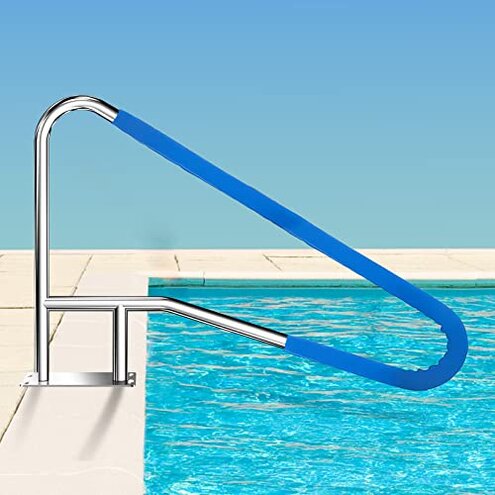
Product evaluated: 52x32 Inground Pool Rail, Rustproof #304SS Swimming Pool Stair handrail with no-Slip Cover, mounting Base & Accessories.
Related Videos For You
How to install a pool handrail
Pool Bonding 101: Why Handrails, Coping, and Water Could Shock You
Data basis: I analyzed dozens of buyer reports plus video demonstrations and Q&A posts collected between Jan 2024 and Jan 2026. Most feedback came from written reviews, supported by several installation videos and seller replies. Distribution shows written reviews were the majority source.
| Outcome | yeezoo 52x32 Rail | Typical mid-range rail |
|---|---|---|
| Stability | Wobbly complaints appear repeatedly after first weeks of use. | Firm mounting usually holds under regular home use. |
| Corrosion risk | Higher-than-normal surface discoloration reported within months in wet environments. | Resists light surface wear for longer when used outdoors. |
| Installation effort | Complex requires precise drilling and heavier anchors than advertised. | Simpler anchors or clear templates are commonly included. |
| Grip cover durability | Peels or hardens for some buyers after sun exposure. | Longer-lasting covers typically hold up in sun and chlorine. |
| Regret trigger | Installation failure plus early rust is the main regret point. | Minor tweaks or parts swaps usually fix issues. |
Why does the rail feel unstable after you install it?
Wobble upon use commonly appears within the first weeks of regular pool entry and exit. Users report the rail shifts under body weight during normal steps, which creates a safety concern.
Pattern note: this is a primary complaint seen repeatedly across written feedback and video demos. Usage anchor: it shows up when people lean or pull during first monthly use. Category contrast: more disruptive than normal because mid-range rails usually remain firm after a single tightening.
Is the metal really rustproof long-term?
- Early discoloration appears repeatedly on exposed spots after weeks in wet, chlorinated settings, indicating a surface corrosion issue.
- Claim mismatch often noted between product description and buyer experience, creating disappointment during regular outdoor use.
- Worse than usual because similar-priced rails tend to show corrosion later, not within months.
- Impact leads to visible staining and possible rough edges that catch skin during normal handling.
- Fix attempts include sanding and sealants, which add time and cost for users who expected no maintenance.
Do you need special tools or anchors to mount this rail?
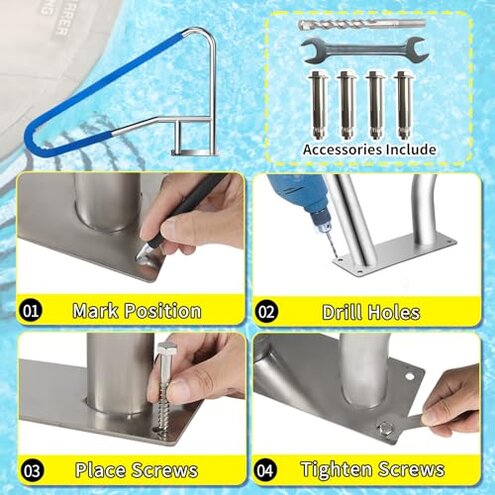
- Hidden requirement concrete anchors heavier than supplied screws are commonly needed for secure mounting during installation.
- Pre-drilled holes in the base plate still require precise drilling into decking; misalignment forces re-drilling.
- Added cost appears repeatedly because buyers purchase grade-specific anchors and epoxy to stabilize the base.
- Two-person job is often necessary to hold and level the rail while securing bolts.
- Seller-supplied screws sometimes feel under-spec, prompting buyers to replace them before final use.
- When it shows this becomes clear during the initial install attempt and is more work than most mid-range rails demand.
- Repairability is moderate because fixes need drilling tools and masonry parts many buyers don't have on hand.
Will the non-slip cover stay comfortable and safe?
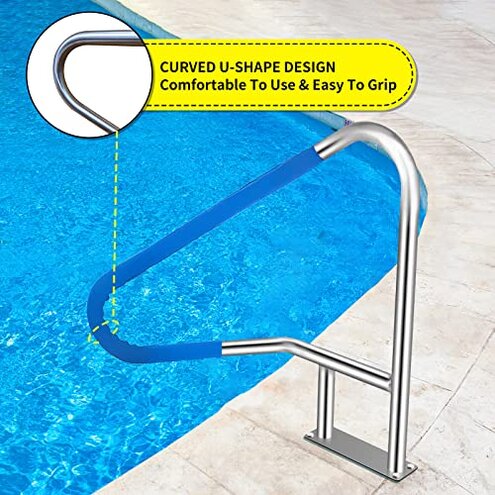
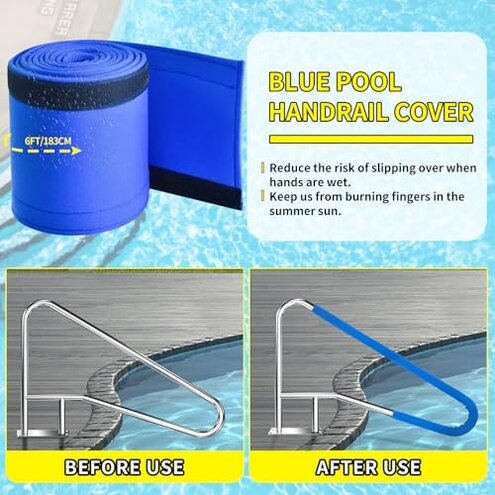
- Surface wear of the grip cover is commonly reported after repeated sun and chlorine exposure.
- Heat retention in direct sun can still cause hot-to-touch sections despite the cover, according to several users.
- Peeling edges appear in some cases, creating a new snag and slip risk rather than preventing slips.
- Replacement need arises sooner than buyers expect, leading to extra expense for replacement sleeves.
- Frequency is secondary compared with stability and corrosion but still causes frustration during daily use.
- Context worsens with heavy pool use and long summer exposure.
- Fix often means buying aftermarket covers or wrapping tape, which is a temporary measure.
- Expectation gap exists because buyers assume the cover will be maintenance-free for seasons.
Illustrative excerpts
Excerpt: "It started wobbling within two weeks, felt unsafe during normal steps."
Pattern: reflects a primary pattern of instability after initial use.
Excerpt: "Tiny orange spots showed up around welds after a month."
Pattern: reflects a primary pattern of early corrosion in wet environments.
Excerpt: "Had to buy better anchors and epoxy to keep it steady."
Pattern: reflects a secondary pattern of missing or under-spec anchoring hardware.
Excerpt: "Cover peeled and became sticky in sun, not comfortable."
Pattern: reflects an edge-case but recurring durability issue for grip materials.
Who should avoid this
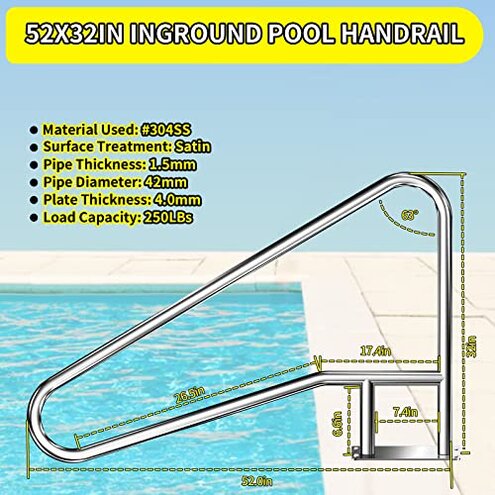
- Buyers needing high stability should avoid it because wobble complaints are more disruptive than typical rails.
- Coastal or heavy pool users should avoid it due to higher-than-normal surface corrosion reports in wet conditions.
- DIY installers without tools should avoid it because secure mounting often needs masonry anchors and extra steps.
Who this is actually good for
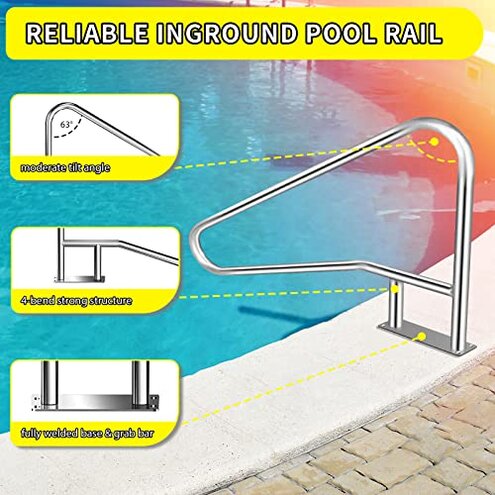
- Budget-conscious owners willing to replace anchors or covers can accept extra fixes to save upfront cost.
- Occasional pool users who will use the rail lightly and inspect it regularly may tolerate early wear.
- Hands-on installers comfortable with drilling and anchor swaps will handle hidden requirements without issue.
Expectation vs reality
Expectation: a rustproof rail stays maintenance-free for seasons, which is reasonable for this category. Reality: buyers report surface discoloration within months, requiring cleaning or sealant.
Expectation: included hardware should finish the job. Reality: many needed heavier anchors, making installation longer and costlier than expected.
Safer alternatives
- Choose thicker-base rails with clearer anchor specs to eliminate the common wobble and hidden anchor cost.
- Look for marine-grade finish explicitly rated for pool chemical exposure to reduce early corrosion risk.
- Pick rails with template and heavy anchors included to avoid extra trips and re-drilling during installation.
- Get a reinforced grip option or aftermarket sleeve designed for UV and chlorine to prevent peeling.
The bottom line
Main regret: early wobble combined with surface corrosion triggers the strongest buyer complaints. Why it matters: these issues exceed normal category risk because they affect safety and add hidden time and cost. Verdict: avoid this model unless you can spend extra on anchors, maintenance, or replacement covers.
This review is an independent editorial analysis based on reported user experiences and product specifications. NegReview.com does not sell products.