
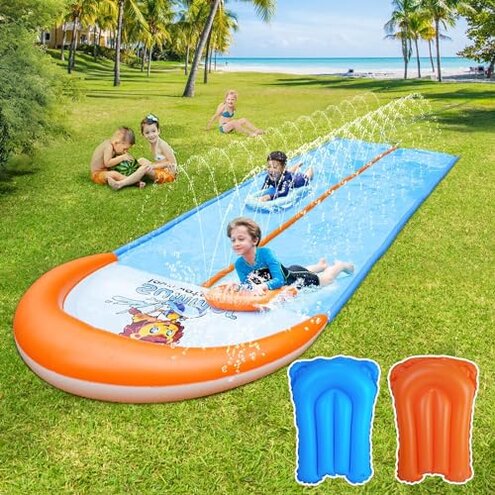
Product evaluated: JOYIN 22.5FT Water Slide and 2 Inflatable Boards, Extra Long Heavy Duty Double Lawn Waterslide with Sprinkler for Kids Adults Backyard Summer Water Toy Outdoor Fun, Blue, Light Blue
Related Videos For You
Backyard Waterslide
How To Easily Roll Up A Water Slide Inflatable With Dolly Winch - Bounce House
Data basis: I analyzed dozens of written reviews and several video demonstrations collected through January 2026, with most feedback coming from written buyer reviews supported by visual setup footage.
| Outcome | JOYIN 22.5FT | Typical mid-range slide |
|---|---|---|
| Durability | Higher tear risk: Reports commonly show punctures and seam failures after first few uses. | Moderate durability: Mid-range alternatives usually survive a season with basic care. |
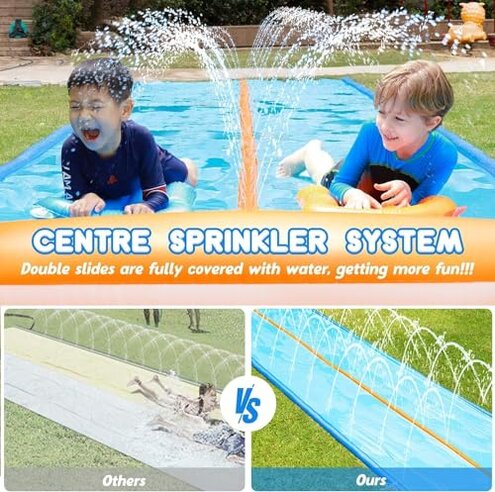
| Water coverage | Uneven sprinkling: One-side sprinkler design often leaves dry lanes and uneven slides. | Even wetting: Competitors tend to use dual-spray layouts with better coverage. |
| Setup & anchoring | Hidden ground needs: Stakes sometimes fail on hard or rocky soil. | Robust anchoring: Mid-range models include stronger anchors or heavier base options. |
| Repairability | DIY patches needed: Buyers often must patch seams or re-inflate regularly. | Better patch kits: Many mid-range slides ship with higher-quality repair kits. |
| Regret trigger | Seam failure: Primary reason buyers felt the purchase failed seasonal use. | Lower regret: Fewer reports of rapid failure in typical mid-range options. |
Why did the slide deflate so quickly during play?
Puncture pattern: Many buyers reported punctures or rapid deflation during initial uses, creating an immediate safety and fun interruption.
Usage anchor: The issue appears most often during first few uses and worsens with longer play sessions or rougher surfaces.
Category contrast: This is more disruptive than expected because most mid-range slides tolerate a full season before such failures.
Why does only one side stay wet and slippery?
- Design gap: The built-in sprinkler is one-sided, so water coverage is inconsistent across the slide.
- Common report: This appears repeatedly in buyer feedback as a primary annoyance for siblings racing side-by-side.
- When it shows: The problem is noticeable right after setup, during normal play on sunny days.
- Impact: Uneven wetting leads to frequent stops and pushes, reducing smooth sliding fun.
- Workaround: Many buyers add a garden hose or a second sprinkler to even out wetness.
Are seams and attachments truly durable for regular backyard use?
- Seam weakness: Seams and glued attachments are commonly reported to split after repeated inflation and use.
- Persistence signal: This is a recurring pattern, not universal but frequent enough to be a primary concern.
- When it worsens: Problems grow after multiple weekends of play or with heavier riders.
- Compared to category: The material and seam longevity feel less forgiving than typical mid-range competitors.
- Attempted fixes: Buyers often apply household patch kits, which temporarily restore function.
- Fixability: Repairs work short-term but usually add upkeep time and repeated fixes over a season.
- Hidden requirement: Expect to keep a patch kit and time available for repairs if you buy this.
Is setup and anchoring reliable on real lawns?
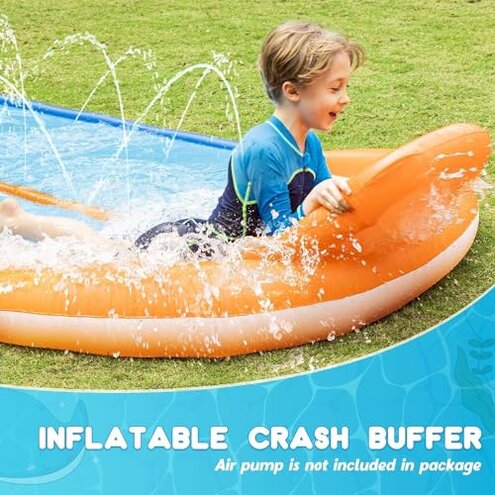
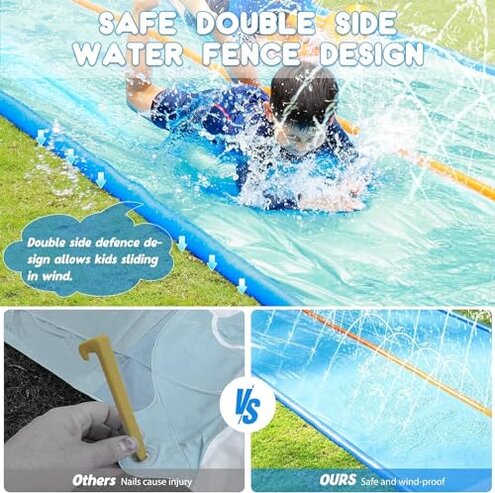
- Anchor limits: The included stakes and bumper are commonly reported to be inadequate on compacted or rocky soil.
- Frequency tier: This is a secondary issue that appears across many setup videos and buyer notes.
- When it matters: Anchoring fails under windy conditions or with active kids pushing off the ends.
- Why worse than normal: Mid-range slides often include heavier or more varied anchors for uneven yards.
- Impact: Poor anchoring increases movement and sudden slips, creating a safety concern for older children.
- Attempts: Buyers add sandbags, extra stakes, or rope tie-downs to secure the slide.
- Effort cost: These fixes add setup time and often require trips to the hardware store.
- Hidden need: You may need a soft, level lawn and extra anchoring gear to use this safely.
Illustrative excerpts
- "Stopped holding air after two afternoons of play, had to patch twice." — primary pattern.
- "One lane stayed dry; kids kept tripping at the wet/dry seam." — secondary pattern.
- "Stakes barely held on thin dirt; slide shifted during use." — secondary pattern.
- "Patch kit fixed it but it deflated again after a week." — primary pattern.
Who should avoid this
- Durability-sensitive buyers: Avoid if you need a product that lasts a full season without repairs.
- Rocky-or-compacted yards: Avoid if your lawn is hard or has many roots; anchors may fail.
- No repair time: Avoid if you cannot spend time patching or re-inflating between uses.
Who this is actually good for
- Short-term parties: Good if you want a low-cost slide for a single event and you accept higher wear risk.
- DIY patchers: Good if you are comfortable repairing inflatables and carrying a patch kit.
- Soft-surface yards: Good if you have a soft, level lawn and can add extra anchoring.
Expectation vs reality
Reasonable expectation: Buyers expect a backyard slide to hold air and be usable for a season.
Reality: Many users experienced rapid punctures or seam splits within a few uses, requiring repairs.
Setup expectation: Stakes that come with a product should secure it in most yards.
Setup reality: The supplied anchors often need reinforcement on anything but soft ground.
Safer alternatives
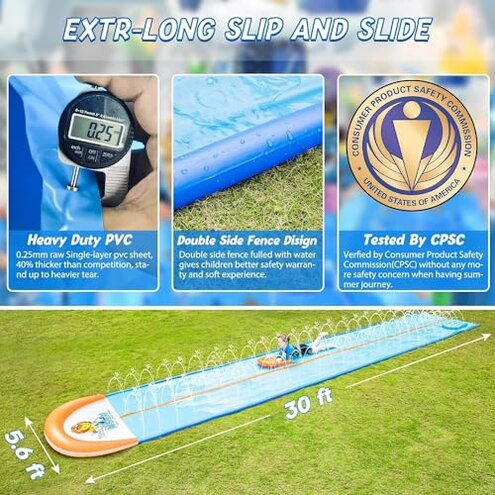
- Choose reinforced seams: Look for slides that advertise double-stitched seams to reduce puncture risk.
- Dual-spray design: Prefer models with dual-side sprinklers for consistent wetting and smoother play.
- Heavy-duty anchors: Buy slides with stronger anchor systems or plan to add sandbags and extra stakes.
- Better repair kits: Select options that include a professional-grade patch kit to reduce maintenance time.
- Read visuals: Watch setup and teardown videos before buying to check real-ground compatibility.
The bottom line
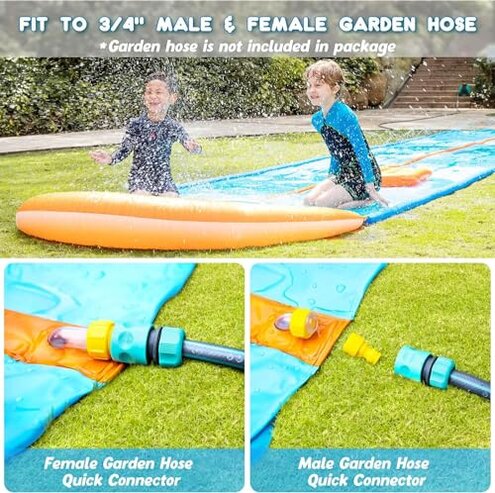
Main regret: The primary trigger is rapid punctures and seam deflation that interrupt play.
Why it matters: These failures exceed normal category risk because they often appear within the first uses and require repeated repairs.
Verdict: Avoid this model if you need a durable, low-maintenance slide; consider it only for short-term events or if you accept patching work.
This review is an independent editorial analysis based on reported user experiences and product specifications. NegReview.com does not sell products.