
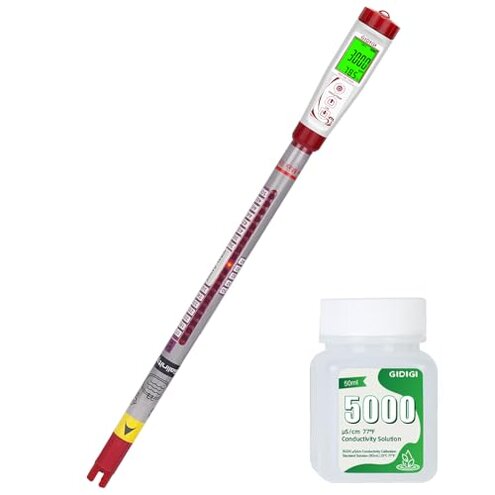
Product evaluated: Digital Pool Salt Tester with Long Probe,Salinity Meter for Saltwater Pool,Accurate Salt Test Kit Truncheon Hot Tub,Spa,Freshwater Fish Tank,Koi Pond(0-5000PPM)
Related Videos For You
INTEX SALTWATER SYSTEM SETUP
How To Set Up and Calibrate the HI98319 Salinity Tester
Data basis: This report uses dozens of buyer feedback items and video demonstrations collected between Dec 2023 and Jan 2026. Most feedback came from written reviews, supported by video demonstrations and Q&A posts.
| Outcome | GX-EC02 | Typical mid-range tester |
|---|---|---|
| Accuracy consistency | Variable readings that often need re-checks after first use. | Stable readings usually within expected tolerance for pool testing. |
| Durability / seal risk | Higher risk of probe seal problems when submerged too deep. | Lower risk thanks to more robust probe housings. |
| Ease of use | Clear display but extra steps like frequent calibration add effort. | Simpler workflows with fewer maintenance steps required. |
| Maintenance needs | Frequent recalibration and careful depth control required. | Moderate calibration frequency; fewer hidden handling rules. |
| Regret trigger | Accuracy drift plus probe leaks are the main buyer regret. | Lower chance of combined accuracy and leak failures. |
Top failures
Why are readings inconsistent and unreliable?
Primary pattern: Many buyers report recurring inconsistent salt readings that force re-testing.
Usage anchor: The problem appears on first use for some, and after repeated testing for others, especially with long sessions or varied pool temperatures.
Category contrast: This is more disruptive than most mid-range meters where one calibration normally lasts weeks.
Why does the probe leak or fail after a few uses?
- Early sign: O-rings or probe joint feel loose after initial submersion.
- Frequency tier: A secondary issue seen across written reviews and demo videos.
- Cause: Users often exceed the 13in max immersion or twist the probe during testing.
- Impact: Water intrusion can cause erratic readings and short device life.
- Attempted fixes: Buyers report replacing O-rings or limiting depth to avoid leaks.
Why is calibration a hidden ongoing task?
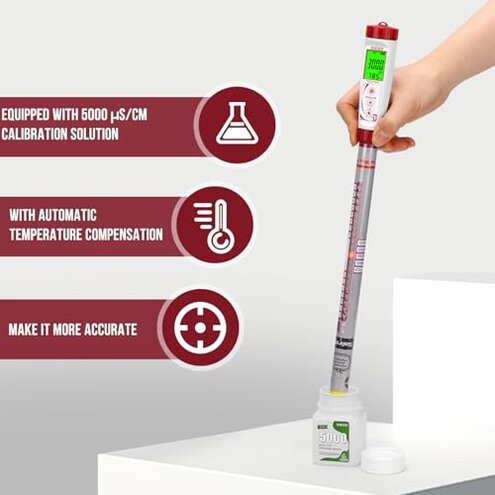
- Hidden requirement: Comes with a calibrating solution, which implies regular recalibration is expected.
- Early sign: Readings drift within days unless recalibrated after heavy use.
- Frequency tier: This is a primary issue for users who need consistent results.
- Cause: Factory calibration often needs confirmation against the included solution.
- Impact: Extra time and consumables add to cost and hassle.
- Fixability: Recalibration helps but does not always eliminate drift over weeks.
- Category contrast: Less forgiving than most mid-range testers that hold calibration longer.
Why is setup and everyday handling more fussy than expected?
- Initial setup: Instructions are brief, causing users to miss depth and handling rules.
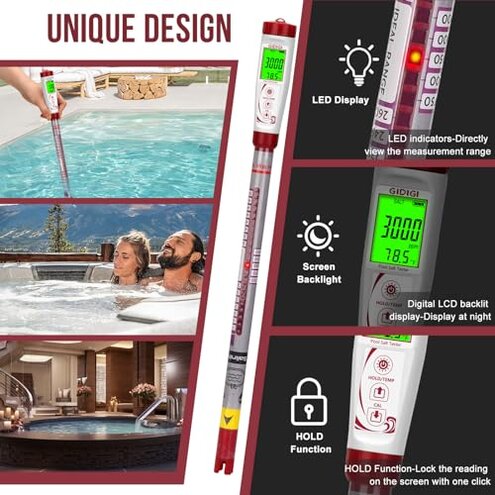
- Early sign: LED probe cues are helpful but insufficient without careful positioning.
- Frequency tier: A secondary complaint across both novice and experienced buyers.
- Cause: The long probe requires deliberate angle and depth control during testing.
- Impact: Testing takes longer and needs two hands or a helper.
- Attempted fixes: Users tape a depth guide or test in a cup instead of in-pool probing.
- Hidden cost: Extra O-rings and time spent recalibrating are commonly needed.
- Category contrast: More upkeep than most mid-range salt meters, which are more plug-and-play.
Illustrative excerpts
Illustrative: "Readings jump every time I dip it, even after calibration." — reflects a primary pattern.
Illustrative: "Water got inside the probe after a few tests." — reflects a secondary pattern.
Illustrative: "Needed the calibration fluid to get any believable numbers." — reflects a primary pattern.
Illustrative: "Instructions didn't warn about immersion depth limits." — reflects an edge-case pattern.
Who should avoid this
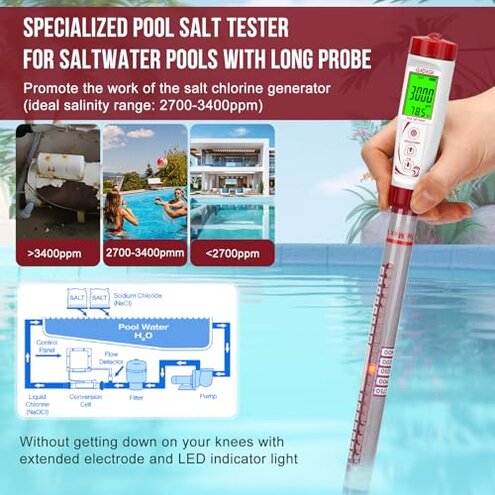
- Critical users: Avoid if you need precise pool or spa monitoring for safety reasons.
- Low-maintenance buyers: Avoid if you want a set-and-forget tester.
- Frequent testers: Avoid if you test daily, since calibration and depth care add time.
Who this is actually good for
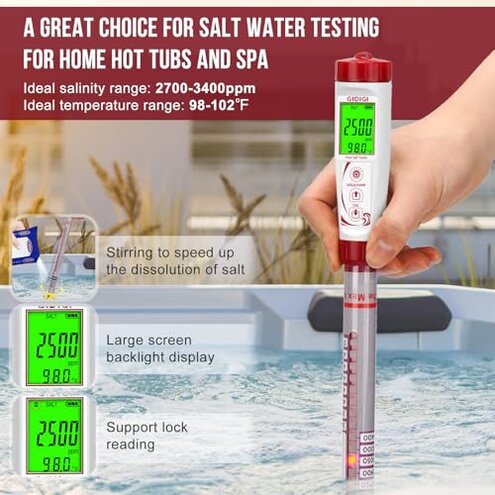
- Hobby users: Good if you accept occasional rechecks and can tolerate calibration steps.
- Budget buyers: Good if you want a cheap digital readout and can replace O-rings as needed.
- Non-critical pools: Good for backyard pools where small reading shifts are acceptable.
Expectation vs reality
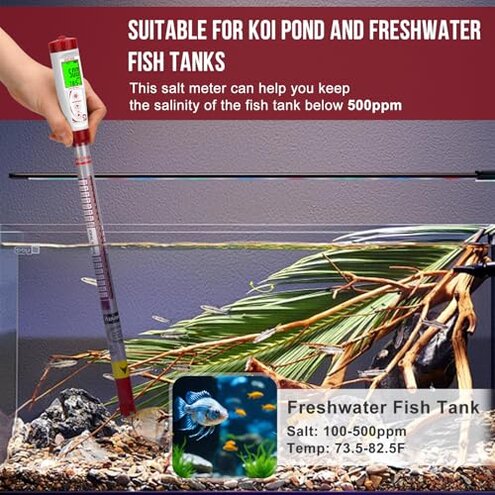
Expectation: Reasonable for this category is a digital meter that holds calibration for weeks.
Reality: This unit often needs frequent recalibration and cautious handling, raising ongoing cost and effort.
Expectation: Reasonable for pool testers is clear depth guidance in the manual.
Reality: The manual is brief and does not emphasize the 13in immersion limit, which can cause leaks.
Safer alternatives
- Choose sturdier probes: Look for testers with sealed probe housings to avoid water intrusion.
- Longer calibration life: Prefer models advertised with multi-week calibration stability.
- Clear handling guides: Pick brands with detailed manuals and depth markers for the probe.
- Replaceable parts: Buy units with easy O-ring replacement kits included or widely available.
The bottom line
Main regret: The combined accuracy drift and probe seal issues cause the most buyer regret.
Why worse: These failures require more maintenance and caution than is normal for mid-range salt meters.
Verdict: Avoid this model if you need reliable, low-maintenance salt readings for safety-critical pools.
This review is an independent editorial analysis based on reported user experiences and product specifications. NegReview.com does not sell products.