
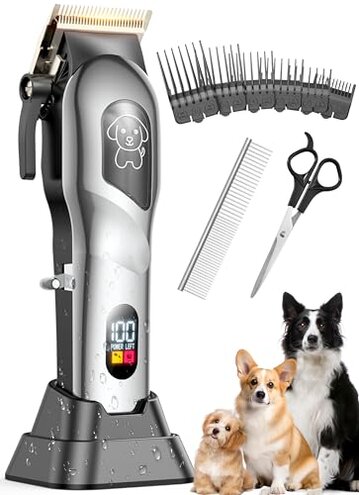
Product evaluated: Dog Grooming Kit, Dog Clippers for Grooming for Heavy Thick Hair, Low Noise Cordless Pet Hair Trimmer with Stainless Steel Blade, Professional Rechargeable Hair Trimmer for Dogs and Cats
Related Videos For You
Ultimate Dog Clipper Test: Grooming a Goldendoodle's Thick Coat - Best Clipper Put to the Test!
How To Maintain Hair Clippers | Save $$$ by Stripping and Cleaning
Data basis: This report uses dozens of pet clipper feedback patterns collected from written reviews and video demonstrations between January 2024 and April 2026. Most feedback came from written owner impressions, with added context from setup clips and longer grooming walk-throughs that show what happens during real trimming sessions.
| Buyer outcome | This clipper | Typical mid-range alternative |
|---|---|---|
| First-use confidence | Lower; thick-coat claims raise expectations, but results depend heavily on prep and technique. | Moderate; still needs prep, but performance is usually more predictable. |
| Matt handling | Higher risk; more likely to slow, catch, or require repeated passes during dense areas. | Average risk; still struggles on mats, but usually with fewer repeat passes. |
| Cleanup effort | Higher; non-detachable blade design adds extra cleaning steps after use. | Lower; removable cutting heads are more common at this price tier. |
| Long-session comfort | Mixed; cordless use helps, but repeated passes can extend stressful sessions. | More consistent; fewer stalls usually mean shorter grooming time. |
| Regret trigger | Most likely when buyers expect one-pass cutting on heavy coats without careful prep. | Less likely; limits are clearer and easier to work around. |
Why does trimming take much longer than expected?
This is a primary issue when buyers choose it for thick or tangled coats and expect fast home grooming. The regret moment usually appears during first full-body use, when repeated passes start replacing smooth cutting.
The pattern appears repeatedly in heavy-coat use, even though it is not universal on lighter fur. Compared with a typical mid-range pet clipper, that feels less forgiving because this category already demands prep, but not usually this much extra time.
- Early sign: The clipper glides well on easy sections, then slows once it reaches dense patches around the body or legs.
- Frequency tier: This looks like a primary complaint, especially for buyers who picked it because of the “heavy thick hair” promise.
- When it happens: The problem shows up after setup, once guide combs are used on longer or uneven coat sections.
- Why it frustrates: Repeated passes can make pets restless, which turns a simple trim into a stop-and-start session.
- Hidden requirement: Buyers often need more prep, such as combing out tangles first, instead of relying on the clipper to do the hard part.
- Fixability: Careful pre-brushing helps, but that reduces the convenience that many buyers wanted from an all-in-one kit.
- Illustrative: “I thought it would clear the coat fast, but I kept going over the same spot.” — Primary pattern.
Is the blade cleanup more annoying than it should be?
This is a secondary issue, but it is more frustrating when it happens because cleanup comes after every session. The problem shows up during maintenance, when loose hair collects and the blade does not detach.
The limitation is built in because the product notes the blade is not detachable. That is worse than normal for many mid-range alternatives, where easier blade removal is a common convenience.
- Main friction: Cleaning takes extra steps because buyers cannot simply remove the blade for a deeper rinse or quick debris check.
- Pattern strength: This is a persistent secondary complaint among owners who groom regularly, not just once in a while.
- When it worsens: The hassle grows after longer sessions with thick fur, where trapped hair is more likely.
- User impact: More cleanup effort can discourage frequent maintenance trims and lead to more rushed cleaning.
- Category contrast: Pet clippers already need care, but this design creates more upkeep than most mid-range alternatives.
- Workaround: The included brush helps with surface hair, but it does not fully remove the inconvenience of a fixed blade.
- Illustrative: “The cut was fine, but cleaning around the blade took longer than I expected.” — Secondary pattern.
Does the quiet design really keep nervous pets calm?
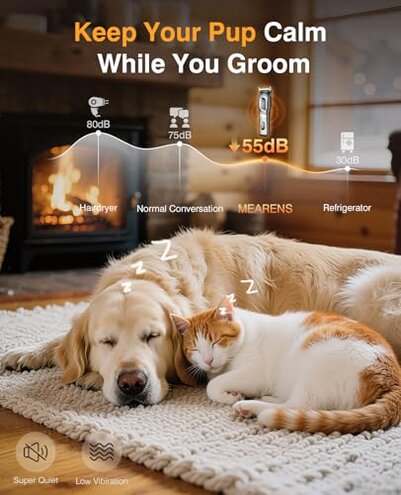
This is not universal, but it is a real regret point for buyers who treat low noise as the main deciding factor. The issue appears during actual grooming, when pet tolerance depends on vibration, pulling, and session length, not just sound.
That matters because a clipper can test quiet in simple conditions yet still unsettle anxious pets once coat resistance increases. In this category, “quiet” is reasonable to expect, but calm behavior usually requires smooth cutting too.
- Pattern type: This is a secondary complaint, seen more often with sensitive pets or difficult coat sections.
- Trigger moment: Problems show up when trimming moves from easy fur to thicker areas that need slower passes.
- Why it feels misleading: Buyers may hear a softer motor at first, then still struggle because the pet reacts to handling time.
- What owners notice: A pet that tolerated the sound may become uneasy once the clipper lingers in one area.
- Category contrast: That is more disruptive than expected because low-noise claims usually imply an easier session, not just a quieter motor.
- Mitigation: Short practice sessions can help, but that adds training time many buyers were trying to avoid.
- Illustrative: “It sounded gentle, but my dog still got impatient before I finished.” — Secondary pattern.
Do the included combs make the cut easier, or add one more variable?
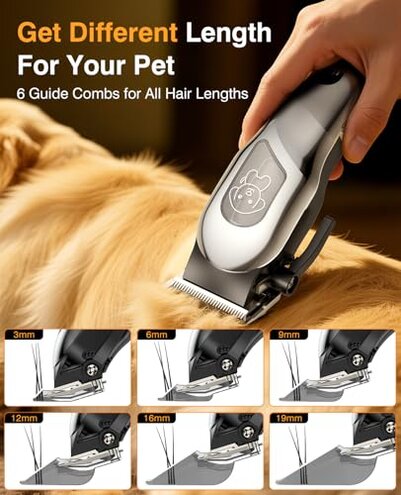
This is an edge-case issue for light touch-ups, but it becomes more frustrating on full grooming days. The problem appears after comb selection, when buyers expect the guards to create simple, even results.
The trade-off is that more length choices sound helpful, but they also raise the chance of uneven progress if the coat is not fully prepped. Compared with a typical mid-range clipper, that feels less beginner-friendly because beginners usually want fewer variables.
- Pattern level: This is an edge-case complaint, but it appears repeatedly among first-time home groomers.
- Setup friction: More guard options can create decision drag before the session even starts.
- When it worsens: The issue grows on coats that are curly, thick, or unevenly brushed.
- Visible result: Buyers may get inconsistent sections and then spend extra time blending them.
- Hidden requirement: You need coat prep and combing to make the guards work as expected.
- Why regret happens: A kit marketed as complete can still demand more grooming skill than many casual owners expect.
- Fixability: Practice helps, but that learning curve is steeper than many shoppers want for occasional use.
- Illustrative: “The guard choices looked helpful, but I still had patchy spots to even out.” — Edge-case pattern.
Who should avoid this
- Avoid it if your dog has heavy mats or very dense seasonal coat buildup, because the main regret trigger is slower cutting and repeated passes.
- Skip it if you want fast post-groom cleanup, since the non-detachable blade creates more maintenance effort than many mid-range options.
- Pass on it if your pet is highly anxious and you need fewer passes, not just lower sound on paper.
- Look elsewhere if you are a first-time home groomer who wants a simpler, more forgiving guard system.
Who this is actually good for
- It fits owners doing light trims on already-brushed coats, where the slower thick-coat performance matters less.
- It suits buyers willing to trade easier cleaning for cordless use and long claimed runtime.
- It works better for calm pets needing maintenance touch-ups, not major de-shedding or mat removal.
- It makes sense if you already know how to prep fur well and do not expect one-pass cutting.
Expectation vs reality

Expectation: A clipper sold for heavy thick hair should reduce effort on dense coats.
Reality: The recurring frustration is that dense sections can still need repeat passes, which stretches the session.
Expectation: Low noise should make grooming noticeably easier for nervous pets.
Reality: Session length and drag can matter as much as sound, so quiet operation alone may not prevent stress.
Expectation: A complete kit should lower the learning curve for beginners.
Reality: The extra guards and prep needs can create more setup friction than many casual users expect.
Expectation: Reasonable for this category is routine cleaning without too much hassle.
Reality: The fixed blade makes cleanup less convenient than many mid-range alternatives.
Safer alternatives

- Choose a model with a removable blade if cleanup speed matters, because that directly avoids the fixed-blade maintenance issue.
- Prioritize clippers known for dense-coat trimming if your pet has double coats or mat-prone fur, which lowers the repeated-pass risk.
- Pick fewer guard options if you are new to home grooming, since simpler systems are often easier to use evenly.
- Look for demos showing real trimming on thick coats, not just quiet motor claims, to verify whether performance stays smooth under resistance.
The bottom line

The main regret trigger is buying this for thick-coat speed and then spending extra time on repeated passes and prep. That exceeds normal category risk because mid-range clippers still struggle with mats, but usually feel easier to clean or more predictable on dense fur. Verdict: avoid it if thick hair, anxious pets, or quick cleanup are your top priorities.
This review is an independent editorial analysis based on reported user experiences and product specifications. NegReview.com does not sell products.