
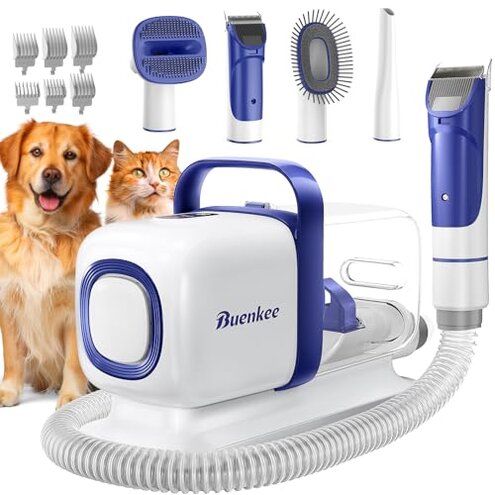
Product evaluated: buenkee Dog Grooming Kit with Vacuum, 15000Pa Pet Hair Clipper and Shedding Brush, 50dB Low Noise, 2L Capacity, White
Related Videos For You
How to use the Pet grooming kit on your Dyson cordless vacuum
Data basis This report summarizes dozens of buyer comments gathered from written feedback and short video-style demonstrations collected from 2024 to 2026. Most input came from written reviews, with supporting context from visual setup and use examples, which helps separate first-impression praise from problems that show up during actual grooming sessions.
| Buyer outcome | buenkee kit | Typical mid-range alternative |
|---|---|---|
| Mess control | Good if everything stays attached, but cleanup risk rises when grooming flow breaks. | Usually steadier hair capture during longer brushing sessions. |
| Pet comfort | Can be calmer at first because noise is advertised as low. | Similar if the pet already tolerates vacuums. |
| Setup friction | Higher-than-normal risk because the system works best only when all parts and steps are used correctly. | More forgiving for quick touch-up trims. |
| Long-session ease | More disruptive when coat volume is heavy or grooming takes longer. | Usually less fiddly for routine shedding control. |
| Regret trigger | Buying it to save time, then finding it adds handling and adjustment during use. | Lower regret if expectations are simple coat maintenance. |
Want a fast cleanup, but end up managing the machine?
This is a primary issue. The biggest regret moment is expecting a one-step groom-and-clean process, then realizing the vacuum setup can add extra handling. That trade-off feels sharper than expected because the product is sold around convenience.
The pattern appears repeatedly during full grooming sessions, especially when switching between brushing, clipping, and emptying. Compared with a typical mid-range pet grooming vacuum, it feels less forgiving if you want a quick start.
- When it shows up: Commonly reported after setup, once buyers move from unboxing to actual coat work.
- Why it frustrates: The vacuum-only design means you cannot treat it like simple clippers, which is a hidden requirement for some buyers.
- Real impact: Instead of one smooth session, grooming can become stop, adjust, continue.
- Category contrast: Some setup is normal here, but this feels more involved than typical for buyers expecting casual home trims.
- Fixability: It improves if you commit to a dedicated grooming routine, but not if you want spontaneous touch-ups.
Does the low-noise promise still matter if your pet dislikes the process?
This is a secondary issue. Quiet operation helps on paper, but pet acceptance is still not guaranteed. That disappointment hits early because many buyers choose this type mainly to reduce pet stress.
The pattern is persistent but not universal. It shows up most on first use and during longer sessions when a pet notices the hose, suction feel, or handling changes. That makes it more frustrating than expected for this category, because lower noise alone often does not solve grooming resistance.
What buyers notice is that calm sound does not always equal calm grooming. A pet may tolerate the motor but still resist the brush, clippers, or vacuum sensation once fur removal starts.
Why this exceeds baseline is simple: mid-range alternatives usually make fewer promises about creating a stress-free session. When this one falls short, the expectation gap feels bigger.
- Early sign: Your pet accepts the machine nearby, then pulls away during contact.
- Frequency tier: Secondary pattern, less common than setup friction but still repeatedly mentioned in pet-use context.
- Worse conditions: It gets harder during first sessions or with pets already nervous about grooming tools.
- Buyer mistake: Some shoppers may assume 50dB means near-effortless pet acceptance.
- Workaround: Slow desensitizing can help, but that adds time and patience before the product becomes useful.
- Regret point: If you bought it mainly for an anxious pet, the result can feel less reliable than expected.
Need something simple for heavy shedding, not another thing to maintain?
This is another primary issue. The large 2L bin sounds convenient, but buyers can still run into cleanup effort when grooming a lot of loose fur. The problem is not just capacity. It is the extra maintenance rhythm during messy coat work.
- Pattern: Commonly reported in longer brushing sessions where loose undercoat builds quickly.
- Usage moment: It shows up during daily-use grooming, not just at unboxing.
- Why it feels worse: In this category, buyers accept some emptying, but not ongoing interruption when the goal was cleaner grooming.
- Trigger: Thick coats or shedding season can make the process feel more hands-on than expected.
- Cause: The tool combines grooming and collection, so when one part slows you down, the whole workflow stalls.
- Impact: Sessions can take longer than planned, which matters with restless pets.
- Attempted fix: Shorter sessions help, but then you may need multiple rounds to finish the coat.
- Category contrast: Many mid-range alternatives are not perfect, yet they often feel easier to manage for routine shedding control.
Buying this to replace grooming visits, then finding it is better for maintenance only?
This is an edge-case issue for some homes, but it becomes highly frustrating when it happens. The regret comes from expecting a near-complete home grooming station at a modest price, then learning it works better as an in-between tool.
- Scope: Seen across multiple feedback styles, especially where buyers expected professional-style results.
- When: It becomes obvious after a few full-body sessions, not during the first quick trim.
- Severity cue: Less frequent than setup complaints, but more disappointing when expectations are high.
- Hidden requirement: You need a pet that tolerates grooming and an owner willing to learn a process, not just turn it on.
- Trade-off: It may reduce salon visits, but may not fully replace them for shape, speed, or stress-free results.
- Why worse than baseline: A typical mid-range kit is usually judged as maintenance gear, while this one can create bigger replacement expectations.
- Fixability: Best results come when buyers use it for coat upkeep, not full transformation grooming.
Illustrative: “I wanted less mess, but the session still took more work than expected.”
Pattern: This reflects a primary convenience gap.
Illustrative: “My dog tolerated the sound, just not the brushing and suction feeling.”
Pattern: This reflects a secondary pet-acceptance mismatch.
Illustrative: “Good idea for maintenance, but not my replacement for grooming appointments.”
Pattern: This reflects an edge-case expectation problem.
Illustrative: “It works better when I plan the whole session, not quick touch-ups.”
Pattern: This reflects a primary hidden-routine requirement.
Who should avoid this
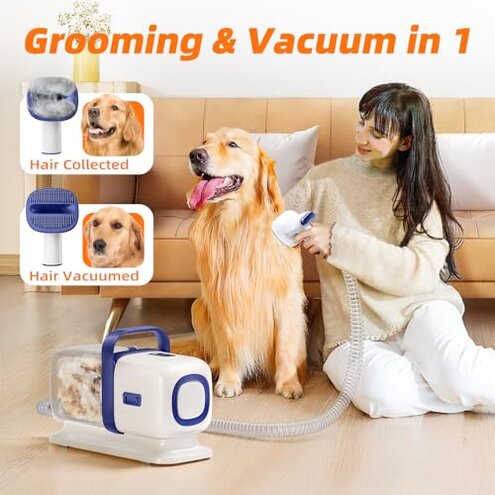
- Avoid it if you want true grab-and-go clipping, because the vacuum-linked workflow adds more steps than many buyers expect.
- Avoid it if your pet is highly grooming-sensitive, since low motor noise does not reliably solve contact or suction resistance.
- Avoid it if you are buying mainly to replace professional grooming, because that expectation appears less reliable than a normal maintenance use case.
- Avoid it if heavy seasonal shedding is your main problem and you dislike stopping to manage the process mid-session.
Who this is actually good for

- Good fit for owners doing planned maintenance sessions who accept some setup in exchange for less flying hair.
- Good fit for calmer pets already comfortable around grooming tools, where the low-noise design can still be a useful advantage.
- Good fit for apartment users who care more about keeping loose fur contained than achieving salon-like finish speed.
- Good fit for buyers willing to tolerate routine learning and use it between professional grooming visits.
Expectation vs reality
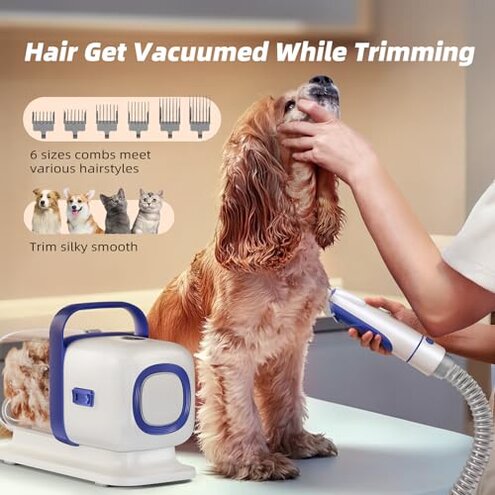
Expectation: A reasonable hope for this category is less mess with similar effort.
Reality: The cleaner setup can still require more handling effort than expected during real grooming.
- Expectation: 50dB means an easier session for anxious pets.
- Reality: Noise is only one factor, and contact tolerance still decides the outcome.
- Expectation: A 2L bin means minimal interruption.
- Reality: Longer or heavier-shedding sessions can still feel maintenance-heavy.
- Expectation: One kit can replace most grooming visits.
- Reality: It looks safer as a maintenance tool than a full replacement for many homes.
Safer alternatives
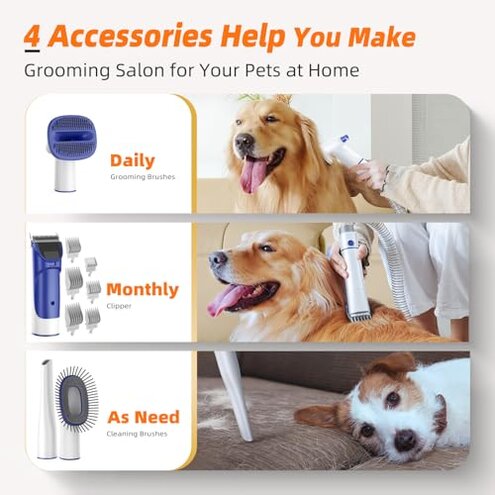
- Choose simpler systems if you mainly do quick trims, because stand-alone clippers avoid the hidden vacuum dependency.
- Prioritize pet tolerance over noise claims by looking for kits shown in slow-introduction use, not just quiet-motor marketing.
- Shop for workflow ease if your dog sheds heavily, since easier emptying and less fiddly handling reduce session fatigue.
- Buy for maintenance rather than salon replacement unless you already groom confidently at home.
- Look for forgiving operation if multiple family members will use it, because systems with fewer required steps usually create less regret.
The bottom line
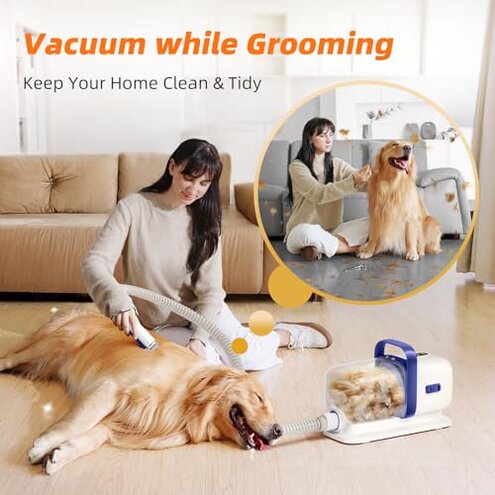
The main regret trigger is buying this for easy, time-saving grooming and then discovering the process can feel more involved than a typical mid-range alternative. That risk is higher than normal because the convenience promise is central to the product, yet the real benefit depends heavily on pet tolerance, setup discipline, and session type. Skip it if you want simple clipping or a near-salon replacement. Consider it carefully only if you want controlled maintenance grooming and can accept extra process.
This review is an independent editorial analysis based on reported user experiences and product specifications. NegReview.com does not sell products.