
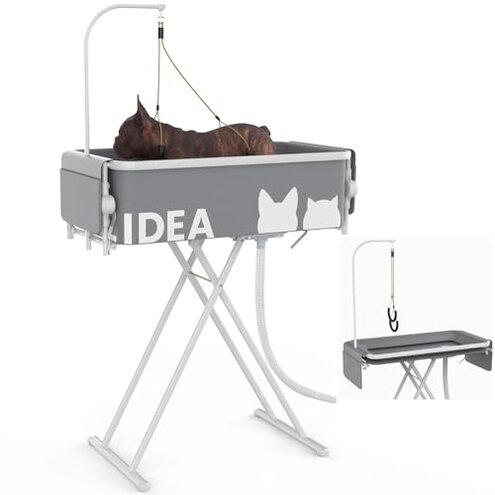
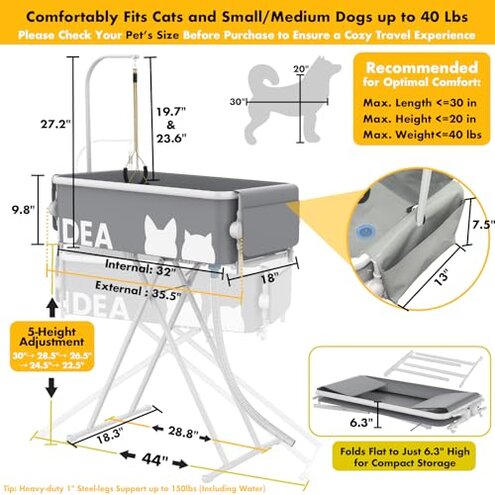
Product evaluated: PAWZIDEA 2-in-1 Portable Dog Bathtub & Grooming Table, 33" Foldable Pet Washing Station for Small Medium Dogs Cats, Elevated Tubs for Bathing Shower Indoor Outdoor, 5 Height Adjustable, Storage Pocket
Related Videos For You
BarkBath Review: Does This Portable Dog Bath Work?
Dog Grooming Tables and Straps for the Do-It-Yourself Dog Groomer
Data basis: This report uses dozens of buyer comments gathered from written feedback and photo or video-backed demonstrations collected from 2024 to 2026. Most feedback came from written experiences, with added support from visual setup clips showing real bath-time use, storage, drainage, and pet handling problems.
Comparative risk snapshot
| Buyer outcome | PAWZIDEA 2-in-1 | Typical mid-range alternative |
|---|---|---|
| Setup ease | More steps because height changes, hose routing, and restraint placement matter before filling. | Usually simpler with fewer adjustments that affect daily use. |
| Stability feel | Higher risk of feeling less secure during active pets or side-to-side movement. | More forgiving for basic bathing if the pet shifts often. |
| Drain cleanup | More finicky when the drain point is not lower than the tub base. | Typically easier if the outlet design works in more bathroom layouts. |
| Grooming mode | Useful but conditional because restraint reach and table confidence can depend on pet size and movement. | Usually less flexible, but often simpler if bought only for one job. |
| Regret trigger | Bath takes longer than expected when draining, securing, and keeping the tub steady all need extra attention. | Lower regret if you want a straightforward wash station more than a 2-in-1 design. |
Top failures
Does it feel less stable once your pet starts moving?
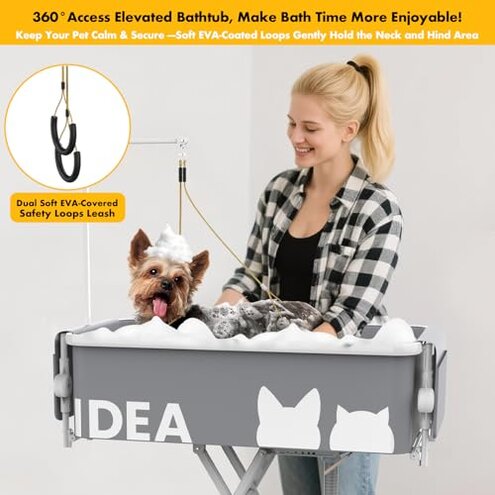
This is a primary issue and among the most disruptive complaints for this type of raised pet tub. The regret moment usually appears during the first real bath, when a wet dog shifts weight and the owner realizes the setup needs more control than expected.
The pattern appears repeatedly, though not for every buyer. It tends to feel worse with wiggly pets, quick repositioning, or when the tub is used inside another bathtub or on a slick surface.
Compared with a typical mid-range raised bath station, this feels less forgiving. A normal buyer expects some movement from a foldable frame, but not enough to make them pause mid-wash.
Illustrative: “It works until my dog turns, then I stop trusting the setup.”
Pattern: This reflects a primary complaint.
- Early sign: You may notice slight side movement during setup, before adding water or lifting the pet in.
- When it shows up: The concern grows during bathing, especially when rinsing, reaching for soap, or turning the pet.
- Frequency tier: This is a primary pattern, reported more often than minor cosmetic complaints.
- Why it frustrates: The tub can still function, but the owner has to stay more alert than expected.
- What buyers try: People commonly lower the height, reposition the legs, or choose calmer pets only.
- Fixability: Partly fixable, but the need to manage pet movement remains.
- Hidden cost: More attention means longer bath sessions and less one-hand convenience.
Is the drain easier in ads than in a real bathroom?
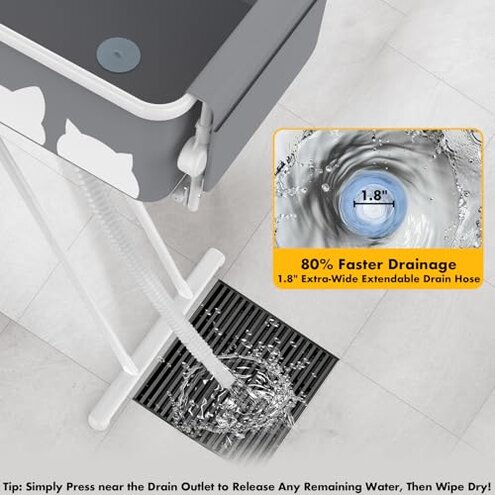
This is another primary issue, though slightly less universal than stability concerns. The frustration usually starts after setup, when owners realize the hose works best only if the drain route falls lower than the tub outlet.
The pattern is persistent across different home layouts. It gets worse in bathrooms where the tub wall, shower lip, or floor drain position forces water to travel awkwardly.
That matters more here than in many mid-range alternatives because the product promises quick-drain convenience. If you still need to press, tilt, or reroute, the time-saving pitch feels weaker than expected.
Illustrative: “Draining was the hardest part, not the washing.”
Pattern: This reflects a primary complaint.
- Core problem: Drain speed depends heavily on bathroom layout, not just the hose size.
- Usage moment: The annoyance shows up at the end of the bath, when cleanup should be easiest.
- Worsening condition: It becomes more noticeable with a fuller tub or when the outlet sits near level with the target drain.
- Hidden requirement: You may need a lower drain path or a bucket plan for predictable emptying.
- Buyer impact: Water can linger, adding extra wiping, pressing, and cleanup steps.
- Attempted workaround: Some owners remove parts of the drain setup or manually push remaining water out.
Do the restraints and grooming mode take more setup than expected?
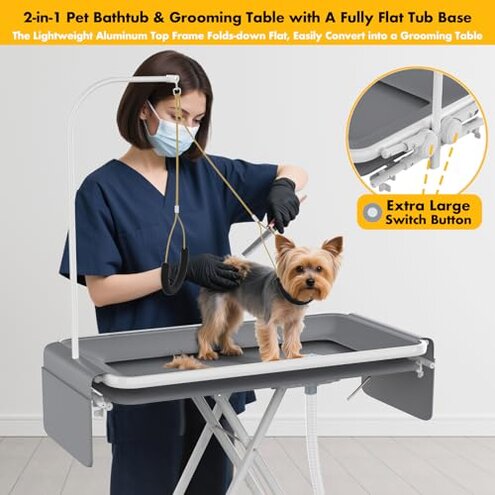
This is a secondary issue, less frequent than drain complaints but more frustrating when it happens. The regret usually appears during grooming conversion, when the owner expects quick switch-over and instead finds the restraint reach or positioning less convenient.
- Main trade-off: The 2-in-1 design adds flexibility, but also more setup judgment than a simple wash tub.
- Pattern signal: This issue is recurring among buyers who planned to use both bath and grooming modes regularly.
- Real-world moment: It shows up when trying to secure a pet that squirms, sits, or resists the arm position.
- Why it feels worse: A typical mid-range single-purpose tub may do less, but it often asks less from the owner.
- User-visible effect: Restraints may feel short or require extra planning, which interrupts the workflow.
- Extra requirement: Some setups may need an extension cord-style workaround mindset for better reach, which many buyers will not expect.
- Fixability: It is sometimes manageable if your pet is calm and already used to grooming.
- Best-case limit: Even then, it is not as grab-and-go as the feature list suggests.
Illustrative: “The table idea is smart, but securing my dog took extra fiddling.”
Pattern: This reflects a secondary complaint.
Does the foldable design create more compromise than convenience?
- Secondary pattern: The fold-flat design is convenient for storage, but it also brings more moving parts into normal use.
- When noticed: Buyers tend to notice this on first setup and again every time they unfold, adjust, and store it.
- Why it ranks lower: This is less severe than wobble or drainage, but it adds repeated friction.
- Category contrast: Foldable pet tubs usually involve some compromise, yet this one can feel more hands-on than mid-range alternatives.
- Daily impact: Height adjustment matters, because the product itself warns users to set height before adding water.
- Regret point: That means less flexibility once the bath starts, which can catch rushed owners off guard.
- Who feels it most: This bothers people who want a fast routine, not people willing to treat setup like a small station.
Illustrative: “Portable, yes, but not as quick as I hoped.”
Pattern: This reflects a secondary complaint.
Who should avoid this
- Avoid it if your dog twists, jumps, or leans hard during baths, because the stability concern is higher than normal for this category.
- Avoid it if your bathroom has a high tub wall or awkward drain position, because the drainage benefit depends heavily on layout.
- Avoid it if you want true one-step grooming conversion, because the restraint and setup demands can add extra fiddling.
- Avoid it if you need a very fast wash routine, because height setting, hose direction, and storage folding all add time.
Who this is actually good for
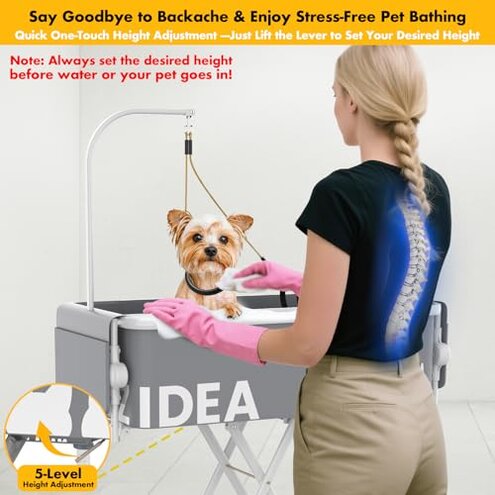
- Good fit for owners with calm pets under the stated size range who value back-saving height more than absolute sturdiness.
- Good fit if you have a friendly drain setup, such as a clear lower outlet path where the hose can empty without fighting gravity.
- Good fit for occasional use, where the extra setup feels acceptable because storage space matters more.
- Good fit if you specifically want one product for light bathing and light grooming, and can tolerate some setup learning.
Expectation vs reality
Expectation: A foldable raised pet tub should save your back without adding much stress.
Reality: This one can save your back, but movement control may demand more attention than expected.
Expectation: The quick-drain feature should make cleanup the easy part.
Reality: Drain performance depends a lot on your room layout, so cleanup may still involve manual help.
Expectation: A 2-in-1 design should replace separate bath and grooming gear.
Reality: The combo feature works best for patient pets and patient owners, not for quick daily handling.
Reasonable for this category: Some wobble is normal in foldable pet stations.
Worse-than-expected reality: The confidence gap can feel higher than normal once a wet pet starts shifting.
Safer alternatives
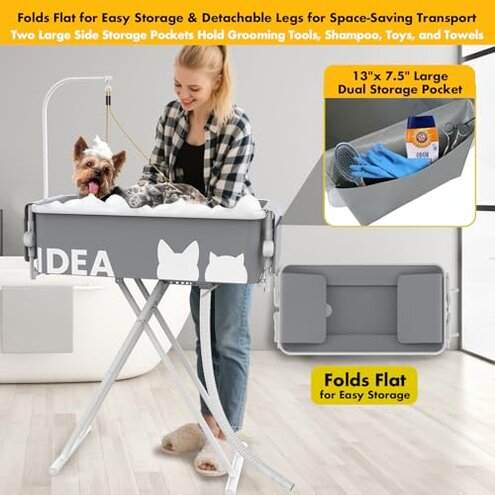
- Choose a wider-base tub if your pet moves a lot, because that directly lowers the stability risk described above.
- Pick a simpler drain design if your bathroom layout is tricky, especially if the outlet cannot sit clearly above the target drain.
- Buy separate tools if grooming matters as much as bathing, because a dedicated table often reduces restraint setup frustration.
- Look for fewer adjustments if you need fast routine baths, since every extra step becomes noticeable in weekly use.
The bottom line
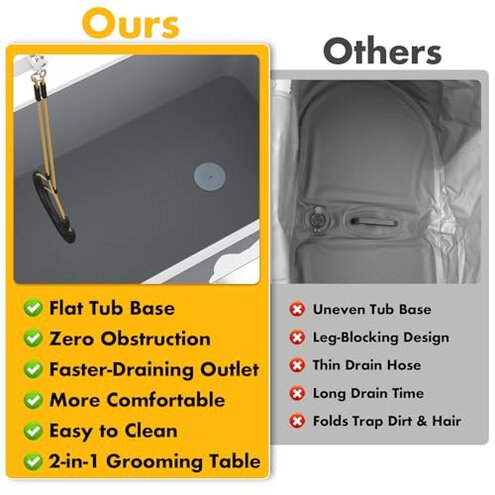
The main regret trigger is that the product asks for more setup control than many buyers expect, especially with stability and drainage. That exceeds normal category risk because these problems show up during the exact moments when pet owners need the setup to feel simple and secure. If you want low-fuss bathing, this is easier to skip than troubleshoot around.
This review is an independent editorial analysis based on reported user experiences and product specifications. NegReview.com does not sell products.