
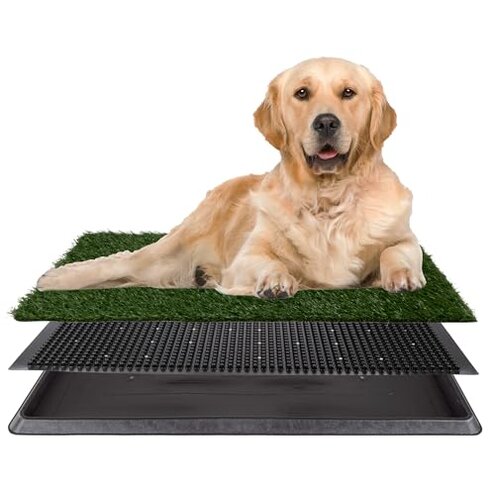
Product evaluated: Artificial Grass Puppy Pee Pad for Dogs and Small Pets - 20x30 Inch, Reusable 3-Layer Turf Pads for Dogs with Tray - Indoor and Outdoor Fake Grass Potty Pet Supplies by PETMAKER
Related Videos For You
The Porch Potty™ — The Original Grass Litterbox For Dogs
The Best Way to Remove Dog Urine Odour from Artificial Grass
Data basis for this report comes from analyzing dozens of buyer comments collected across written reviews and photo/video-backed feedback from the past 12 months. Most signals came from longer written complaints about daily use, supported by shorter media posts showing cleaning and setup outcomes. The focus here is on recurring negative patterns that tend to drive returns, second purchases, or training setbacks.
| Buyer outcome | This PETMAKER pad | Typical mid-range alternative |
| Odor control | Higher risk of lingering smell when used daily | Moderate odor with more forgiving materials and airflow |
| Leak containment | More finicky alignment; misses can reach floors | More tolerant of imperfect placement and angle |
| Cleaning effort | More steps than expected; needs frequent rinse cycles | Less hands-on if paired with washable liners or absorbent layers |
| Dog acceptance | Mixed; some dogs avoid the feel or edges | More consistent if texture is closer to real grass |
| Regret trigger | Smell + cleanup becomes a daily chore | Occasional deep clean, not constant troubleshooting |
Why does it start smelling even after you clean it?
Regret moment usually hits after a few days of regular indoor use when the pad still smells “cleaned but not clean.”
This is a primary issue that appears repeatedly, especially when the pad is used multiple times per day and can’t fully dry between uses.
When it shows up is during daily use and after rinse-cleaning, when trapped moisture can keep odor around.
Worse than typical for this category because many mid-range options are more forgiving if you miss a deep clean by a day.
- Early sign: the turf smells “fine” wet, then worse once it dries.
- Pattern: odor complaints are recurring, not a one-off defect story.
- Trigger: heavy use with limited ventilation makes smell more persistent.
- Impact: buyers report avoiding the room or moving the pad outside.
- Hidden need: it often requires a scheduled deep-clean, not just quick rinses.
- Fixability: better drying and more frequent wash cycles can help, but adds routine work.
- Trade-off: reusable savings can get eaten by the time cost of keeping it fresh.
Is the “three-layer” design actually mess-proof on real floors?
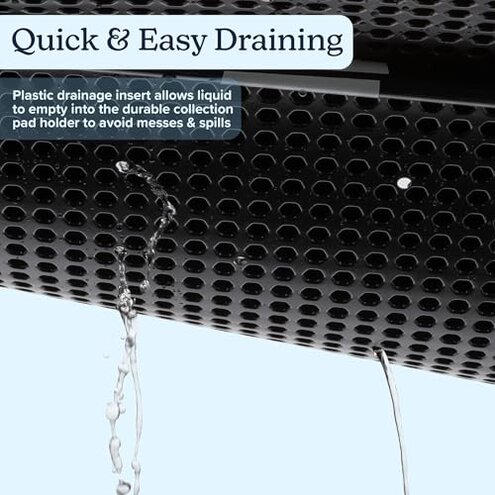
- Severity: leaks are a primary complaint because they can reach hardwood or carpet.
- When: issues show up during first setup and the first few accidents.
- Pattern: leakage is persistent across multiple feedback sources, but not universal.
- Worsens: off-center aiming, edge hits, or an uneven surface increases misses.
- Cause: the system can be less forgiving if layers shift or don’t sit flat.
- Buyer impact: extra mopping and anxiety about “trusting” it indoors.
- Mitigation: many buyers add a waterproof mat underneath, which adds cost and space.
- Category contrast: mid-range trays often tolerate sloppy placement better than this one.
Will your dog actually use it, or avoid it?
- Reality: acceptance issues are a secondary problem but can derail training fast.
- When: refusal tends to appear right away, especially with nervous puppies.
- Pattern: avoidance shows up repeatedly, but depends heavily on the dog.
- Worsens: if the pad smells from prior use, some dogs avoid it more strongly.
- Behavior: some dogs step on it, then walk off to finish nearby.
- Training cost: buyers report losing time retraining after a few messy misses.
- Workaround: adding attractant sprays or swapping turf can help, but adds steps.
- Category contrast: many mid-range “grass” pads feel closer to outdoors under paws.
Does the cleaning routine become a bigger chore than you expected?
- Time sink: cleanup burden is a primary regret driver for indoor daily use.
- When: it becomes obvious after repeated use when rinsing feels constant.
- Pattern: the “easy clean” claim is not universal in real households.
- Worsens: tight schedules and small bathrooms make washing more annoying.
- Hidden requirement: you need a place to drip-dry the turf without stinking up the home.
- Practical impact: buyers describe rotating towels, using a tub, and disinfecting more often.
- Category contrast: many mid-range setups reduce handling by using washable liners or absorbent inserts.
Illustrative excerpt: “I rinse it, but the smell comes back by the next day.”
Pattern note: This matches a primary odor persistence theme during daily use.
Illustrative excerpt: “It works if it’s perfectly flat, but my dog hits the edge.”
Pattern note: This reflects a primary leak/aiming sensitivity issue after setup.
Illustrative excerpt: “My puppy steps on it and then goes next to it.”
Pattern note: This aligns with a secondary acceptance and training friction theme.
Illustrative excerpt: “Cleaning is easy, but drying it inside is the hard part.”
Pattern note: This maps to a primary hidden drying requirement.
Illustrative excerpt: “I ended up putting another mat under it to feel safe.”
Pattern note: This shows a secondary mitigation cost that appears repeatedly.
Who should avoid this
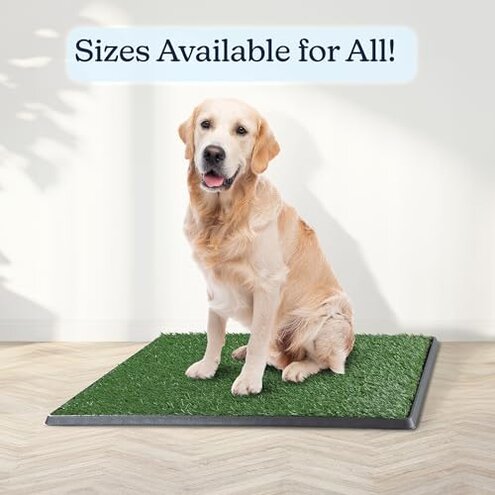
- Apartment dwellers who cannot ventilate or dry turf well, because odor persistence is a primary complaint.
- Hardwood owners who need true containment, because edge misses and alignment sensitivity are more disruptive than typical.
- Busy schedules that need low-touch cleanup, because frequent rinsing becomes a routine burden.
- Training-sensitive pups that get spooked by textures, because acceptance variability can cause near-pad accidents.
Who this is actually good for
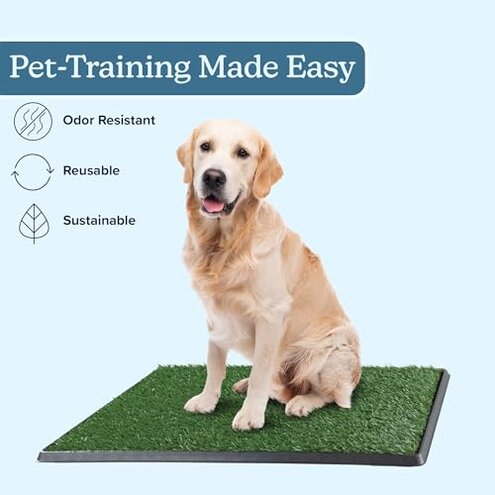
- Balcony users who can rinse and air-dry outdoors, accepting the extra cleaning steps in exchange for reuse.
- Short-term needs like post-surgery potty breaks, tolerating odor risk for limited time.
- Owners who can supervise early, correcting aim and positioning to reduce edge spill problems.
- People already set up with a waterproof under-mat, accepting the added accessory to manage leak anxiety.
Expectation vs reality
| Expectation | Reality |
| Reasonable for this category: rinse it and you’re done. | Often worse: rinse helps, but many buyers report odor returns without deeper cleaning and drying. |
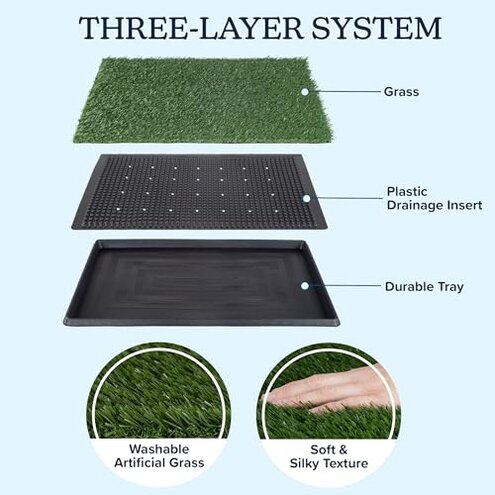
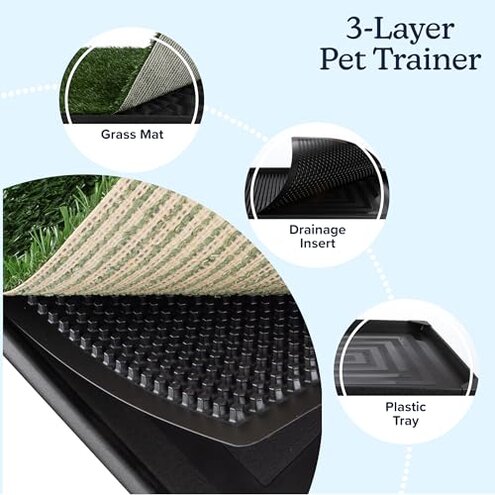
| Simple three-layer design prevents messes. | Finicky: alignment and edge hits can still lead to floor cleanup. |
| Training aid makes indoor potty easy. | Mixed: some dogs hesitate, and hesitation increases near-pad accidents. |
Safer alternatives
- Choose a system with a more sealed rim or higher edge walls to reduce edge-miss leaks.
- Look for turf that dries faster or includes an easier swap option to neutralize odor persistence.
- Prefer washable liner-based setups if you need quick cycles, cutting the handling time that drives regret here.
- Plan for a waterproof base mat if you still want turf, directly mitigating the floor damage risk.
- If acceptance matters, consider a pad with a more natural feel or a smaller starter size to reduce refusal during training.
The bottom line
Main regret trigger is the combination of lingering odor and a cleaning routine that feels more demanding than the “easy clean” promise.
Category risk is higher than normal because leaks and smell both show up during routine daily use, not rare edge cases.
Verdict: avoid it if you need low-maintenance indoor potty support, unless you can rinse and dry it outdoors consistently.
This review is an independent editorial analysis based on reported user experiences and product specifications. NegReview.com does not sell products.