
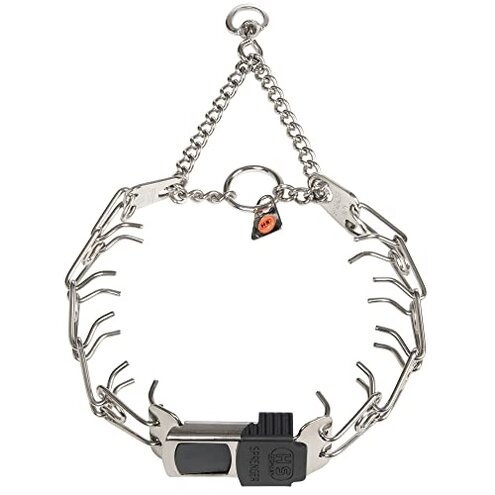
Product evaluated: Herm Sprenger Dog Training Prong Collar with Quick Release Cliclock Buckle & Swivel Ring | Adjustable Length German Made Stainless Steel Collar for Small to Medium Dogs Up to 15" Neck (2.25mm Prongs)
Related Videos For You
How to use the Prong Collar To Train Your Dog
Data basis: This report synthesizes dozens of written reviews and video demonstrations collected between 2020 and 2026, with most feedback coming from written reviews and supported by video clips and Q&A posts.
| Outcome | Herm Sprenger (this product) | Typical mid-range alternative |
|---|---|---|
| Fit & adjustability | Tighter sizing controls but requires link removal and precise fit, a common setup pain reported by buyers. | More forgiving fit with simpler buckles that often require less fiddling at first setup. |
| Safety / accidental release | Mixed reports of the quick-release buckle being easier to open or accidentally jostled, appearing less forgiving than expected. | Lower accidental risk on many mid-range collars with tested snap buckles and clearer release feedback. |
| Hidden setup needs | Extra links sold separately and link-removal skill required, a hidden requirement some buyers missed before purchase. | Usually complete out of the box with fewer hidden parts to add or remove. |
| Maintenance effort | High upkeep reported by some users because of careful fit checks and occasional adjustments after use. | Lower maintenance in many mid-range options that are less sensitive to small fit changes over time. |
| Regret trigger | Fit mistakes or loose buckle often cause immediate regret during first walks, a more disruptive outcome than expected in this category. | Smaller regret surface — fit or buckle errors typically easier to fix without safety concerns. |
Top failures
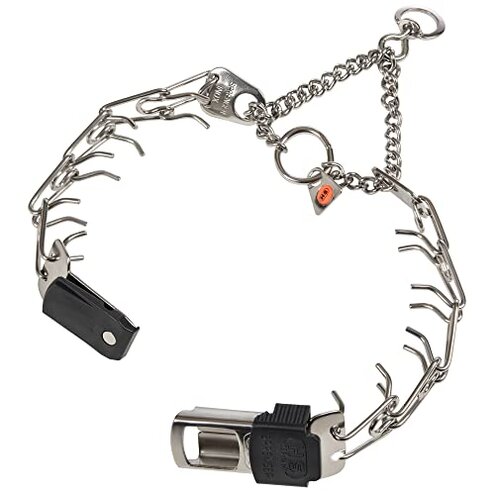
Is the collar hard to size correctly, and does that create immediate safety risk?
Regret moment: Many buyers report a difficult first-fit experience that creates immediate worry about control and comfort.
Pattern: This is a recurring complaint that appears repeatedly in written feedback, especially from first-time prong collar users.
When it shows up: The problem appears at first use and after removing or adding links during repeat adjustments.
Why worse than expected: Unlike many mid-range collars that are forgiving, this product’s requirement for precise link removal makes fit mistakes more disruptive and harder to fix quickly.
Will the quick-release buckle open unexpectedly?
- Early sign: A small number of buyers report the buckle feeling less secure during hand checks, a less frequent but persistent signal.
- Frequency tier: This is a secondary issue that appears repeatedly enough to notice in feedback but is not universal.
- Usage anchor: Reports cluster during active walks or when the dog works through brush and gear rubs the buckle.
- Cause: The quick-release design trades a bit of secure feedback for convenience, which some users find unacceptable.
- Fix attempts: Buyers report adding tape or swapping to a backup leash connection to reduce accidental openings.
Does setup require hidden parts or special skills?
- Hidden requirement: Extra links are sold separately, a commonly reported oversight that forces an extra purchase before fitting larger necks.
- Early sign: New buyers notice the collar is too short or too long only after trying it on the dog for the first time.
- Frequency tier: This is a primary issue for buyers who need quick sizing changes; it appears repeatedly in setup complaints.
- When it shows up: The issue appears during initial fitting or when switching between dogs or seasons.
- Impact: Extra time and cost are added because links must be ordered, removed, or reattached carefully.
- Fixability: Fixable with spare links and basic tools, but only after extra effort and cost.
Does the collar demand more maintenance and attention than expected?
- Early sign: Owners report checking and re-tightening after several walks, a pattern that appears across multiple feedback sources.
- Cause: The need for a snug fit behind the ears makes the collar sensitive to weight changes, coat thickness, and movement.
- Frequency tier: This is a secondary-to-primary issue depending on daily use; it shows up more with heavy or frequent training sessions.
- When it worsens: Long sessions, frequent handling, or multiple dogs increase the frequency of adjustments.
- User impact: Requires more time each day than typical mid-range collars, which can feel like higher upkeep.
- Attempts: Some buyers switched to softer padding or used the collar only for short training sessions to reduce fuss.
- Category contrast: This product demands more hands-on care than many mid-range alternatives, leading to real regret for buyers seeking low-effort options.
Illustrative excerpts (not real quotes)
Illustrative: "Took too long to remove links and get a safe fit on my dog."
Pattern: This reflects a primary pattern about setup and hidden parts.
Illustrative: "Quick-release felt loose during our first walk in the woods."
Pattern: This matches a secondary pattern about buckle security in use.
Illustrative: "Needed to re-tighten after every training session; more upkeep than expected."
Pattern: This is a secondary pattern tied to maintenance and daily checks.
Who should avoid this
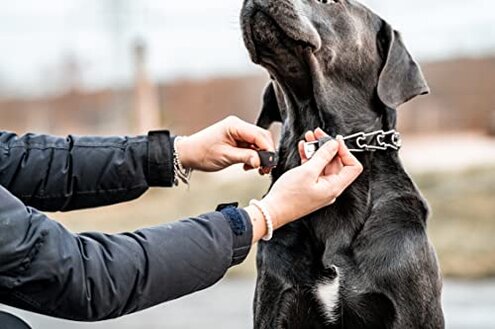
- Inexperienced handlers: If you are new to prong collars, the precise link adjustments and hidden extras raise the risk of unsafe fit.
- Low-maintenance buyers: Buyers who want a collar that needs little daily attention should avoid due to the higher upkeep burden.
- Those wanting plug-and-play gear: If you expect everything needed out of the box, the separate links requirement makes this a poor fit.
Who this is actually good for
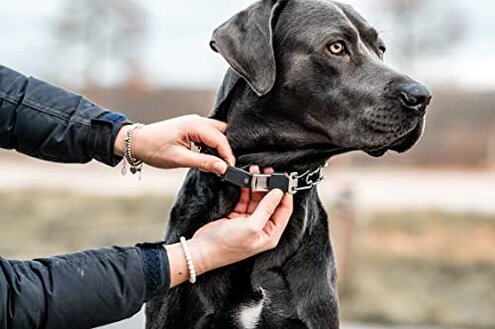
- Experienced trainers: Trainers who value precise corrections and can perform link adjustments will accept the fit fuss for control benefits.
- Single-dog homes with steady sizing: Owners who fit once and rarely change the collar will tolerate the initial setup work.
- Buyers prioritizing durable metal parts: If you prefer metal over nylon and accept extra care, the stainless construction can be an advantage.
Expectation vs reality
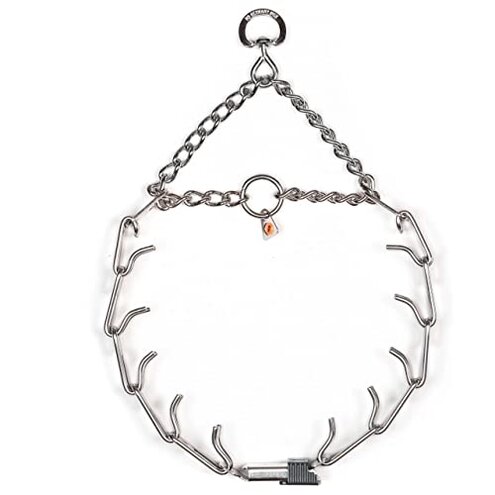
Expectation (reasonable for category): Buyers expect a prong collar to need careful fitting, as many similar collars require adjustment.
Reality: This model increases that friction with a quick-release that some find less secure and with links sold separately, creating higher-than-normal setup cost and time.
Category contrast: Compared with typical mid-range collars, the extra link handling and occasional buckle concerns lead to more frequent buyer regret.
Safer alternatives
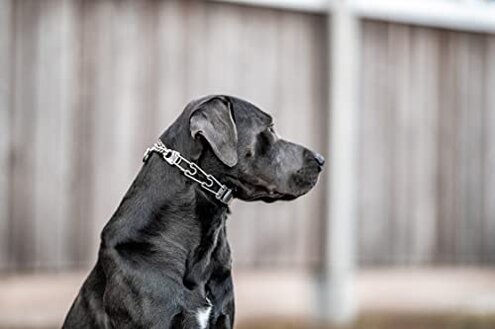
- Choose a forgiving buckle: Look for collars with a proven snap buckle to reduce accidental release risk during active use.
- Buy complete kits: Prefer products advertised as complete out of the box to avoid the hidden links purchase.
- Consider padded designs: If daily adjustments are a concern, pick padded or less-sensitive collars to lower maintenance needs.
- Seek trainer guidance: If you want a prong collar’s control, arrange a fitting with a trainer to avoid setup mistakes.
The bottom line

Main regret trigger: The combination of precise link adjustments and mixed buckle feedback creates immediate buyer frustration during first use.
Why it exceeds risk: These issues are more disruptive than typical mid-range collars because they add hidden cost and daily upkeep.
Verdict: Avoid this product if you need a low-effort, plug-and-play collar; consider it only if you can tolerate extra setup and hands-on maintenance.
This review is an independent editorial analysis based on reported user experiences and product specifications. NegReview.com does not sell products.