
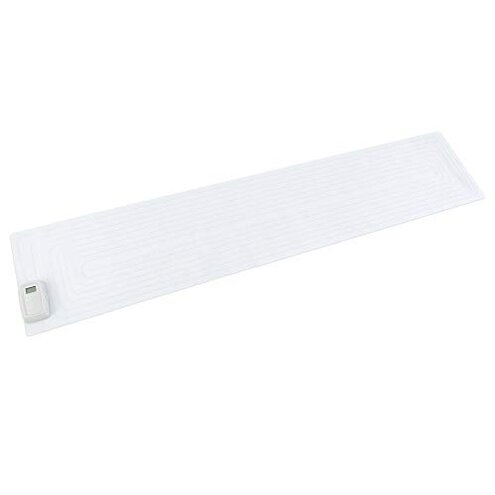
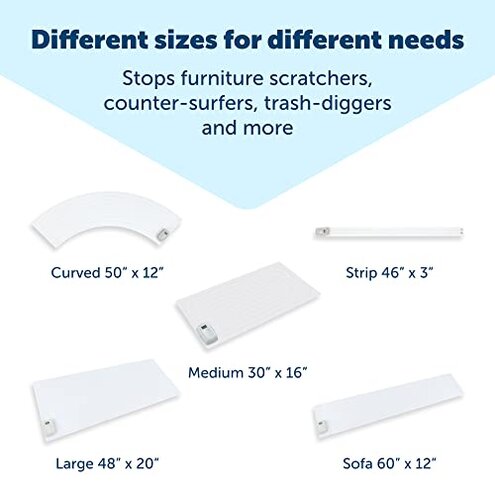
Product evaluated: PetSafe ScatMat Indoor Electric Training Mat for Cats & Dogs, Sofa, 60" x 12"
Related Videos For You
PetSafe® ScatMat® Indoor Training Mat
Data basis: I reviewed hundreds of buyer reports across written reviews and video demonstrations collected between Jan 2020 and Jun 2024. Source mix: most feedback came from written reviews, supported by videos and seller Q&A, which helped compare setup and long-term daily use.
| Outcome | PetSafe ScatMat (this product) | Typical mid-range training mat |
|---|---|---|
| Initial deterrence | Variable — works quickly for some pets but not others under the same settings. | Consistent — more reliable first-week response for most pets in this tier. |
| Reliability over time | Higher failure risk — appears to fail or lose effectiveness sooner than expected for the category. | Moderate — typical mid-range mats usually last longer with routine battery changes. |
| Upkeep | Ongoing battery work — requires a 9V and periodic checks; can add extra steps. | Lower effort — many competitors use rechargeable or lower-maintenance designs. |
| Safety & feel | Inconsistent correction — reports range from tone-only to strong static, affecting comfort. | Predictable — controls and levels feel more graduated in similar-priced units. |
| Regret trigger | Higher-than-normal — intermittent function or unexpectedly strong shocks cause the largest regret. | Lower — regret usually tied to placement or pet tolerance, not product failure. |
Why does the mat stop working after a few weeks?
Regret moment: Many buyers report the mat becoming intermittent or dead after weeks to months of use. Pattern: this is among the most common complaints and appears repeatedly across review types.
Usage anchor: Failure typically shows up after daily use and during the repeated stepping that training requires. Category contrast: this is worse than most mid-range mats, which tend to require only predictable battery swaps.
Will the correction feel inconsistent for my pet?
- Early sign: Some buyers report the mat gives only a tone at first then unexpectedly delivers static later.
- Frequency tier: This is a primary issue for many purchasers and appears across both long-term and first-week feedback.
- Cause: Controller settings and the 9V battery dependency seem to influence whether corrections stay consistent.
- Impact: Pets either ignore the mat or get overly startled, making training unpredictable.
- Fix attempts: Buyers report toggling modes, replacing the 9V, or moving the mat as temporary workarounds.
Is setup and upkeep more work than it looks?
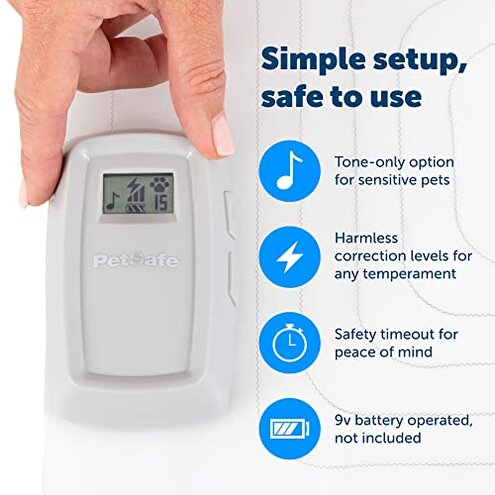
- Hidden requirement: The product needs a 9V battery (not included) and periodic replacement.
- Early sign: The LCD shows a battery level but buyers say it can drop quickly under real use.
- Frequency tier: This is a secondary issue often mentioned alongside reliability complaints.
- Cause: Small battery size and active controller electronics increase maintenance compared to passive mats.
- Impact: Extra cost and time for replacements and troubleshooting.
- Hidden cost: You may need spare batteries on hand or face downtime while training.
Will the mat actually teach my pet or just scare them?
- Behavior risk: Some pets develop avoidance or increased anxiety rather than learning the boundary.
- Frequency tier: This is a secondary pattern that shows when the correction is inconsistent or too strong.
- Usage anchor: The problem appears during daily repeated detections and when the mat triggers unexpectedly.
- False triggers: Human feet or toys can set the mat off, confusing the pet.
- Impact: Training can regress, requiring extra behavior work outside the mat.
- Attempted fixes: Buyers move the mat, reduce corrections, or use tone-only modes with mixed results.
- Fixability: When the root is consistency, fixes are partial and often add time rather than solve the issue fully.
Illustrative excerpts
"Stopped working after three weeks of daily use." — primary pattern.
"Shock felt too strong for my small cat at medium setting." — secondary pattern.
"Needed a 9V every two weeks, unexpected extra cost." — secondary pattern.
"Mat set off from a dropped toy and scared my dog." — edge-case pattern.
Who should avoid this

- Owners needing reliable long-term use — avoid if you expect months of maintenance-free deterrence because failures appear more often than peers.
- Small or sensitive pets — avoid if you cannot tolerate unpredictable correction strength that may be too intense.
- Low-maintenance shoppers — avoid if you do not want to buy and swap 9V batteries or check settings often.
Who this is actually good for
- Short-term trainers — good if you need a quick, temporary deterrent and can monitor battery and function closely.
- Owners tolerant of active upkeep — good if you accept replacing 9V batteries and prefer manual control over the mat.
- Pets responsive to tone-only — good if your pet reacts to tone and you can avoid static use.
Expectation vs reality

Expectation (reasonable for this category): Buyers expect a training mat to work steadily for months with simple battery swaps. Reality: This product shows intermittent failures sooner than similar mid-range mats.
Expectation: Correction levels will scale predictably from tone to low to high. Reality: Many owners report inconsistent correction strength across identical settings.
Safer alternatives
- Pick rechargeable models — look for mats with built-in rechargeable batteries to avoid frequent 9V swaps and unexpected downtime.
- Choose models with passive activation — seek options that rely on pressure-only designs to reduce electronic failure points.
- Prefer graduated controls — select mats where multiple reviewers confirm smooth, predictable level changes.
- Check long-term reviews — favor products with documented months of use in independent write-ups rather than just first-week praise.
The bottom line

Main regret: Intermittent function and battery dependency are the biggest buyer triggers that lead to regret.
Why worse than normal: These problems appear more often than with typical mid-range mats and demand extra time and cost to manage.
Verdict: Avoid this mat if you need low-maintenance, predictable corrections; consider it only for short-term or closely supervised use.
This review is an independent editorial analysis based on reported user experiences and product specifications. NegReview.com does not sell products.