
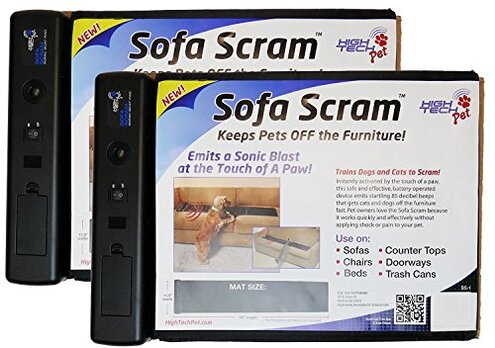
Product evaluated: Sofa Scram Sonic Deterrent/Repellent for Dogs and Cats (2 Pack)
Related Videos For You
Loraffe Ultrasonic/Strobe Rodent Repellent in Action
Dog Repellent Deterrent - A Sound Defense
Data basis: This report draws on dozens of written reviews and several video demonstrations collected between 2014 and 2024. Most feedback came from written reviews, supported by hands-on videos and Q&A notes. The synthesis emphasizes repeat patterns and recent buyer experiences.
| Outcome | Sofa Scram (this product) | Typical mid-range alternative |
|---|---|---|
| Sound level | Loud 85 dB shock-level alarm; more disruptive than category norm. | Moderate warning tones that avoid startling humans. |
| Battery reliability | Frequent swaps required and battery not included. | Longer life or rechargeable options common in mid-range models. |
| Activation consistency | Variable triggers; can false-activate or fail to trigger pets. | More reliable motion or pressure sensors with adjustable sensitivity. |
| Placement & size | Awkward placement needed for paw-activation; visible to pets. | Discreet options designed for furniture or under cushions. |
| Regret trigger | Loud alarm + upkeep creates more annoyance and hidden costs. | Lower regret due to quieter alarms and fewer replacements. |
Top failures
Why does the alarm feel too extreme?
Regret moment: The unit emits a startling beep that often surprises owners and guests when triggered.
Pattern: This is a primary complaint and appears repeatedly across user reports.
Usage anchor: Happens on first uses and in daily interactions when a paw or touch is detected.
Category contrast: The alarm is louder and more disruptive than most mid-range deterrents, which makes normal household presence uncomfortable.
Why do batteries become a hidden hassle?
- Hidden requirement: Requires a 9V battery that is not included, adding an extra purchase step.
- Frequency tier: This is a primary issue for many buyers who report frequent battery replacement.
- When it shows up: Battery drain appears during the first weeks of use or after several daily activations.
- Impact: Adds ongoing cost and maintenance time compared with rechargeable or longer-life alternatives.
- Fixability: Temporary fixes include higher-capacity alkalines, but replacements remain regular.
Why is activation inconsistent?
- Early sign: Device sometimes trips from incidental touches or fails to detect deliberate paw contact.
- Pattern: This is a secondary but persistent complaint across different buyers.
- When it worsens: In cluttered furniture areas or if the unit shifts position during use.
- Cause: Sensitivity seems fixed and not adjustable, reducing reliability in real homes.
- Impact: False activations increase annoyance; missed activations reduce deterrent effect.
- Attempts: Buyers tried repositioning and taping the unit; results were mixed.
- Category contrast: Less forgiving than many mid-range options that offer sensitivity settings.
Why does effectiveness fade or feel fiddly?
Regret moment: The product can be awkward to place and pets commonly habituate over time.
Pattern: This is a secondary but noticeable pattern, reported by many repeat buyers.
Usage anchor: Decline in effectiveness shows after weeks of repeated exposure or when pets learn the sound.
Category contrast: Habituation is common, but this unit’s loud, single-tone response accelerates learning compared with varied or subtle deterrents.
Illustrative excerpts (not actual quotes)
- "It startled guests and made the room tense." — reflects a primary pattern of noise-related regret.
- "Needed new 9V right away, not included." — reflects a primary pattern about hidden costs and setup.
- "Sometimes triggers when nothing touches it." — reflects a secondary pattern of inconsistent activation.
- "Worked for a few weeks then my dog ignored it." — reflects a secondary pattern of habituation over time.
Who should avoid this
- Families with kids: Avoid if you cannot tolerate an 85 dB alarm that can startle household members.
- Low-maintenance buyers: Avoid if you dislike frequent battery purchases or extra upkeep.
- Skeptical about noise: Avoid if you need a discreet solution; the alarm is louder than typical devices.
Who this is actually good for
- Short-term training: Good for owners who need an immediate, strong deterrent and can monitor battery use.
- Outdoor quick fixes: Useful where a loud, temporary scare is acceptable and habituation is less relevant.
- Pet-averse furniture zones: Works for buyers who will tolerate noise to protect a specific area for limited time.
Expectation vs reality
- Expectation: Reasonable for this category is a non-startling deterrent that keeps pets off furniture.
- Reality: This unit delivers a startling 85 dB beep that often creates more household friction than prevented damage.
- Expectation: Reasonable for this category is low upkeep and included batteries sometimes seen in mid-range packs.
- Reality: You must buy a 9V battery and plan on frequent replacements, adding time and cost.
Safer alternatives
- Choose quieter alarms: Pick models labeled with moderate decibel levels to reduce household disruption and regret from noise.
- Prefer adjustable sensitivity: Look for units with sensitivity settings to avoid false triggers and missed deters.
- Favor rechargeable designs: Seek rechargeable or long-life battery options to reduce hidden upkeep costs.
- Use varied deterrents: Combine non-audible training methods or varied cues to slow pet habituation.
The bottom line
Main regret: The combination of a very loud 85 dB alarm and frequent battery upkeep is the central problem buyers report.
Why it matters: That pairing produces more household annoyance and hidden cost than most mid-range pet deterrents, increasing regret risk.
Verdict: Avoid this pack if you need a discreet, low-maintenance deterrent; consider quieter, adjustable, or rechargeable alternatives instead.
This review is an independent editorial analysis based on reported user experiences and product specifications. NegReview.com does not sell products.