
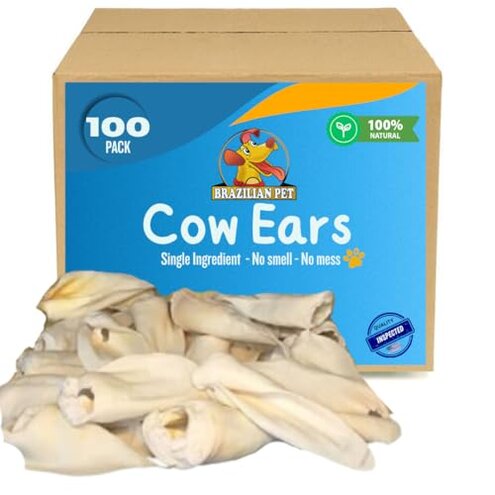
Product evaluated: Brazilian Pet 100% Natural - Over 5 inches- Real Cow Ears Prime Dog Chews, Free Range Grass Fed Cattle (100 Count)
Related Videos For You
Dog bones: Which are safe for dogs? | Ultimate Pet Nutrition - Dog Health Tips
BRUTALLY Honest Review of Popular Dog Chews! 👉 Plus, 3 to AVOID ⚠️
Data basis: This report used dozens of written reviews and customer photos plus several video demos collected Jan 2020–Jan 2026, with most feedback coming from written reviews supported by photos. The distribution shows a strong written-review signal with recurring visual evidence.
| Outcome | This product | Typical mid-range chew |
|---|---|---|
| Consistency | Variable sizing — pieces often range noticeably in size and thickness. | More uniform — mid-range options tend to test to consistent size tolerances. |
| Odor level | Strong smell commonly reported on first opening and during chewing. | Milder — alternatives usually aim for lower initial odor. |
| Durability | Breakage risk — shards and splintering seen with aggressive chewers. | More durable — category mid-range chews resist shattering under similar use. |
| Mess & handling | Greasy residue can soil hands and surfaces after handling. | Cleaner — many mid-range chews leave less oil on hands. |
| Regret trigger | Higher-than-normal risk of inconsistent pieces and strong odor causing returns. | Lower — mid-range products have fewer early-return triggers. |
Top failures
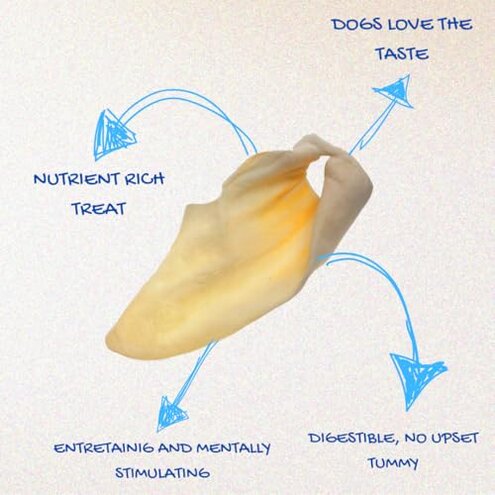
Why does the bag smell so strong?
Regret moment: Many buyers notice a very strong odor on first opening, which some find unpleasant in a home space.
Pattern: This is a commonly reported issue, appearing at first use and during short chews, not only after long storage. The smell is more disruptive than expected for this category because most mid-range chews are milder and tolerable indoors.
Why are piece sizes so inconsistent?
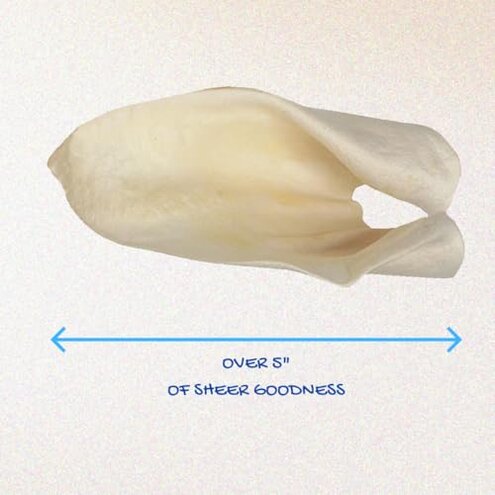
- Early sign: You may receive very thin or very small ears instead of the pictured over-5-inch pieces.
- Frequency tier: This is a primary issue that appears repeatedly across written reports and photos.
- When it shows up: Problem appears at unboxing and affects how long the chew lasts for your dog.
- Cause signal: Variability seems tied to bulk packing and loose sorting before shipping.
- Impact: Small pieces wear out quickly and may not satisfy medium or large chewers.
Does this break into shards or small pieces?
- Safety concern: Shattering into sharp fragments is a recurring secondary issue in aggressive chewers.
- Usage anchor: Shards tend to appear during long, hard chewing sessions or when dogs crunch the edges.
- Category contrast: This is more disruptive than expected because similar chews usually bend or compress rather than splinter.
- Visible cause: Customers document brittle breaks and irregular edge flaking in photos and videos.
- Attempted fixes: Buyers report cutting large pieces down or removing edges, which adds time and effort.
- Hidden requirement: This chew requires close supervision for medium-to-large dogs to prevent choking or mouth cuts.
- Fixability: Supervision helps but does not eliminate the extra time cost compared with safer alternatives.
Why do these leave greasy hands and furniture marks?
- Immediate sign: Oily residue on hands is commonly reported after handling single pieces.
- When it matters: The grease shows up during normal handling and after play sessions.
- Impact: Grease transfers to carpets, sofas, and dog beds if not wiped immediately.
- Why worse than normal: Many mid-range chews are drier and require less cleanup, so this adds unexpected chores.
- Attempts: Buyers say paper towels or hand washing are needed after every piece, adding minutes per session.
- Frequency: This is a secondary to primary issue—common but slightly less reported than sizing or smell problems.
- Hidden cost: Extra cleaning and laundry add ongoing time and expense for active chewers.
- Mitigation limits: Some buyers refrigerate treats to reduce smell but note grease remains.
Illustrative excerpts
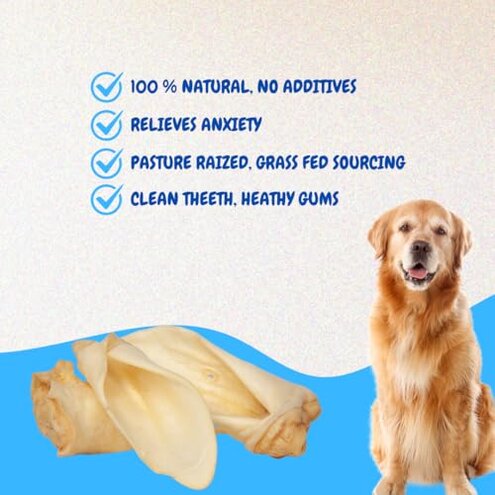
Excerpt: "Smelled very strong when I opened the bag, made my living room uncomfortable." — reflects a primary pattern.
Excerpt: "One ear was tiny, the next was huge; not what I expected for a 100-pack." — reflects a primary pattern.
Excerpt: "Left greasy stains on the couch after my dog dropped it once." — reflects a secondary pattern.
Who should avoid this
- Owners needing uniform size: Avoid if you require consistent piece sizes for portion control or multi-dog fairness.
- Small-home dwellers: Avoid if you dislike strong food odors in shared indoor spaces.
- Busy households: Avoid if you cannot supervise chews; the product often needs active monitoring.
Who this is actually good for

- Budget bulk buyers: Good if you accept variability and want many treats for low cost per piece.
- Outdoor-only chewers: Good for owners who use chews outside where odor and grease are less problematic.
- Light chewers: Good if your dog chews gently and won’t cause shattering or fast consumption.
Expectation vs reality
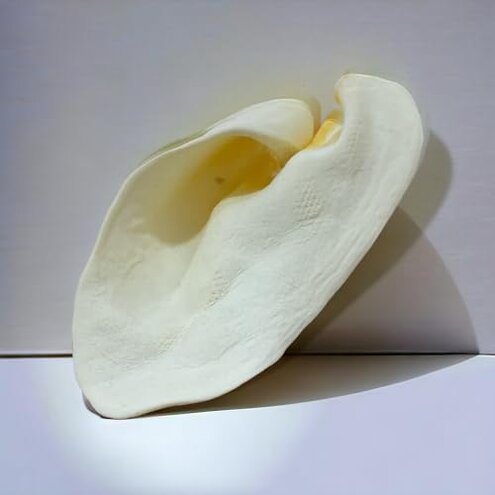
- Expectation (reasonable for this category): Bulk dog chews will vary slightly in size but remain similar overall. Reality: This product shows larger-than-expected variation that shortens chew time for many dogs.
- Expectation: Natural chews have an initial smell that fades in storage. Reality: The odor is commonly strong at first use and can persist during chewing.
- Expectation: Chews will not leave heavy residue. Reality: Greasy handling and surface marks are commonly reported.
Safer alternatives
- Choose uniform-brand packs: Look for sellers that advertise size grading to reduce inconsistency and portioning issues.
- Try low-odor options: Pick treats labeled as low-odor or oven-dried to avoid strong first-opening smell.
- Select non-splintering chews: Prefer rubber or compressed chews for aggressive chewers to reduce shard risk.
- Buy smaller trial packs: Purchase small quantities first to test odor, grease, and sizing before committing to bulk.
The bottom line
Main regret: The combination of inconsistent sizing and strong odor is the primary trigger causing returns and complaints.
Why worse: These issues exceed normal category risk because they add supervision time, cleanup, and safety checks that mid-range alternatives avoid.
Verdict: Avoid if you need consistent, low-odor, low-mess chews; consider trialing a smaller, milder alternative first.
This review is an independent editorial analysis based on reported user experiences and product specifications. NegReview.com does not sell products.