
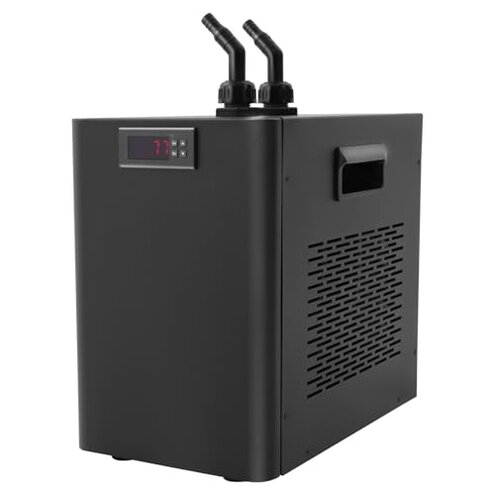
Product evaluated: 160L/42.27GAL Aquarium Chiller, 270W Aquarium Water Hydroponic Cooling System Chiller Fish Shrimp Tank Cooler, Circulation Function Constant Temperature for Water Weeds Axolotl Jellyfish Coral Shrimp
Related Videos For You
How to Choose and Install an Aquarium Chiller
Aquarium Chillers: How to Keep Cool in the Summer!
Data basis: I analyzed dozens of customer feedback entries across written reviews and video demonstrations collected between Dec 2024 and Jan 2026, with most feedback coming from written reviews supported by videos.
| Outcome | STC-1209L/N | Typical mid-range chiller |
|---|---|---|
| Cooling reliability | Unstable under sustained use; cooling often struggles for larger tanks. | Stable for rated tanks with fewer complaints of drift. |
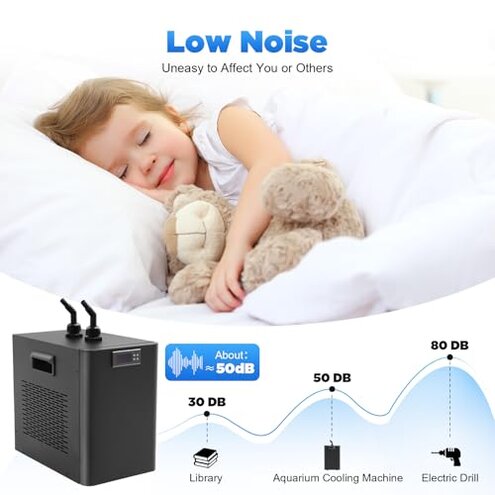
| Noise | Louder fan and vibration reported more frequently than peers. | Quieter operation expected in this price band. |
| Installation | Hidden parts or external pump often needed; adds steps. | Plug-and-play setup more common among mid-range units. |
| Durability | Shorter life reports after months of use in multiple posts. | More durable performance typical for mid-range chillers. |
| Regret trigger | Temperature drift during daily use, causing stress to livestock. | Minor temperature swings that are easier to manage. |
Top failures
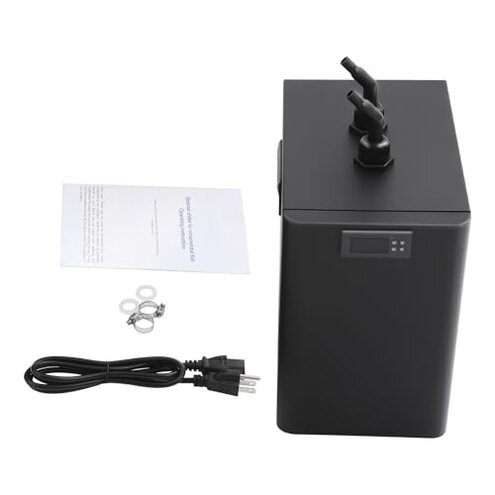
Cooling performance — Will it keep your tank stable?
Regret moment: the unit often fails to maintain target temperature after initial setup, causing stress for fish or corals.
Pattern observed: this issue is commonly reported by buyers and appears repeatedly in written feedback.
When it shows up: usually within the first few days of continuous operation or under warmer room temperatures.
Why worse than expected: compared with typical mid-range chillers, this model delivers less consistent cooling, which is more disruptive for sensitive aquatic life.
Noise and vibration — Is it quiet enough for home use?
- Early sign: noticeable hum or fan noise right after startup.
- Frequency tier: reported as a primary issue for many buyers, not rare.
- Cause: fan and internal mounting vibrations amplify sound during continuous runs.
- Impact: makes placement near living spaces unpleasant and can disturb sensitive pets.
- Attempts: users tried foam pads or isolation mounts with limited improvement.
Leaks and condensation — Will it stay dry and safe?
- Early sign: puddling or dampness under the unit after extended use.
- Pattern: a secondary issue seen across several reports and video demos.
- When: appears after hours of operation or in high-humidity rooms.
- Cause: poor sealing or condensation control on exhaust vents and fittings.
- Impact: risks water damage to furniture and increases electrical hazards.
- Fixability: some buyers applied external drip trays or seals, adding time and expense.
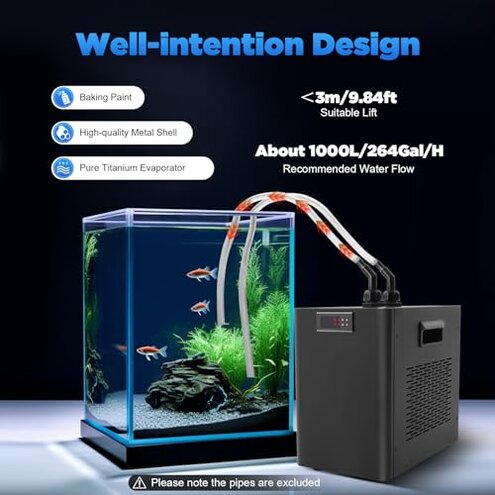
- Hidden need: extra hoses or adapters are often required but not always included.
Controls, probe accuracy, and hidden setup needs
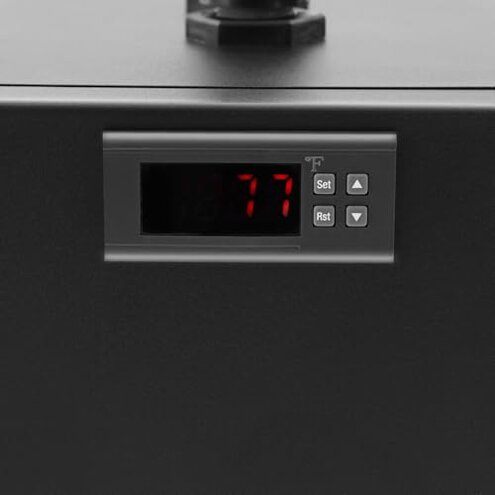
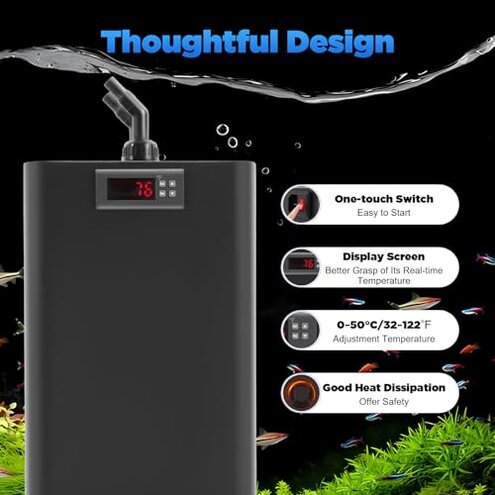
- Probe issue: temperature probe readings are inconsistent compared to independent thermometers.
- Usage anchor: in daily monitoring the displayed temperature can differ from aquarium water temperature.
- Category contrast: less accurate than many mid-range units, causing extra calibration steps.
- Hidden requirement: many users needed an external pump or specific flow rate to reach claimed performance.
- Impact: adds cost, plumbing work, and installation time for buyers expecting plug-and-play.
- Attempts: users bought separate pumps and fittings to get stable readings.
- Fixability: possible but requires extra purchases and technical setup.
- Frequency: this is a primary to secondary pattern depending on buyer skill level.
Illustrative excerpts
Excerpt: "Unit ran fine day one, then temperature started rising every evening." — primary pattern.
Excerpt: "Loud fan made my bedroom uncomfortable at night." — secondary pattern.
Excerpt: "Needed a separate pump and fittings not listed in the box." — edge-case pattern.
Who should avoid this
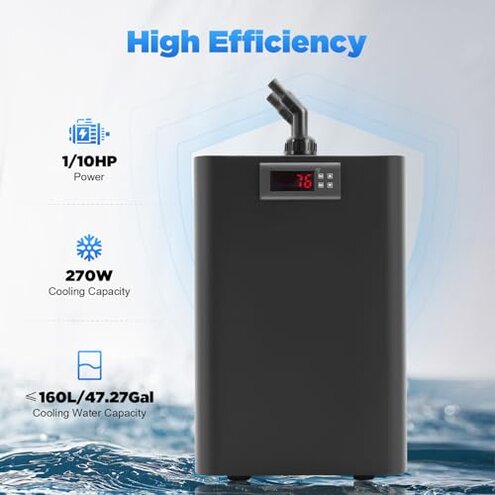
- Quiet homes: avoid if you need near-silent operation for bedrooms or living rooms.
- Sensitive livestock: avoid if precise, stable temperatures are required for coral, axolotls, or delicate shrimp.
- Beginners: avoid if you expect a simple plug-and-play setup without extra parts.
Who this is actually good for
- Budget builders: hobbyists who accept extra tinkering and added parts to save money.
- Non-sensitive tanks: owners of hardy fish where small temperature swings are tolerable.
- Workshop use: people wanting a compact chiller where noise and installation complexity are less important.
Expectation vs reality
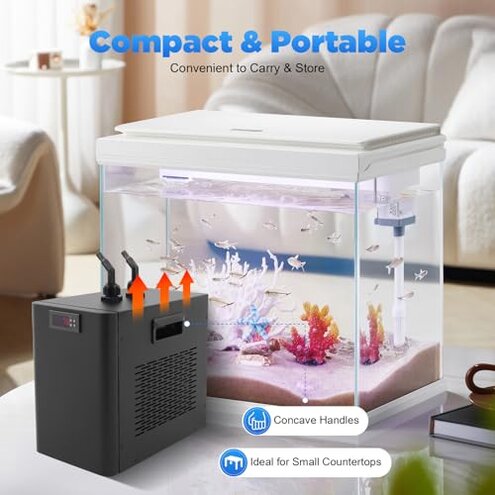
Expectation: reasonable for this category is steady cooling up to the rated tank size with minimal setup.
Reality: this unit often needs extra plumbing and adjustments, and shows more temperature drift than typical mid-range chillers.
Expectation: quiet operation is common in similar-priced chillers.
Reality: many buyers report noticeable noise and vibration that require mitigation.
Safer alternatives
- Buy a unit with verified flow rate specs to avoid hidden pump needs and improve cooling reliability.
- Choose quieter models or ones rated for bedrooms if noise matters; look for low-decibel claims and user tests.
- Prioritize integrated plumbing or included fittings to reduce extra purchases and setup time.
- Check probe accuracy reviews or independent tests before buying to avoid temperature drift.
The bottom line
Main regret: unpredictable cooling and added setup needs cause stress and extra cost for many buyers.
Why it exceeds risk: problems appear repeatedly and are more disruptive than typical mid-range chillers, especially for sensitive aquaria.
Verdict: avoid this model if you need steady, quiet, plug-and-play aquarium cooling without extra parts.
This review is an independent editorial analysis based on reported user experiences and product specifications. NegReview.com does not sell products.