
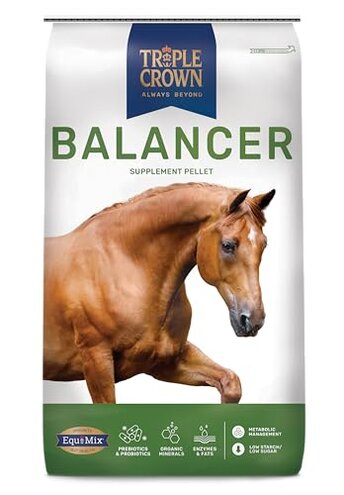
Product evaluated: Triple Crown Balancer, Horse Supplement, Horse Vitamins & Minerals, Weight Supplement, 50 lbs
Related Videos For You
Ask the Vet - What supplements should every horse have?
My Biggest Secret to Healthy Horses, Shiny Coats & Top Performance (Feed, Supplements & Vitamin E)
Data basis I analyzed dozens of user reports collected between 2023-01 and 2025-12 from written reviews, Q&A, and video demonstrations, with most feedback coming from written reviews supported by videos.
| Outcome | Triple Crown Balancer | Typical mid-range alternative |
|---|---|---|
| Palatability | Higher refusal appears repeatedly with picky eaters during daily feeding. | Usually accepted by most horses after a short introduction. |
| Visible weight gain | Slower results commonly reported across weeks of use. | Faster change when paired with moderate grain programs. |
| Cost per pound | About $1.38/lb which buyers flag as higher than some peers. | Lower to mid price expected for mid-range supplements. |
| Feeding complexity | Higher requirement for specific feed adjustments to see benefits. | Less picky about feeding changes in typical options. |
| Regret trigger | Cost + poor acceptance together create the most buyer regret. | Lower risk because acceptance and results are more consistent. |
Top failures
Will my horse eat this consistently?
Regret moment You pour the pelleted balancer into the feed tub and your horse sniffs or leaves it; that rejection is commonly reported across user feedback.
When it shows Refusal most often appears on first introduction and can persist during daily use without flavor masking.
Why worse than normal Typical mid-range balancers usually get accepted after brief mixing, but here the refusal rate makes daily feeding more stressful and wasteful.
Does it actually add weight?
- Primary pattern Noticeable weight gain is commonly reported as slow or absent after weeks of use.
- Usage context Lack of change tends to show after 4–8 weeks on a low-grain program.
- Category contrast This is more disruptive than expected because mid-range options usually show clearer results when fed correctly.
- Buyer impact Slow results increase cost-over-time and buyer regret when the feed bill rises without benefit.
Do I need extra feed or adjustments?
- Pattern Multiple reports indicate additional grain or specific feeding plans are required to see gains.
- When Hidden needs show up during the first month, after owners follow the product alone.
- Cause The product appears formulated to work with reduced-starch programs, which demands planning.
- Impact Adds extra time and cost because buyers must change hay or add grain to compensate.
- Fix attempts Owners commonly mix it with sweeter feeds or add oil to improve results.
- Why worse This is more upkeep than most mid-range balancers, which are more forgiving of feeding variation.
Is the packaging and quality reliable?
- Secondary pattern Instances of clumping or dusty pellets appear repeatedly, especially in humid storage.
- When Problems typically show up after partial bag storage and repeated opening.
- Cause Moisture exposure or long-term storage seems connected to quality changes.
- Impact Clumping and dust reduce acceptability and increase waste during regular scooping.
- Attempted fixes Buyers report sifting, aerating, or repackaging into dry bins to restore texture.
- Fixability These fixes are workable but add ongoing chore time and cost.
- Category contrast More handling than typical bags in this category creates higher maintenance and frustration.
Illustrative excerpts
Illustrative: "My mare ignored the pellets for a week, then ate leftover grain only." Reflects primary pattern.
Illustrative: "After six weeks, we saw barely any weight change despite steady feeding." Reflects primary pattern.
Illustrative: "Bag clumped in the corner of the tack room after one month." Reflects secondary pattern.
Illustrative: "Had to mix with sweet feed and oil to get her interested." Reflects secondary pattern.
Who should avoid this
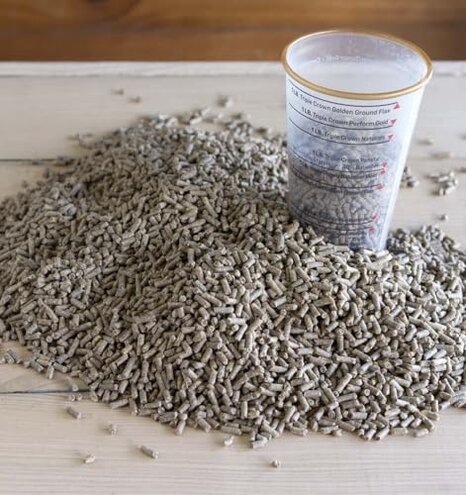
- Picky eaters Owners of horses that refuse new feeds should avoid this due to higher-than-normal refusal reports.
- Low-tolerance budgets Buyers who can’t absorb extra feed costs should avoid it because results can be slow without added grain.
- Limited storage Those with humid or small storage areas should avoid it because clumping and dust are a recurring hassle.
Who this is actually good for
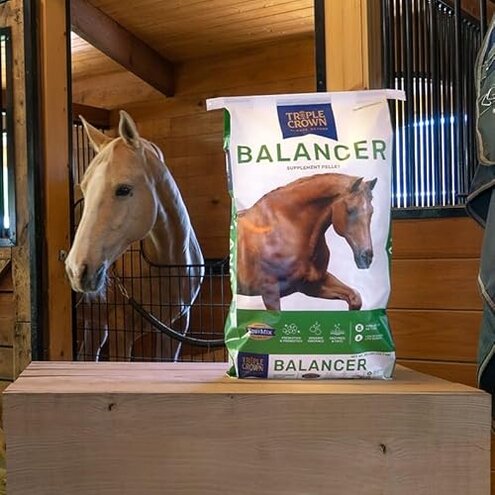
- Rostered programs Owners who already run a structured low-starch program can tolerate feeding complexity for metabolic balance.
- Willing to mix Buyers prepared to mask flavor with sweet feed or oil may accept palatability problems to get targeted nutrients.
- Large operations Facilities with dry bulk storage and staff to manage bag handling will handle clumping risks better.
Expectation vs reality
Expectation Reasonable for this category: a balancer should be accepted within days and support steady weight with small feeding changes.
Reality This product often needs additional grain, masking, or storage fixes, which raises cost and handling above normal expectations.
Safer alternatives
- Test sample Try a small bag or sample first to check acceptance before buying a 50 lb bag.
- Plan feeding Budget for a brief grain or oil addition to avoid slow-result regret.
- Storage upgrade Use dry bins or sealed containers to prevent clumping and dust problems.
- Compare labels Choose mid-range balancers that emphasize palatability if your horse is a known picky eater.
The bottom line
Main trigger The combination of higher refusal rates and the need for extra feeding creates the strongest buyer regret.
Why worse These issues raise cost and handling more than typical mid-range balancers, making this risky for many buyers.
Verdict Avoid if your horse is picky, you lack dry storage, or you cannot add grain or masking feeds.
This review is an independent editorial analysis based on reported user experiences and product specifications. NegReview.com does not sell products.