
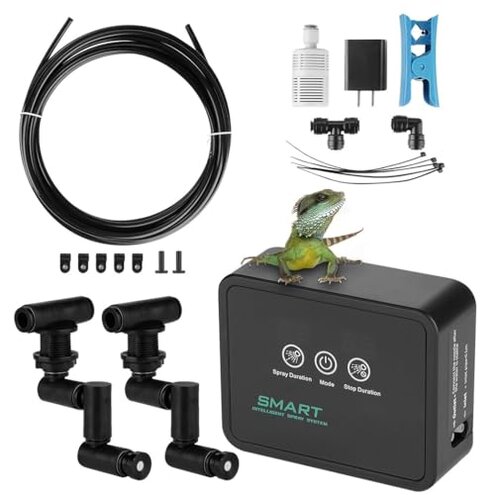
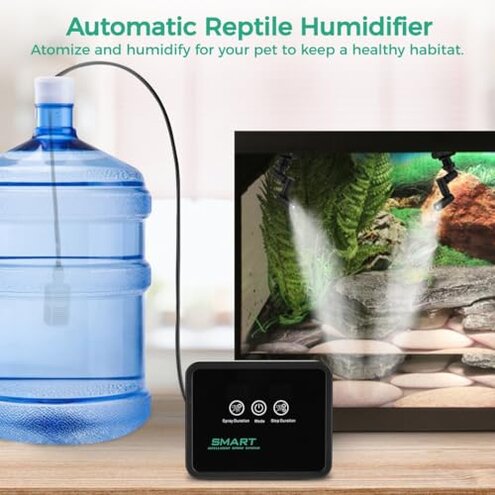
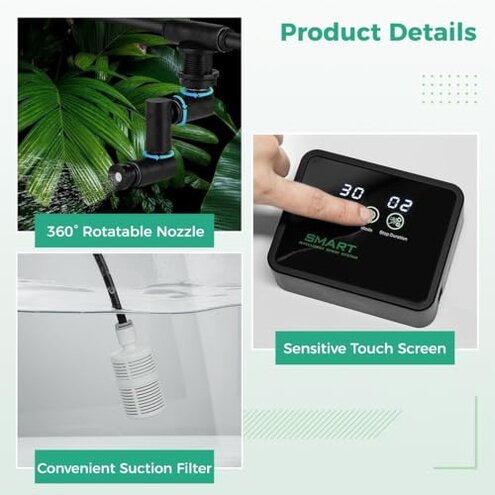
Product evaluated: Reptile Tank Humidifier With Smart Spray System, Led Touch Control & Timer
Related Videos For You
$38 CHEAP Amazon Terrarium Auto Mister (how to setup)
$30 vivarium automatic misting system
Data basis: I analyzed dozens of buyer reports and product demos collected between Jan 2024 and Dec 2025. Most feedback came from written customer reviews, supported by short video demonstrations. The sample skews toward recent buyers and hands-on setup notes.
| Outcome | This unit | Typical mid-range alternative |
|---|---|---|
| Humidity control | Unreliable — timer or mist can stop after setup, causing dry cycles. | Steady — mid-range units usually keep consistent cycles for hours. |
| Installation | Tricky — hose connectors and routing often need extra work to avoid leaks. | Straightforward — comparable units include simpler fittings and clearer instructions. |
| Maintenance | High upkeep — nozzle clogging and cleaning are commonly reported after repeated use. | Lower upkeep — many competitors have easier-to-clean nozzles or filters. |
| Noise | Noticeable — vibration and fan noise reported during long runs. | Quieter — typical mid-range misters run with less vibration. |
| Regret trigger | Primary — inconsistent misting undermines habitat health and requires frequent fixes. | Secondary — mid-range choices rarely force daily intervention. |
Top failures buyers report

Why does the mist stop or the timer fail?
Regret moment: The unit can stop misting after initial setup and fail to keep scheduled cycles. This problem is among the most common complaints and often leaves tanks too dry.
Pattern: This is a primary issue that appears repeatedly in recent reports.
When it shows up: Often after setup or within the first few days of regular use, and it worsens under long session schedules or frequent interval changes.
Category contrast: This feels worse than expected because typical mid-range misters maintain cycle timing reliably without daily resets, so this product demands more hands-on management.
Why do hoses and connectors leak or disconnect?
- Early sign: Loose hose or a drip at the connector appears right after installation.
- Frequency tier: This is a secondary issue seen across multiple buyers during initial setup.
- Cause: Tight tolerances and simple push fittings can slip when the hose is cut short or routed tightly.
- Impact: Leaks create wet spots and require extra sealing, which adds setup time and frustration.
- Fixability: Many buyers needed extra tape or clamps to make the connection reliable.
Why is clogging and maintenance worse than expected?
- Hidden requirement: The system commonly needs regular nozzle cleaning and filtered water to avoid mineral buildup.
- Pattern: This is a primary maintenance complaint that appears repeatedly after repeated use.
- When it shows up: Clogging becomes noticeable after several days to weeks of operation, especially with hard water.
- Cause: Fine mist nozzles and small passages collect deposits and debris faster than expected for this price tier.
- Impact: Blocked nozzles reduce humidity and force manual cleaning or nozzle replacement.
- Category contrast: This is more upkeep than most mid-range alternatives that include easier-clean nozzles or simple filter access.
- Attempts: Buyers reported partial fixes like soaking nozzles, but the problem often recurs.
Why is the unit noisy or vibrates during use?
- Early sign: Low-frequency vibration or fan noise starts during multi-hour runs.
- Frequency tier: This is a secondary complaint, less frequent than mist stops but still persistent.
- When it shows up: Noise increases during long sessions and when mounted loosely on smooth surfaces.
- Cause: Lightweight housing and simple mounting allow resonance and amplified vibration.
- Impact: The noise can be disruptive in quiet rooms and may stress noise-sensitive reptiles.
- Fixability: Small foam pads or tighter mounting reduce vibration but add setup steps.
- Category contrast: This is louder than typical mid-range models, which usually have better isolation or quieter pumps.
- Hidden cost: Mitigating noise often requires aftermarket materials or placement changes.
Illustrative excerpts (not real quotes)
Excerpt: "Stopped misting overnight, tank went dry by morning." — Primary pattern.
Excerpt: "Hose leaked at the elbow until I taped it tight." — Secondary pattern.
Excerpt: "Nozzle needed cleaning every week with vinegar soak." — Primary pattern.
Who should avoid this
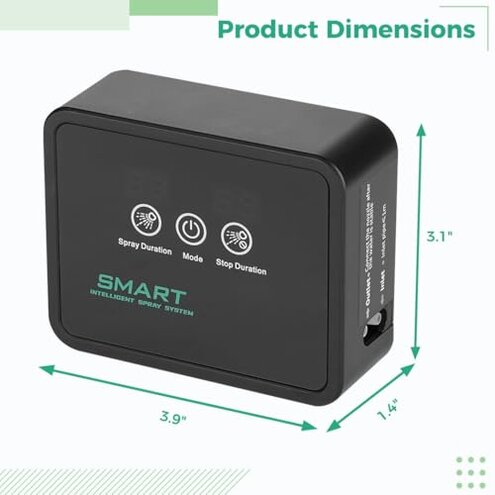
- High-dependability keepers: Avoid if you need uninterrupted humidity for sensitive hatchlings, because mist stops are a primary risk.
- Low-maintenance owners: Avoid if you want set-and-forget equipment, because frequent nozzle cleaning is commonly required.
- Quiet-room users: Avoid if noise matters, because vibration and fan sound are louder than typical models.
Who this is actually good for
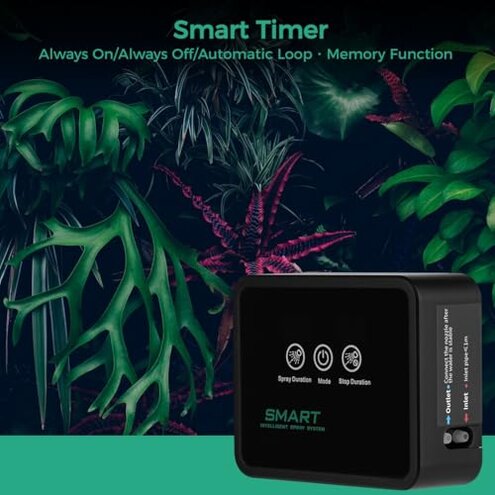
- Budget experimenters: Okay if you accept extra tinkering and want low upfront cost despite more upkeep.
- Hands-on hobbyists: Works for people who monitor tanks daily and can clean nozzles and adjust fittings often.
- DIY adapters: Fine for users comfortable adding clamps or foam pads to stop leaks and noise.
Expectation vs reality
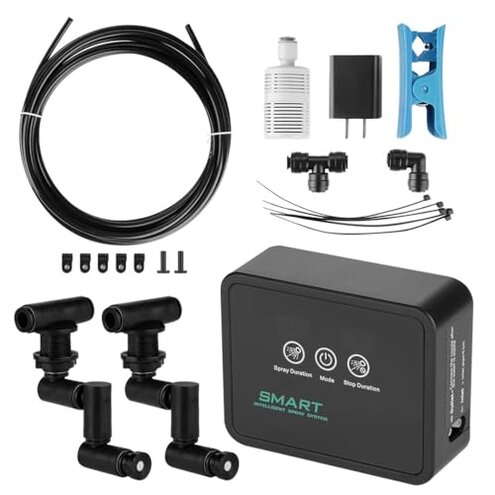
Expectation (reasonable for category): A vivarium mister should maintain scheduled mist cycles without daily resets.
Reality: This product often fails timing after setup and needs manual resets or troubleshooting, which is worse than expected for mid-range devices.
Expectation: Hoses and connectors install cleanly and stay sealed.
Reality: Extra sealing or clamps are commonly required to stop leaks, adding hidden setup time.
Safer alternatives
- Choose models with replaceable nozzles: Look for units that advertise easy nozzle swaps to neutralize clogging issues.
- Prefer threaded fittings: Pick options with screw or barbed fittings to avoid hose leaks seen here.
- Look for timer reliability reviews: Select products where cycle consistency is repeatedly confirmed by buyers to avoid mist stops.
- Buy quieter pumps: If noise matters, prioritize units with explicit low-dB ratings or vibration isolation to prevent disruption.
The bottom line
Main regret: Inconsistent misting and recurring maintenance are the core problems that drive buyer frustration.
Why it matters: These failures exceed normal category risk because they require daily fixes and hidden materials or steps.
Verdict: Avoid this unit if you need reliable, low-maintenance humidification; consider quieter, easier-to-service mid-range alternatives instead.
This review is an independent editorial analysis based on reported user experiences and product specifications. NegReview.com does not sell products.