
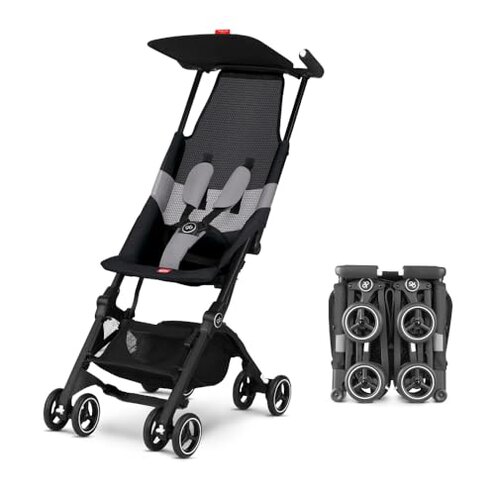
Product evaluated: gb Pockit Air All Terrain Ultra Compact Lightweight Travel Stroller with Breathable Fabric in Night Blue, 28x17.5x39.8 Inch (Pack of 1)
Related Videos For You
Ultra-compact travel strollers are ready for your vacation! Which fold do you like the best?
Pro travel tip: Keep your stroller with you as long as possible! Click destination for full review!
Data basis for this report comes from analyzing dozens of aggregated buyer feedback items collected from written reviews and star-rating submissions, with support from a smaller set of photo-backed impressions. Most feedback weight came from written comments, while visual add-ons helped confirm real-world usage moments. The collection window spans 2021–2026, with feedback distribution skewing toward everyday travel use rather than occasional indoor-only use.
| Buyer outcome | gb Pockit Air | Typical mid-range |
|---|---|---|
| Airport portability | Strong when you prioritize a tiny fold. | Moderate, usually bulkier but simpler to live with. |
| Push comfort | Higher risk of feeling twitchy on uneven ground. | Lower risk, typically tracks straighter with fewer corrections. |
| Child comfort | Mixed, breathable seat helps heat but padding may feel minimal. | More consistent seat support and recline for longer rides. |
| Daily practicality | More steps and compromises to keep it usable day-to-day. | Less fiddly, better storage and fewer “workarounds.” |
| Regret trigger | When it’s not the only stroller you need for the trip. | When it’s too big for tight travel spaces. |
Top failures
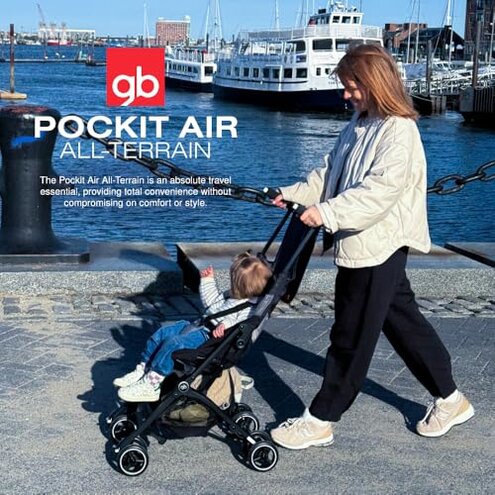
Will it feel wobbly or annoying to steer?
Regret moment tends to hit during real walking, not in the living room. You buy it for travel ease, then you end up constantly correcting the path on sidewalks.
Pattern appears repeatedly in day-to-day “push” feedback, though it is not universal. It tends to show up on first outings and gets more frustrating during longer walks or rougher pavement.
Category contrast: compact travel strollers do steer worse than full-size models, but this one is commonly described as more twitchy than most mid-range travel alternatives.
- Early sign is frequent wrist corrections to keep it tracking straight.
- Primary issue is a light, narrow feel that can get skittish on cracks and bumps.
- Worse conditions include uneven sidewalks, cobblestones, and one-handed pushing.
- Buyer impact is more fatigue because you “drive” it instead of casually pushing.
- Mitigation is to treat it as short-hop transport, not a daily walk stroller.
Is the fold easy, or does it slow you down?
Trade-off complaints show up when buyers expect a smooth fold while holding bags or managing a child. The fold can be fast after practice, but the learning curve is a common friction point.
- Recurring pattern is “takes practice,” especially during early trips and first airport days.
- Usage moment is folding at a gate, in a parking lot, or when switching to stairs.
- Hidden requirement is needing repeated reps to make it reliable under pressure.
- Category contrast: travel strollers often need some technique, but this one is more often described as less intuitive than mid-range quick-fold options.
- Workaround is practicing at home until you can fold without looking.
- Knock-on effect is you may hesitate to fold, which defeats the portability benefit.
- Fixability is mostly user adaptation, not a part you can simply replace.
Will your kid be comfortable for real outings?
- Secondary issue is comfort feeling “okay” for short stints but less so on longer sits.
- Usage context is travel days with naps, queues, and extended time in the seat.
- Persistent theme is that breathable fabric helps heat, but support can feel minimal.
- Category contrast: some firmness is normal in ultra-compacts, but buyers often expect more comfort at this price level.
- Practical impact is more stops and more carrying when the child gets fussy.
- Mitigation mentioned often is adding a compatible padded insert, which adds cost and steps.
- Edge-case risk is fit frustration with bigger toddlers where space and posture matter more.
- Buyer takeaway is it works best as a “transfer tool,” not a lounge seat.
Does it feel too minimal for daily life?
- Primary complaint is that the ultra-compact design brings daily compromises buyers didn’t budget for.
- When it hits is after the first week, once errands replace the “travel-only” plan.
- Commonly reported frustration is limited convenience features compared with mid-range strollers.
- Category contrast: even travel strollers often keep basic usability, but this one can feel too stripped for routine use.
- Time cost shows up as more juggling, more carrying, and more careful packing.
- Mitigation is keeping it as a second stroller dedicated to flights and tight trunks.
- Regret pattern is expecting “one stroller for everything” and getting a specialist instead.
Illustrative excerpts (not real quotes)
- “Great for the plane, but I fight the steering on sidewalks.” Primary pattern tied to handling.
- “Folding is fast only after you practice a bunch.” Primary pattern tied to the learning curve.
- “My kid runs hot, but the seat feels a bit bare.” Secondary pattern tied to comfort trade-offs.
- “I wanted one stroller, but I still need my bigger one.” Primary pattern tied to daily practicality.
- “Perfect in airports, stressful in crowds when it drifts.” Secondary pattern tied to control under pressure.
Who should avoid this
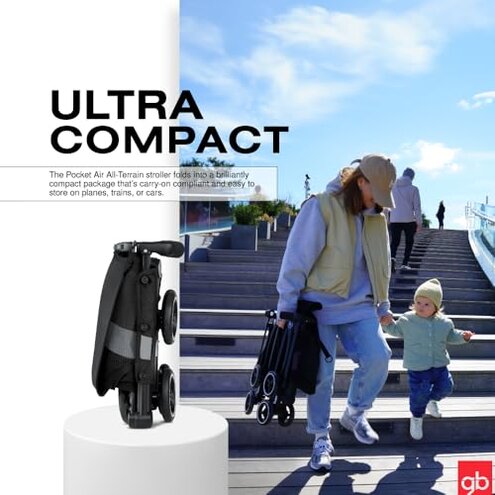
- Daily walkers who need stable steering on rough sidewalks, because twitchy handling is a primary, repeated complaint.
- One-stroller families who need errands plus travel, because minimal practicality commonly pushes buyers back to a bigger stroller.
- Caregivers with wrist strain who want effortless one-hand pushing, because frequent corrections show up early in use.
- Nap-on-the-go users who need cushy support for long sits, because comfort is a recurring trade-off in ultra-compacts.
Who this is actually good for
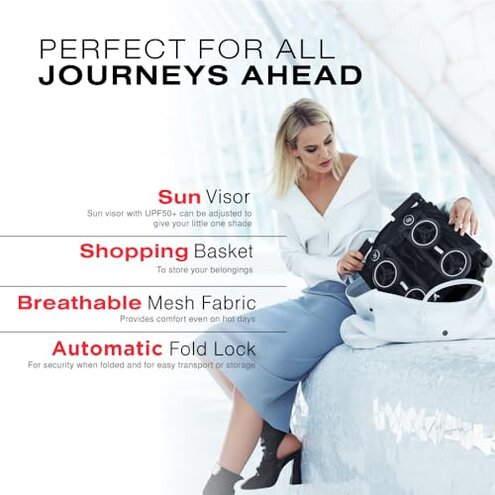
- Frequent flyers who value a tiny fold and accept more steering attention to get true carry-on convenience.
- City travelers doing short hops from hotel to taxi, because the lightweight carry matters more than long-walk comfort.
- Second-stroller buyers who already own a full-size model, because they can tolerate the “specialist” feel.
- Hot-weather trips where breathable seating helps, as long as you’re willing to add padding for longer rides.
Expectation vs reality
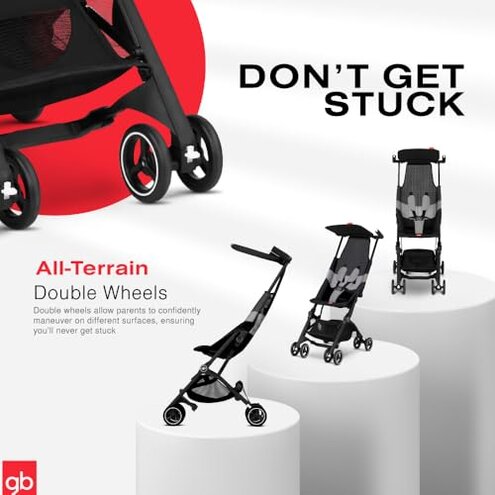
Expectation: A travel stroller will steer a bit worse than a full-size model, which is reasonable for this category.
Reality: Handling complaints are often described as more disruptive than typical mid-range travel strollers, especially on uneven ground.
- Expectation is a fast fold when you’re rushed at curbs and gates.
- Reality is a common learning curve that adds stress until you practice enough.
- Expectation is comfort that works for a full travel day.
- Reality is comfort that’s often fine short-term, but less loved for long sits.
Safer alternatives
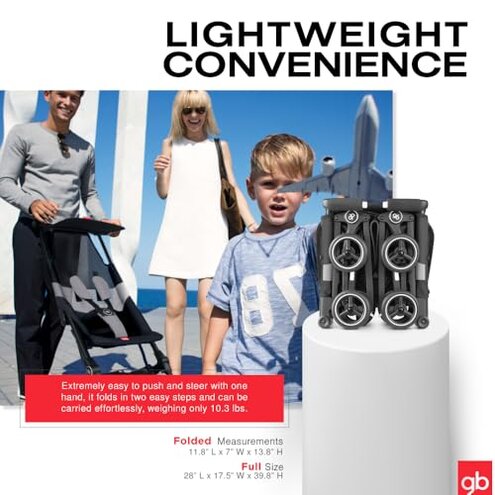
- Prioritize steering by choosing a mid-range travel stroller known for straighter tracking, if your trips include daily sidewalk miles.
- Choose simpler folds if you’ll fold one-handed often, so you avoid the practice-heavy learning curve.
- Buy for comfort if naps are routine, by picking a model with better support and easier long-sit positioning.
- Plan two-stroller ownership if you love ultra-compact size, so you’re not forcing a specialist into daily duty.
- Test your terrain by matching wheel behavior to your surfaces, because rough pavement amplifies twitchy push feel.
The bottom line
Main regret trigger is expecting an ultra-compact travel stroller to also feel calm and stable for everyday walking. Handling friction and daily compromises show up repeatedly, and that’s a higher-than-normal risk versus typical mid-range travel options. Verdict: avoid if this will be your primary stroller or your terrain is rough, but consider it if flights and tight storage are the whole point.
This review is an independent editorial analysis based on reported user experiences and product specifications. NegReview.com does not sell products.