
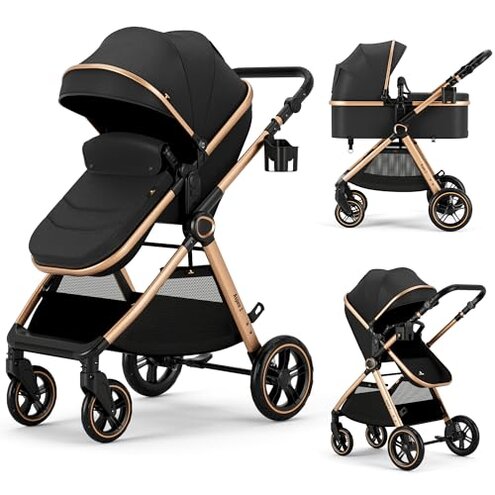
Product evaluated: Accombe 2 in 1 Baby Stroller, Convertible Bassinet Pushchair for Infants and Newborns 0-36 Months
Related Videos For You
It is very convenient and simple to fold. #kids #baby #stroller #babystroller #trolley
Graco® How To Convert the Modes™ Bassinet Toddler Seat to Bassinet Mode
Data basis for this report comes from analyzing dozens of aggregated buyer comments and ratings collected between 2024-01 and 2026-02. Sources included written reviews and photo/video feedback snippets describing real-use moments. Most feedback came from short written notes, supported by a smaller set of visual demonstrations that helped confirm what “wobbly” or “hard to fold” looked like in practice.
| Buyer outcome | Accombe 2-in-1 stroller | Typical mid-range stroller |
|---|---|---|
| Daily push feel | Higher risk of shaky steering during turns and uneven sidewalks | Lower risk; usually tracks straighter with less fuss |
| Fold-and-go | More reports of awkward folding and bulky carry hassles | More predictable folding with fewer “two-hand” moments |
| Newborn mode | Higher-than-normal risk of bassinet/seat conversion friction and fit confusion | Lower risk; conversions are often simpler or clearer |
| Long-term durability | Elevated concern about parts loosening with regular use | Moderate concern; wear happens but feels less sudden |
| Regret trigger | “Looks luxury, feels finicky” once you use it daily | “Not fancy, but reliable” is a common outcome |
Top failures
Does it feel wobbly when you actually push it?
Regret usually hits on the first longer outing when the stroller doesn’t track as confidently as expected. This is among the most disruptive complaints because it affects every walk, not just setup.
Pattern notes show it’s recurring but not universal, and it tends to show up during daily use on sidewalk cracks, curb cuts, and tighter turns. Compared with a typical mid-range stroller, the steering tolerance feels less forgiving.
- Early sign is needing constant micro-corrections to keep it straight.
- Primary pattern appears repeatedly as “shaky” or “unstable” push feel.
- Worse conditions include uneven pavement, longer strolls, and one-hand pushing.
- Impact is more wrist and shoulder effort than most mid-range strollers.
- Likely cause is play developing in the rolling/steering parts after handling and folding.
- Fixability is mixed; tightening helps some buyers but not all.
- Hidden cost is time spent re-checking tightness before outings.
Is folding and lifting it as “compact” as it sounds?
Frustration often shows up right after setup when buyers try the first few folds for car loading. This is a secondary issue in frequency, but it becomes primary for anyone doing daycare drop-offs.
- Recurring theme is “not as compact” in real trunks and closets.
- When it hits is after the first outing, when you’re rushing and need a fast fold.
- Category contrast is that mid-range strollers often fold with fewer steps and less force.
- Bulk surprise shows up when the seat/bassinet pieces add extra handling steps.
- Carry hassle is worse if you also hold a diaper bag and a baby at the same time.
- Workaround commonly becomes partial disassembly, which adds extra time.
- Durability worry rises because repeated forced folding can accelerate loosening.
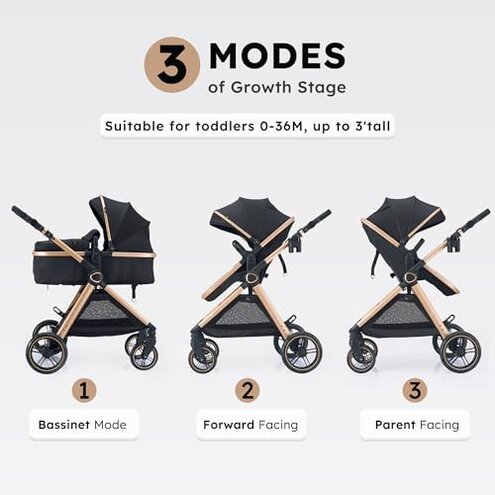
Is the 2-in-1 conversion smooth, or a daily headache?
Trade-off complaints cluster around the conversion promise: a bassinet today and a seat tomorrow. It’s a primary regret trigger for buyers who expected quick, obvious switching.
Pattern signals suggest the conversion friction is persistent for some users, especially after setup when you realize the “simple switch” has hidden steps. Against mid-range competitors, it can feel more finicky because you must align parts and re-check latches more carefully.
- Early confusion shows up when instructions don’t match what you’re holding in hand.
- Hidden requirement is needing extra space and time to swap modes safely.
- Worse conditions include switching modes in a parking lot or hallway.
- Safety anxiety increases because buyers double-check locks more than expected.
- Routine friction builds when caregivers differ on how to attach parts.
- Attempted fix is “leave it in one mode,” reducing the value of 2-in-1.
- Category contrast is that many mid-range travel systems are clearer to click in and out.
- Outcome is using it less, despite liking the look and idea.
Does it hold up after a few weeks of real life?
- Persistent concern shows up as parts feeling looser after repeated folding and lifting.
- When it appears is after repeated use, not usually on day one.
- Worse conditions include frequent car loading and uneven outdoor paths.
- Impact is increased rattles and less confidence pushing with a growing baby.
- Category contrast is that mid-range strollers also wear, but often feel steadier longer.
Illustrative excerpts (not real quotes)
- “It looks high-end, but it wiggles when I turn corners.” Primary pattern: recurring stability concern.
- “Folding takes extra steps, and I can’t do it one-handed.” Secondary pattern: fold friction during errands.
- “The bassinet swap is not quick, and I keep re-checking the latch.” Primary pattern: conversion anxiety.
- “After a few weeks, it feels less tight than when it arrived.” Secondary pattern: looseness over time.
- “Great in the living room, harder outside on rough sidewalks.” Edge-case pattern: terrain sensitivity varies.
Who should avoid this
- Daily walkers on uneven sidewalks who can’t tolerate a commonly reported shaky push feel.
- Car commuters who fold/unfold often and need a fast, predictable fold without extra steps.
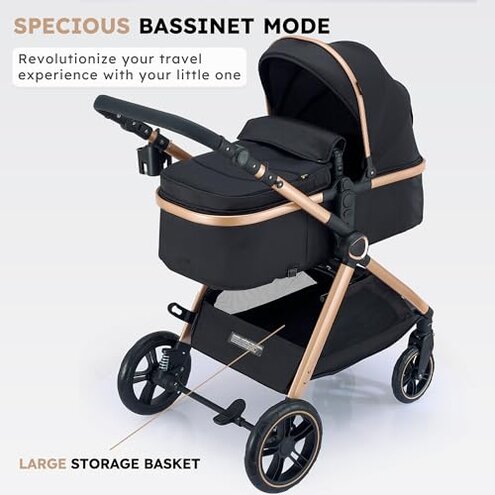
- Newborn-first buyers who want a simple bassinet conversion with minimal latch checking.
- One-caregiver households where one person regularly handles baby + stroller at the same time.
- Low-maintenance shoppers who don’t want periodic tightening and re-check routines.
Who this is actually good for
- Occasional users who accept fold friction because the stroller is used mainly for short trips.
- Style-prioritizers who value the look and can tolerate extra checks to reduce wobble anxiety.
- Home-to-car users on smoother surfaces who won’t stress the steering on rough paths.
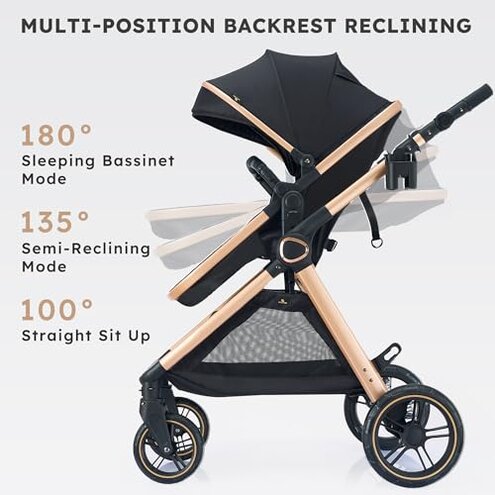
- One-mode families who plan to keep it mostly in seat mode and avoid frequent conversions.
Expectation vs reality
| Expectation | Reality |
|---|---|
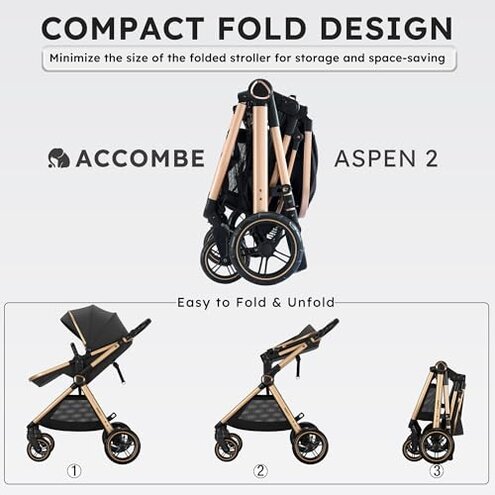
| Reasonable for this category: fold works quickly after a little practice | Worse-than-expected: folding can stay multi-step and awkward under time pressure |
| 2-in-1 means easy switching between bassinet and seat | Finicky conversion can add latch checks and alignment effort |
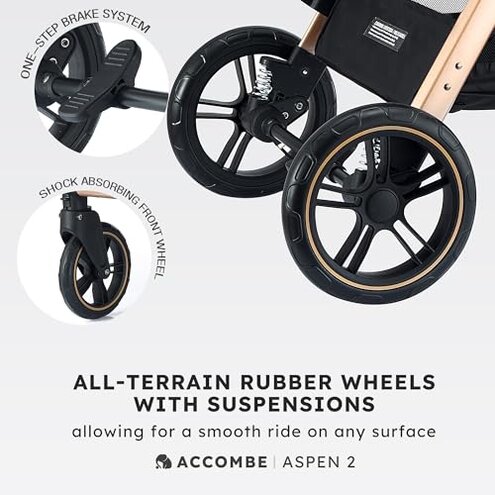
| All-terrain suggests confident steering on rough sidewalks | Sensitivity shows up for some buyers as wobble and constant corrections |
| Mid-range durability means it stays tight with routine handling | Loosening concerns appear after repeated folding and transport |
Safer alternatives
- Prioritize strollers known for stable tracking to neutralize the commonly reported wobble risk.
- Choose a proven one-step fold if you do frequent car loading and tight hallway storage.
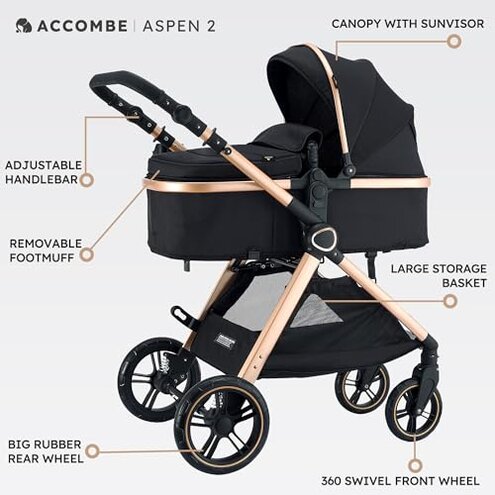
- Pick a travel system with clearer click-in behavior to reduce conversion and latch-check stress.
- Look for models with fewer detachable pieces to cut the hidden “extra steps” requirement.
- Verify replacement-part and support clarity to reduce downtime if looseness develops.
The bottom line
Main regret centers on push stability and convenience, with wobble and finicky handling showing up during real outings. These issues feel above normal for mid-range strollers because they affect every trip and can worsen with repeated folding.
Verdict: if you need a predictable daily stroller, this is a higher-risk pick, and many shoppers will be happier avoiding it for a steadier mid-range alternative.
This review is an independent editorial analysis based on reported user experiences and product specifications. NegReview.com does not sell products.