
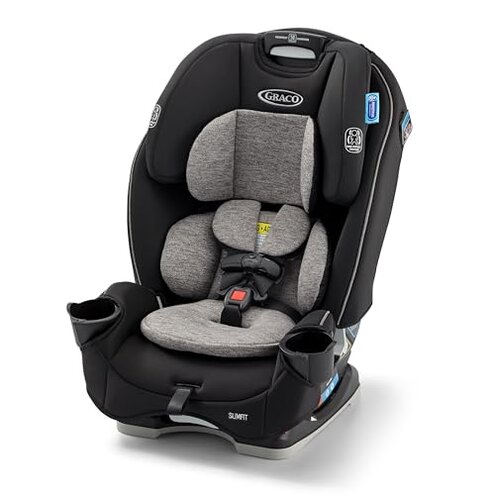
Product evaluated: Graco Slimfit 3-in-1 Convertible Car Seat, Ultra-Space-Saving Design, Jarret, Suitable for Rear and Forward-Facing, Highback Booster Seat with 10-Position Headrest
Related Videos For You
How to Install Graco® Nautilus™ with Safety Surround Car Seat
Install Safety 1st Grow and Go forward facing with seat belt and top tether
Data basis: This report synthesizes feedback from hundreds of buyer reviews and several video demonstrations collected during 2023–2024, with most feedback coming from written reviews supported by videos.
| Outcome | Graco SlimFit | Typical mid-range car seat |
|---|---|---|
| Installation ease | Higher risk: Common reports of difficulty getting a tight fit, especially in narrow cars. | Category baseline: Usually installs quickly with either LATCH or belt without repeated adjustments. |
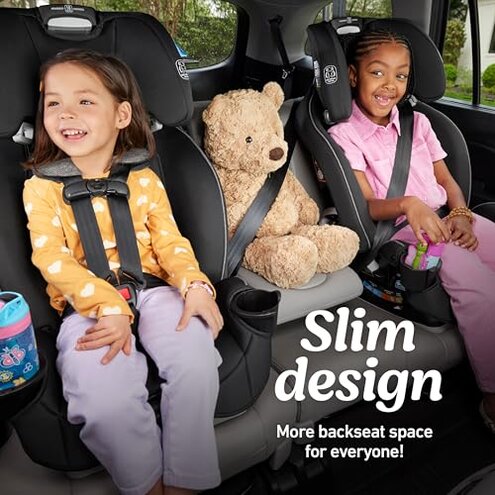
| Back-seat space | Mixed: Slim profile helps but still crowds booster users in many vehicles. | Typical: Mid-range options trade bulk for better long-term fit in varied cars. |
| Harness adjustment | Persistent: Adjustment can feel stiff or awkward for everyday use. | Expectation: Most peers offer smoother single-motion adjustments without extra fiddling. |
| Cleaning & upkeep | Reported: Fabric care and removing covers adds time and fuss after repeated use. | Better: Competing models often have easier-to-remove covers or machine-washable liners. |
| Regret trigger | Higher-than-normal risk: Installation and day-to-day harness friction combine to produce more ongoing hassle than typical. | Lower risk: Mid-range seats more often avoid this combined burden. |
Top failures
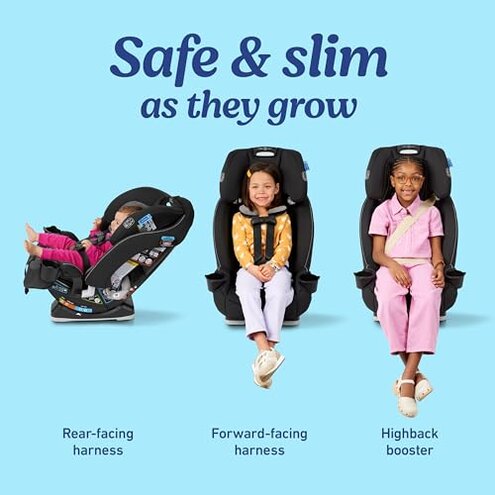
Why is installation so fiddly?
Regret moment: You feel the seat isn't tight enough after installation and must redo it.
Pattern: This problem is commonly reported across written reviews and videos, not universal but frequent.
When it appears: It shows up during first-time setup and often returns after adjusting for forward-facing mode.
Why worse-than-expected: Unlike many mid-range seats that lock in easily, this model requires extra tightening steps and checks, adding installation time.
Why does the harness feel hard to adjust?
- Early sign: Harness feels stiff the first time you lift the headrest.
- Frequency tier: This is a primary issue for many daily users, appearing during routine height changes.
- Cause: Adjustment mechanism often needs a firmer pull or two to move smoothly.
- Impact: Repeated use makes quick transfers between children take longer.
- Fixability: Some buyers report it eases after break-in, but others keep experiencing friction.
Why doesn't it save as much space in some cars?
- Hidden requirement: You must measure back-seat depth and LATCH location to confirm fit before buying.
- Scope signal: This mismatch is seen across compact sedans and some crossovers, not only large vehicles.
- When it appears: Problem shows when adding a second car seat or fitting a booster behind a front passenger.
- Why worse: Buyers expected the “slim” design to free space, but it often still crowds adjacent seats.
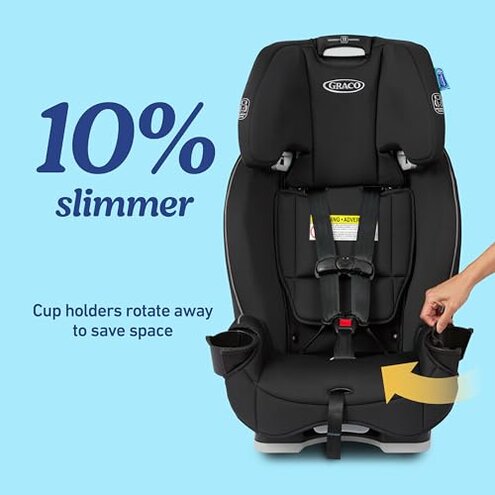
- Attempts: Users tried rotating cup holders and using belt routing, with mixed results.
- Workaround: Often requires choosing a genuinely narrow-profile seat or rearranging passengers.
Why does cleaning and daily upkeep become a chore?
- Early sign: Removing crumbs and stains takes extra time compared with some rivals.
- Frequency tier: This is a secondary issue that appears after weeks of regular use.
- Cause: Cover removal and reinstallation need careful routing to keep harness parts accessible.
- Impact: Parents report longer laundry cycles and more disassembly steps than expected.
- Attempts: Many buyers resort to hand-cleaning or spot treatments instead of full cover washes.
- Hidden cost: Time spent cleaning adds to the seat's ownership burden compared with cleaner-friendly models.
- Edge-case: Spills near adjustment points can require partial disassembly to clean properly.
Illustrative excerpts
Illustrative: "Tightening took three tries and still feels loose."
Pattern: Reflects a primary installation complaint.
Illustrative: "Headrest clicks but the harness stuck the first month."
Pattern: Reflects a secondary adjustment friction pattern.
Illustrative: "Says slim but barely fit behind my front seat."
Pattern: Reflects an edge-case vehicle-fit mismatch.
Who should avoid this
- Small-car owners: If you need guaranteed extra back-seat space, this model may still crowd seats.
- Frequent installers: Families who swap the seat between cars often will find installation friction frustrating.
- Low-tolerance parents: If quick harness adjustments are needed every ride, the fuss is more than typical.
Who this is actually good for
- Single-car households: If you install once and keep the seat in one vehicle, installation fuss is tolerable.
- Space-conscious families: Buyers who prioritize a slightly slimmer profile over perfectly freeing space may accept trade-offs.
- Budget-minded buyers: If you need a multi-stage seat at this price, you can accept extra upkeep to save cost.
Expectation vs reality
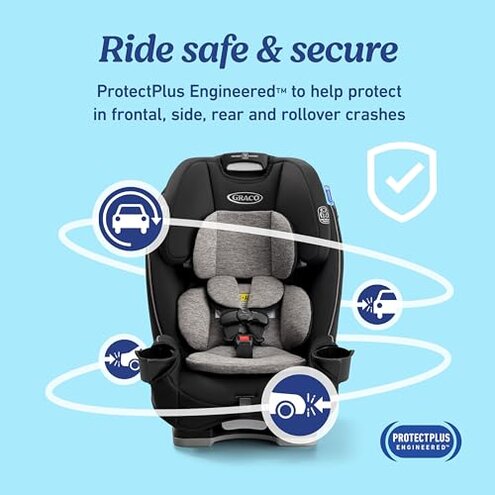
- Expectation: Reasonable for the category that "slim" equals easier back-seat fit; Reality: it often still crowds adjacent seating.
- Expectation: Harness adjusts in one smooth motion; Reality: adjustment can be stiff initially and require repeated pulls.
- Expectation: Covers are quick to remove for cleaning; Reality: cover removal needs careful routing and adds time.
Safer alternatives
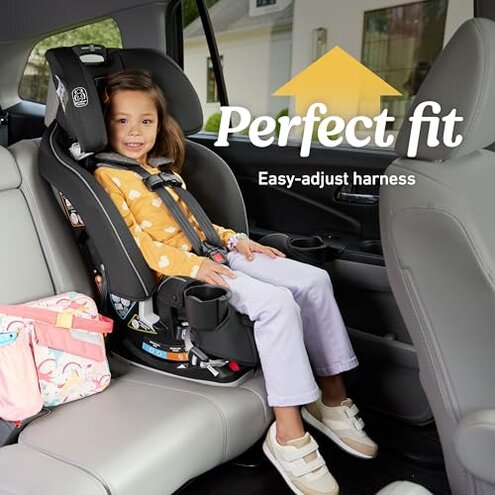
- Measure first: Check your vehicle's back-seat depth and LATCH spacing to avoid fit surprises.
- Prefer easy-adjust: Look for seats with clearly demonstrated single-action headrest and harness mechanisms to avoid friction complaints.
- Removable-liner: Choose models with advertised quick-release covers or machine-washable liners for easier cleaning.
- Try in-car: When possible, test-install a competitor in your car to confirm real-world space savings.
The bottom line
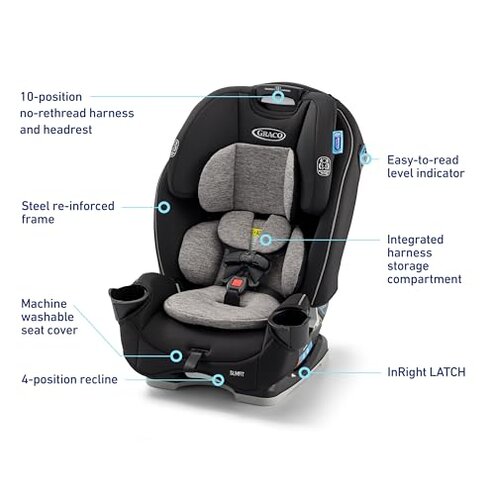
Main trigger: Installation difficulty combined with harness adjustment friction creates the clearest regret for many buyers.
Why worse: These issues pile up during everyday use and are more disruptive than typical for mid-range convertible seats.
Verdict: Consider avoiding this model if you need quick swaps, guaranteed tight installs across cars, or minimal upkeep time.
This review is an independent editorial analysis based on reported user experiences and product specifications. NegReview.com does not sell products.