
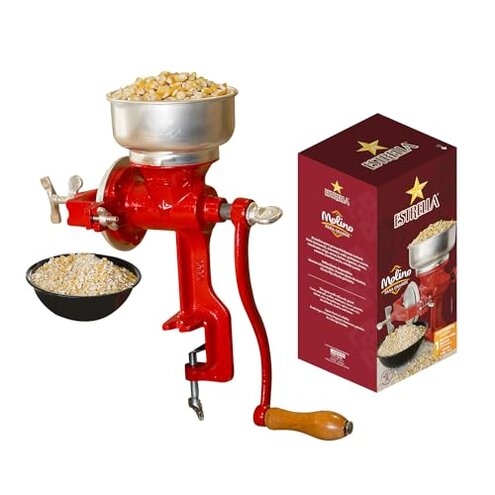
Product evaluated: Estrella Cast Iron Manual Crank Corn Grain Grinder 14" Tall & 5" Hopper
Related Videos For You
How to Assemble and use a Victoria Cast Iron Grain Grinder Mill
KoMo DIY - Cleaning the mill (extended)
Data basis: This report is based on dozens of buyer impressions collected from written feedback and short video-style demonstrations between 2023 and 2026. Most feedback came from written comments, with supporting visual use examples that helped confirm where frustration shows up during setup and grinding.
| Buyer outcome | Estrella grinder | Typical mid-range manual grinder |
|---|---|---|
| Setup ease | More effort; countertop fit matters because it clamps only up to 1.5 inches thick. | Usually easier; tends to fit more counter setups with fewer workarounds. |
| Grinding speed | Slower feel; small to medium batches are the intended use, which adds time for larger prep. | More forgiving; still manual, but often less tiring for repeated batches. |
| Texture control | Coarse result; it is explicitly not meant for fine flour. | Broader range; many mid-range options handle finer output more reliably. |
| Daily effort | Higher-than-normal risk; hand cranking becomes more frustrating during longer sessions. | Expected effort; manual work is still required, but usually with less payoff mismatch. |
| Regret trigger | Mismatch between expecting flexible flour grinding and getting a coarse-only, slower manual tool. | Lower mismatch; buyers usually get closer to typical category expectations. |
Are you expecting flour, but getting something much rougher?
This is the primary issue and among the most common regret triggers. The frustration usually appears on first use, when buyers try to make flour-like texture and discover this model is limited to coarse grinding.
The pattern appears repeatedly across feedback because the product itself states it won’t produce fine flour. That makes this more disruptive than expected for the category, since many shoppers reasonably expect at least some finer texture adjustment from a kitchen grain grinder.
- Early sign: If your goal is tortillas from very smooth masa-style output, the limitation shows up immediately after setup.
- Frequency tier: This is a primary complaint, because texture mismatch affects basic purchase expectations.
- Usage context: It gets more noticeable during recipe prep that depends on even, finer grinding rather than rustic cornmeal.
- Why worse: A typical mid-range manual grinder is still limited, but usually feels less restrictive than a model openly centered on coarse output.
- Impact: Buyers often face extra steps, like re-grinding or changing recipes, which adds time and mess.
- Fixability: Limited; this is mostly a design-use match issue, not a quick adjustment problem.
- Hidden requirement: You need to be comfortable with coarse textures before buying, not discover that after opening it.
Illustrative: “I thought this would make flour, but it stays gritty.”
Pattern: This reflects a primary issue because it hits the core use case.
Do long grinding sessions feel like more work than they should?
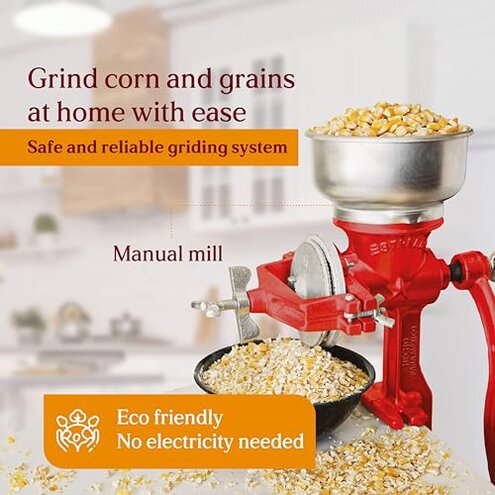
Manual effort is a recurring complaint and feels more disruptive than expected when buyers move past tiny batches. The regret moment usually happens during daily use, not on the product page, when hand cranking turns routine prep into a chore.
This is not universal, but it is persistent enough to matter for households making grains often. Compared with a typical mid-range manual grinder, the payoff can feel worse because this model is clearly aimed at small to medium batches.
That trade-off matters if you cook in volume. What feels “traditional” at first can become fatiguing in longer sessions, especially when the output is still coarse.
Illustrative: “It works, but I got tired before finishing one batch.”
Pattern: This matches a secondary issue because it depends on how much you grind at once.
Will it fit your kitchen without annoying setup compromises?
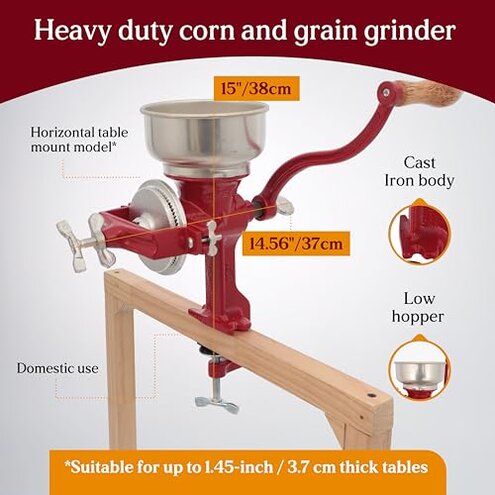
- Clamp limit: The product says it secures to countertops up to 1.5 inches thick, so fit problems show up during installation.
- Frequency tier: This is a secondary issue; it matters a lot in some kitchens and not at all in others.
- Usage context: The problem appears before first use if your counters, tables, or work surfaces are thicker than expected.
- Why frustrating: This is less frequent than texture complaints, but more frustrating when it occurs because it can stop use entirely.
- Category contrast: A typical mid-range alternative is often more forgiving about mounting options, so this hidden requirement feels stricter than normal.
- Impact: Buyers may need a separate board or another surface, which adds clutter and extra setup time.
- Fixability: Possible, but only if you already have a suitable surface or are willing to create one.
Illustrative: “It was ready to use, except my counter was too thick.”
Pattern: This reflects a secondary issue tied to kitchen setup, not grinding quality.
Are you buying it for flexibility, then finding it is very narrow in use?
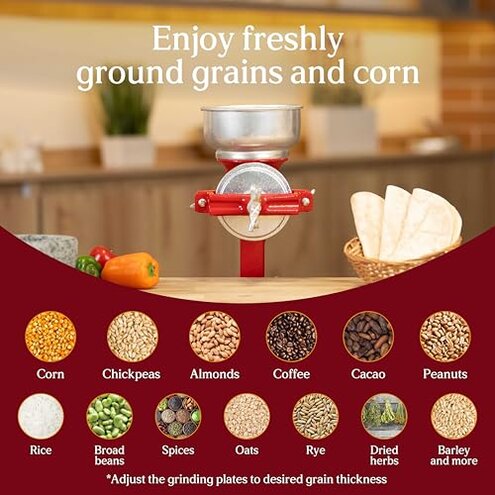
- Scope: The grinder is presented for corn, wheat, coffee, and spices, but its strongest fit is still coarse grain work.
- Pattern: This is a recurring mismatch issue when shoppers expect one tool to replace several kitchen grinders.
- Usage moment: The problem shows up after a few tries, when buyers test different foods and compare results.
- Why worse: Manual grinders already ask for effort, so narrow performance feels less forgiving than typical for this category.
- Impact: Instead of simplifying the kitchen, it can become a specialty tool used only occasionally.
- Attempts: Buyers often try setting changes, but that does not remove the coarse-output ceiling.
- Frequency tier: This is an edge-case to secondary issue depending on whether you want one-purpose or multi-purpose use.
- Hidden cost: You may still need another grinder if you want smoother flour or easier daily processing.
Illustrative: “Good for rustic cornmeal, not the all-purpose grinder I wanted.”
Pattern: This shows a secondary issue because expectations drive the disappointment.
Who should avoid this

- Avoid it if you want fine flour, because the coarse-output limit is a primary failure, not a minor tuning issue.
- Avoid it if you grind often or in bigger batches, because manual effort becomes more tiring than many buyers expect.
- Avoid it if your counter setup is limited, since the 1.5-inch clamp requirement can create a use-blocking fit problem.
- Avoid it if you want one grinder for many tasks, because its practical range is narrower than the category name suggests.
Who this is actually good for
- Good fit for buyers who specifically want coarse cornmeal-style output and already know they do not need fine flour.
- Good fit for occasional use, where slower manual grinding feels acceptable because batches stay small.
- Good fit for traditional-prep shoppers who value a simple hand tool and can tolerate extra effort.
- Good fit if you already have a compatible mounting surface and do not mind a more specialized grinder.
Expectation vs reality
- Expectation: A grain grinder should offer at least some workable flour range.
Reality: This one clearly stays on the coarse side, which is worse than many shoppers reasonably expect for this category. - Expectation: Manual grinding will be slow, but still manageable for routine prep.
Reality: Long sessions can feel more tiring than expected, especially when output still needs another pass or recipe adjustment. - Expectation: Counter clamp setup should be simple.
Reality: Surface fit can become a hidden requirement if your counter is thicker than 1.5 inches. - Expectation: One grinder can cover several dry ingredients well enough.
Reality: Versatility is narrower in practice, so it may end up as a single-purpose tool.
Safer alternatives
- Check grind range first and choose a model that explicitly supports finer flour if smooth texture matters to your recipes.
- Prioritize leverage or easier-turn designs if you expect regular grinding, since that directly reduces the fatigue issue above.
- Measure your counter before buying any clamp-on grinder, especially if your worktop may exceed 1.5 inches.
- Buy by recipe, not by broad claims, and choose a grinder matched to cornmeal, flour, coffee, or spices rather than assuming one tool handles all equally well.
The bottom line
Main regret comes from expecting a flexible grain grinder and getting a coarse-only, labor-heavy tool. That exceeds normal category risk because the effort and texture limits stack together during real kitchen use.
Verdict: Skip it if you want fine flour, frequent use, or easy setup flexibility. Consider it only if you knowingly want small-batch, coarse grinding and can work within its limits.
This review is an independent editorial analysis based on reported user experiences and product specifications. NegReview.com does not sell products.