
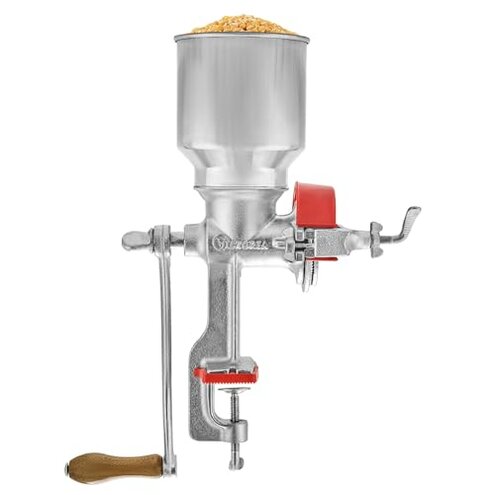
Product evaluated: Victoria Manual Cast Iron Grain Mill with High Hopper, Premium Corn-Grinding Mill and Grain Grinder, Made in Colombia
Related Videos For You
How To Install & Use a Grain Mill - Tricks to Milling Your Own Grain!
KoMo DIY - Hand mill coarse-fine adjustment
Data basis: This report summarizes dozens of buyer comments collected from written feedback and video demonstrations between 2023 and 2026. Most input came from short written reviews, with added context from longer use notes and setup clips, which helps separate first-use frustration from problems that show up during repeated grinding.
| Buyer outcome | Victoria mill | Typical mid-range manual mill |
|---|---|---|
| Grinding effort | Higher hand effort, especially on harder grains and longer sessions | Moderate effort that feels more predictable |
| Texture control | Less consistent from pass to pass for fine grinding | More even coarse-to-medium output |
| Setup demands | Higher-than-normal risk of clamp and surface fit issues | Usually easier to secure on common counters |
| Cleanup time | More upkeep if you switch foods or grind oily items | Often simpler for grain-only use |
| Regret trigger | Buying it for flour-like results or quick daily use | Buying it for coarse meal with lighter routine use |
Need flour-like texture, but getting cracked grain instead?
This is among the primary issues buyers run into. The regret moment usually appears after setup, when the first batches come out more coarse or uneven than expected.
The pattern appears repeatedly in feedback and is not universal, but it becomes more obvious when people try wheat-style flour or very fine cornmeal. Compared with a typical mid-range manual mill, this feels less forgiving because the adjustment range still stops short of the fine powder some buyers expect.
- Early sign: During first use, tightening the adjustment screw still leaves pieces larger than expected.
- Frequency tier: This is a primary complaint, especially for buyers expecting baking flour instead of coarse meal.
- Usage moment: It shows up most during fine-grind attempts, not simple cracked grain or rough corn prep.
- Category contrast: Manual mills usually struggle with superfine output, but this one is more limiting than expected because the product pitch sounds broader than the real result.
- Impact: It adds extra passes, extra time, and sometimes still does not reach the target texture.
- Attempts: Buyers commonly try re-feeding the same grain several times to improve fineness.
- Fixability: The issue is only partly fixable because repeat grinding helps some, but not enough for flour-focused use.
Illustrative: “I wanted flour, but it keeps making rough meal.” Primary pattern.
Does the hand-cranking become more work than you expected?
- Primary burden: Repeated feedback says the mill can feel labor-heavy during longer grinding sessions.
- When it hits: The strain usually shows up after the first small batch, once buyers move from testing to real meal prep.
- Worse conditions: Harder grains and repeated passes make the resistance feel more disruptive than expected for this category.
- Not universal: Some buyers accept the workout, but the complaint is persistent across different use cases.
- Category contrast: Manual mills are never effortless, yet this one often feels slower and more tiring because users may need multiple passes for the texture they want.
- Real cost: The issue is not just comfort. It can turn a simple kitchen task into a longer project.
Illustrative: “Small test batches were fine, then a real batch felt endless.” Primary pattern.
Will it stay stable on your counter while you grind?
Clamp fit is a secondary issue, but it becomes very frustrating when it happens. The problem usually appears during setup or the first harder crank, when buyers realize their table edge or work surface is not a great match.
This pattern is less frequent than texture complaints, yet more disruptive when it occurs because you cannot work around it easily in the moment. Compared with many mid-range manual grinders, the hidden requirement is better surface compatibility than some buyers expect.
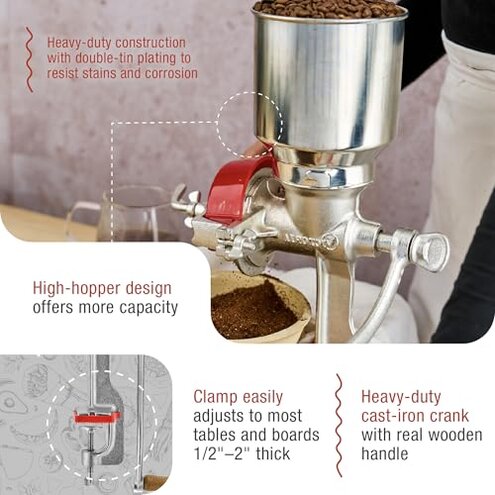
- Hidden requirement: You need a table or counter edge that matches the stated clamp range of 1/2 to 2 inches.
- Worse conditions: Slick, delicate, rounded, or awkward edges can make the setup feel less secure during heavy cranking.
- Impact: Movement during use makes grinding slower and can affect consistency.
- Fixability: It is sometimes fixable by changing surfaces, but that adds setup hassle every time.
- Category contrast: Some manual mills need a sturdy surface, but this one can be pickier than normal in everyday kitchens.
Illustrative: “It works better after I find the one table it likes.” Secondary pattern.
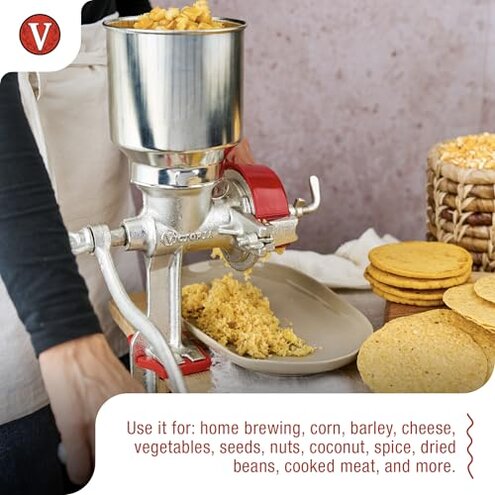
Thinking of using it for everything from nuts to meat?
- Mismatch risk: Broad-use claims create a secondary disappointment for buyers who expect easy switching between many foods.
- When it shows up: The issue usually appears after early experiments with oily, sticky, or strongly flavored foods.
- Real-world effect: Cleanup becomes more involved, especially if you want to switch back to grain without residue or flavor carryover.
- Pattern note: This is recurring, though less common than complaints about effort and fineness.
- Category contrast: Multi-use hand grinders often need extra cleaning, but this feels more demanding than expected because the product description suggests broader convenience.
- Buyer mistake: People who want one grinder for coffee, grain, spices, and other foods often underestimate the upkeep.
- Fixability: The safest fix is using it for fewer food types, which reduces the value of its wide-use promise.
- Edge-case note: For occasional single-purpose corn or grain use, this complaint matters much less.
Illustrative: “It can do many foods, but not without extra cleanup.” Secondary pattern.
Who should avoid this
- Avoid it if you want flour-like texture for baking, because coarse output is a primary regret trigger and feels worse than many buyers expect.
- Avoid it if you plan daily larger batches, because hand effort becomes a primary complaint during longer sessions.
- Avoid it if your counters have limited overhang or awkward edges, because setup compatibility is a hidden requirement.
- Avoid it if you want one tool for many foods with quick cleanup, because the convenience trade-off is weaker than the broad claims suggest.
Who this is actually good for

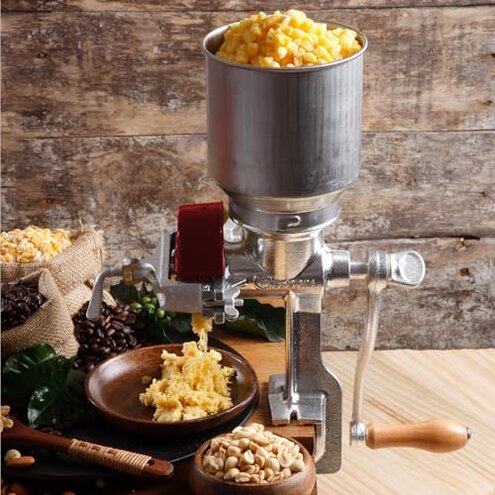
- Good fit for buyers who only need coarse corn or cracked grain and already expect manual effort.
- Good fit for occasional use where slower output is acceptable and repeated passes are not a deal-breaker.
- Good fit for people with a sturdy work surface that matches the clamp range and can handle firm cranking.
- Good fit for single-purpose grinding, where cleanup and flavor carryover matter less.
Expectation vs reality
- Expectation: A manual grain mill should give a reasonable for this category coarse-to-medium grind with manageable effort.
- Reality: This one can require more repeat passes and more arm work than expected, which raises the time cost.
- Expectation: A broad-use grinder should switch between foods without much friction.
- Reality: Multi-food use often adds cleanup steps that make the versatility feel less practical.
- Expectation: Clamp-on setup should be simple on most kitchen surfaces.
- Reality: Surface fit can be pickier than expected, which becomes obvious during the first hard crank.
Safer alternatives
- Choose burr detail over broad marketing if fine texture matters, and look for clear buyer proof of flour-like output.
- Choose lighter-duty goals if you want manual grinding, and shop for coarse meal use instead of baking flour expectations.
- Choose base stability by checking clamp range and your counter thickness before buying any hand mill.
- Choose single-purpose use if you want less cleanup, especially for grain-only grinding instead of mixed food use.
- Choose easier throughput if you grind often, and consider a more efficient manual design or a powered option.
The bottom line

Main regret starts when buyers expect easy fine grinding and get a slower, coarser, more tiring process instead. That exceeds normal category risk because the extra effort often comes on top of repeat passes and setup sensitivity. Skip it if you want flour, frequent use, or easy all-purpose convenience. It makes more sense only for occasional coarse grinding with a sturdy setup.
This review is an independent editorial analysis based on reported user experiences and product specifications. NegReview.com does not sell products.