
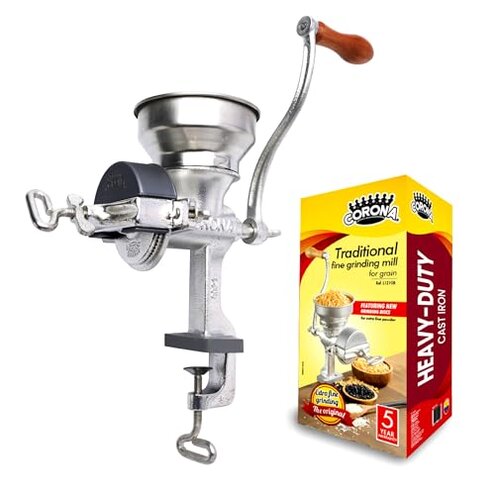
Product evaluated: Corona Corn Grinder with Low Hopper, Grain Mill, Manual Grinder For Corn, Rice, Soybeans, Pepper, Chickpeas, Cast Iron Wheat Grinder For Domestic Use
Related Videos For You
How To Install & Use a Grain Mill - Tricks to Milling Your Own Grain!
Tips to Maintain Your Grain Mill | Impact Mill | Stone Grind Mill | Grain Mill Maintenance
Data basis: This report draws on dozens of buyer impressions collected from written feedback and video-style demonstrations between 2023 and 2026. Most input came from longer written accounts, with supporting clips and photo-led comments helping confirm what happens during setup, grinding, and cleanup.
| Buyer outcome | Corona grinder | Typical mid-range alternative |
|---|---|---|
| Grinding effort | Higher effort during normal use, especially with harder or drier grains | Moderate effort for hand-crank use, usually less tiring in short sessions |
| Texture control | Less consistent results after setup and between batches | More predictable output with fewer adjustment repeats |
| Stability | Higher-than-normal risk of movement or awkward mounting on some counters | Usually easier to secure for routine kitchen use |
| Cleanup burden | More cleanup from dust, fragments, and plate re-adjustment | Less fussy cleanup for occasional grinding |
| Regret trigger | Buying it like a simple kitchen helper and finding it needs patience, strength, and tinkering | Buying it for occasional use and getting closer to expected convenience |
Why does it feel harder to use than expected?
Primary issue: The most common frustration is not that it fails to grind, but that it takes more physical work than many buyers expect. That regret usually shows up on the first serious batch, when the novelty wears off and the hand-cranking starts to drag.
Pattern: This appears repeatedly across user feedback, especially during longer sessions or when grinding tougher dry foods. For a manual mill, effort is normal, but this often feels more disruptive than expected for home use.
- Early sign: Resistance shows up fast once the hopper is filled beyond a light test amount.
- When it hits: The strain is most obvious during daily use or when making enough for a family recipe.
- Worsens with: Harder grains, repeated cranking, and trying to push for finer texture make the handle feel more demanding.
- Impact: Buyers expecting a quick prep tool often end up slowing down or splitting the job into smaller batches.
- Category contrast: Manual mills always need effort, but this one is less forgiving than many mid-range hand mills for casual cooks.
Why is the grind size so hard to dial in?
- Secondary issue: Texture inconsistency is a persistent complaint, though less frequent than effort, and it becomes obvious after setup.
- Pattern: Feedback commonly describes needing several adjustment tries before getting something usable for a specific recipe.
- Usage moment: The problem shows up when switching from coarse cracking to a finer grind for doughs or tortillas.
- Cause in practice: Small adjustment changes can produce noticeably different output, which adds trial and error.
- Buyer impact: This can waste time and ingredients because the first pass may be too coarse or uneven.
- Hidden requirement: You often need patience and testing, not just assembly, before the mill feels predictable.
- Category contrast: Some inconsistency is reasonable for this category, but this often needs more re-tuning than typical mid-range options.
Why does mounting become its own project?
Regret moment: A manual grinder should feel straightforward once clamped down. Here, a recurring frustration is that the setup can be pickier than expected depending on the counter edge and work area.
Pattern: This is not universal, but it is a persistent issue across different home setups. It usually appears before first real use, then returns any time the grinder is moved or stored away.
Worsens when: Counters are thicker, edges are rounded, or the user wants a very stable position for heavier grinding. That makes the tool feel less like a grab-and-use appliance and more like something that needs a dedicated spot.
Category contrast: Clamp-style mills always depend on the counter, but this creates a higher setup burden than many buyers expect from a domestic kitchen tool.
- Practical effect: If the fit is awkward, the grinder can shift enough to make cranking feel less smooth.
- Time cost: Buyers may spend extra setup time finding a usable edge before each session.
- Fixability: A suitable counter helps, but that is a hidden requirement many shoppers do not plan for.
- Frustration level: Less frequent than grind effort, but more annoying when it blocks use completely.
Why does a simple batch turn into extra cleanup?
- Edge-case issue: Cleanup is not the main complaint, but it appears repeatedly enough to matter once the mill is used often.
- When it shows: The mess becomes more noticeable during repeated use, especially when adjusting plates or changing grain type.
- What buyers notice: Small fragments, dust, and leftover material can mean more brushing and wiping than expected.
- Why it frustrates: The tool saves electricity, but it often gives back that savings in extra cleanup steps.
- Attempted workaround: Smaller batches and slower feeding can help, but they also stretch out the prep time.
- Category contrast: Manual mills are rarely spotless, yet this can feel more upkeep-heavy than most mid-range alternatives for occasional users.
Illustrative excerpts
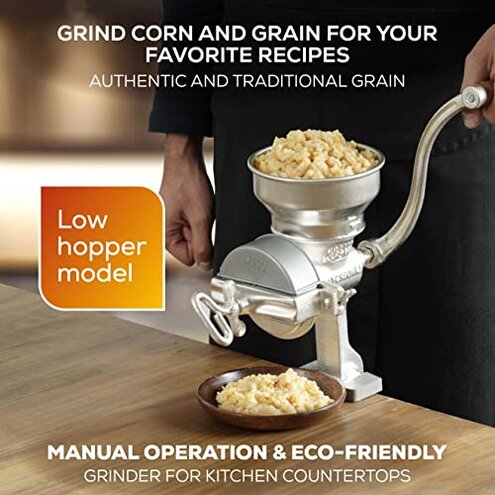
Illustrative: “I thought hand-crank meant simple, not this much arm work.”
Primary pattern: Reflects the most common complaint about effort during real food prep.
Illustrative: “One turn too far, and the texture changed completely.”
Secondary pattern: Reflects the repeated issue of fussy adjustment after setup.
Illustrative: “It works, but I need the right counter every time.”
Secondary pattern: Reflects the persistent mounting limitation tied to kitchen layout.
Illustrative: “Grinding was fine, cleaning the bits after was the annoying part.”
Edge-case pattern: Reflects the less common but recurring cleanup burden.
Who should avoid this
- Avoid it if you want fast meal prep with low effort, because the hand force needed is among the most common complaints.
- Avoid it if you need repeatable fine texture without test batches, because the adjustment process is less predictable than many expect.
- Avoid it if your kitchen lacks a reliable clamp-friendly edge, because setup stability can become a recurring block to use.
- Avoid it if you dislike tools that add cleanup and tuning, because this asks for more hands-on involvement than a typical casual-use mill.
Who this is actually good for
- Good fit: Buyers who already expect a labor-heavy manual mill and do small batches can tolerate the effort better.
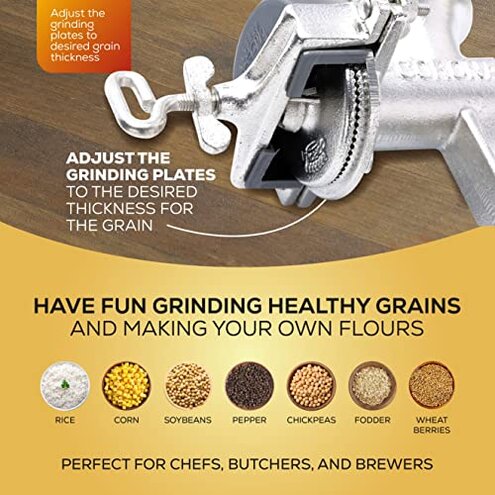
- Good fit: People making coarse or traditional preparations may accept the adjustment quirks because perfect fineness is not their main goal.
- Good fit: Users with a dedicated sturdy workspace can avoid much of the mounting frustration.
- Good fit: Shoppers choosing durability over convenience may accept extra cleanup and slower workflow as the trade-off.
Expectation vs reality
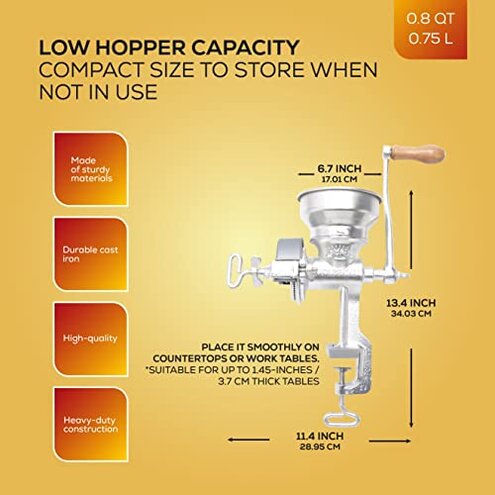
- Expectation: A manual grinder should need effort, but still feel manageable for ordinary kitchen batches.
- Reality: This often feels more tiring than that reasonable category baseline once you grind more than a small test amount.
- Expectation: Adjustment should take a little learning, then stay fairly predictable.
- Reality: Buyers commonly report repeat tuning when changing texture goals or ingredients.
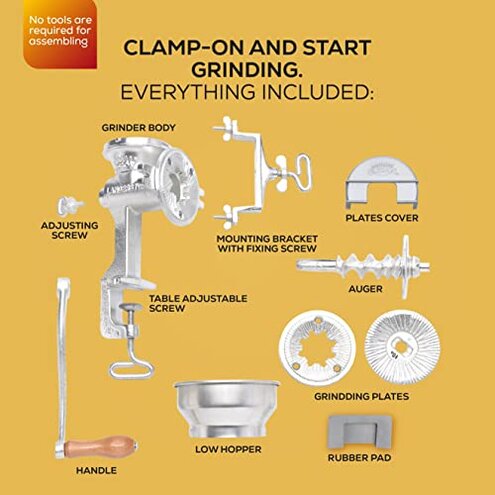
- Expectation: Clamp it on and start grinding.
- Reality: The usable setup can depend heavily on having the right counter, which many do not realize before buying.
Safer alternatives

- Choose easier-feed mills if arm strain is your main concern, especially for regular household batches.
- Look for finer adjustment control if recipe consistency matters more than old-style simplicity.
- Prioritize base stability or more flexible mounting if your counters have rounded or thick edges.
- Pick a lower-mess design if you want occasional use without added brushing, wiping, and re-tuning.
The bottom line
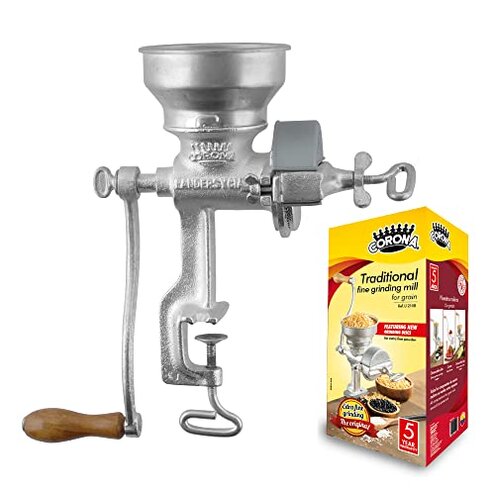
Main regret trigger: Buyers often expect a simple manual helper and get a tool that demands strength, setup care, and patience. That pushes its risk above a typical mid-range hand mill because the inconvenience is not just expected manual effort; it is the repeated combination of effort, tuning, and workspace dependence. Verdict: Avoid it if you want convenience or reliable fine-grind results without trial and error.
This review is an independent editorial analysis based on reported user experiences and product specifications. NegReview.com does not sell products.