
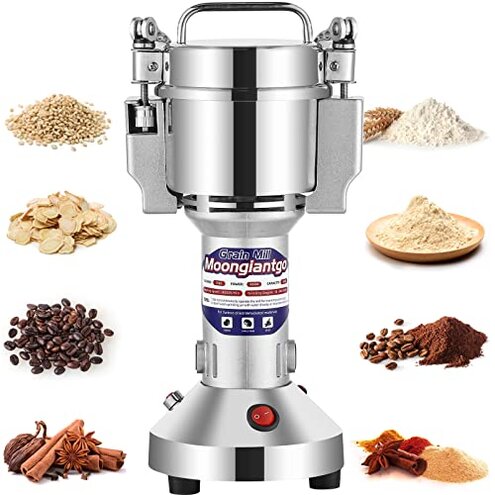
Product evaluated: Moongiantgo Grain Mill Grinder Electric 150g Commercial Spice Grinder 850W Stainless Steel Pulverizer Dry Grinding Machine for Wheat Corn Rice Pepper Herbs Coffee Beans (150g Upright, 110V)
Related Videos For You
Testing most powerful spice grinder for home 😍 #grinder #spicegrindingmachine #review #gadgetreview
How to Mill Grains with the KitchenAid Grain Mill
Data basis: This report uses dozens of feedback points collected from product-page writeups and short-form demonstration surfaces between 2020 and 2026. Most feedback came from written comments, with added context from visual use demonstrations that show noise, grind speed, and cleaning effort during real kitchen use.
Comparative risk snapshot
| Buyer outcome | This grinder | Typical mid-range alternative |
|---|---|---|
| Batch size ease | Higher risk of frustration because the usable fill range is narrow and easy to overdo. | Usually easier to load without stopping performance so quickly. |
| Cleanup time | More effort because the cup is not detachable and needs careful dry cleaning. | Usually simpler with easier wipe-out access or removable parts. |
| Session length | Short-work only because use is capped at 3 minutes, then it needs 5 to 10 minutes of rest. | More forgiving for back-to-back small jobs. |
| Texture control | Less predictable because there is only on/off control and finer results may need regrinding. | Typically steadier for getting close to the target texture with fewer repeats. |
| Regret trigger | Hidden limits show up after first use when buyers realize speed is offset by cooling breaks and careful loading. | Lower risk if you expect casual daily use with less babysitting. |
Top failures
Why does a “fast” grinder still turn one job into several steps?
Primary issue: The biggest regret point is not raw power. It is the extra workflow around it.
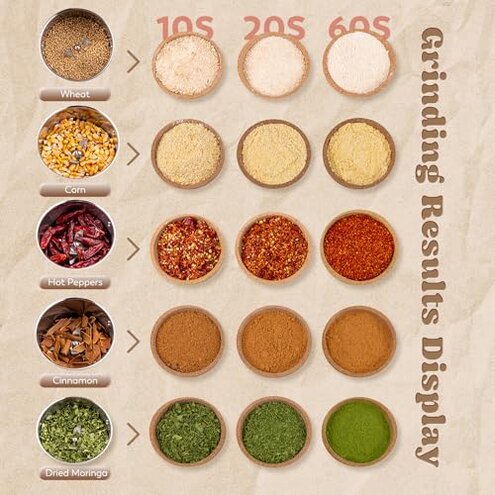
During daily use, this shows up when you want one quick grind and end up measuring carefully, stopping early, and sometimes sifting and running a second pass. That is more disruptive than expected for this category.
Recurring pattern: This is not universal, but it appears repeatedly when buyers want a finer powder from tougher dry items like grains or spices. The machine can grind quickly, yet the result may still need extra handling.
Category contrast: Small electric grinders usually need some pulse control, but this one is less forgiving because it only has an on/off button and the listing itself suggests regrinding if the texture is too coarse.
- Early sign: After setup, buyers notice there is no fine-control setting, only start and stop.
- Frequency tier: This looks like a primary complaint because it affects the main reason people buy a grinder.
- When worse: It gets worse with harder dry materials or when you want powder instead of a rough chop.
- Impact: The “quick” job can add extra time if you need to sift and grind again.
- Hidden requirement: Buyers may not expect that sieving can become part of normal use for finer results.
Will the cooling breaks get annoying if you grind often?
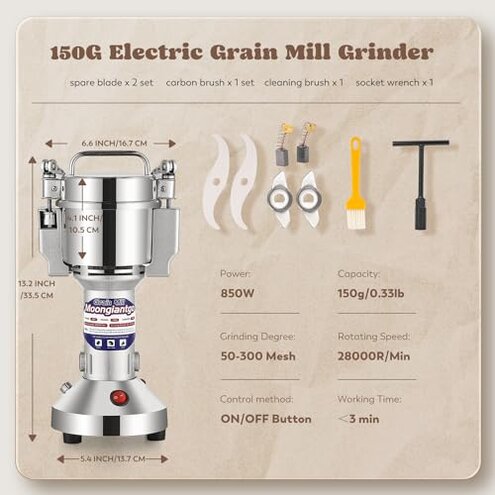
- Primary limit: The grinder is meant for short sessions, with use limited to 3 minutes before a 5 to 10 minute rest.
- Pattern: This is a persistent trade-off, not a random defect, because it comes directly from the stated operating limits.
- Usage moment: It shows up on the first longer batch or when you prepare several ingredients in a row.
- Why worse: Many buyers expect a small spice grinder to need breaks, but this is stricter than normal because the cooldown window is long compared with the short run time.
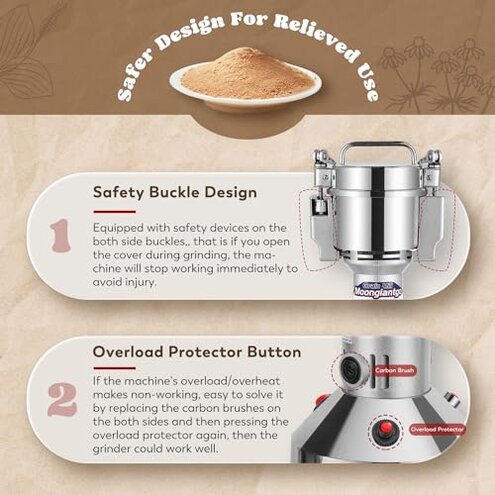
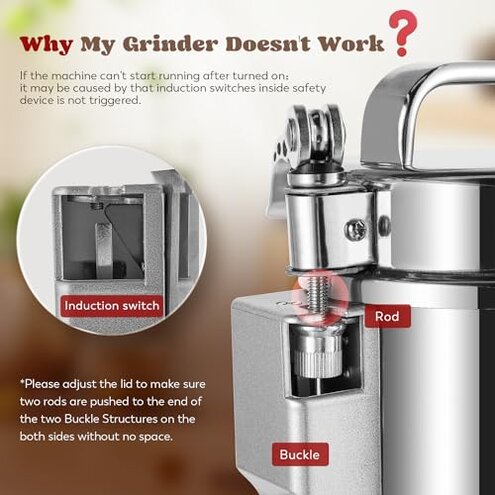
- Motor protection: The overload and heat protection can help prevent burnout, but they also mean interrupted workflow if you push too hard.
- Practical effect: If you grind for meal prep, herbs, coffee, and spices back-to-back, the machine can become a stop-and-wait tool.
- Fixability: You can reduce the annoyance by doing smaller batches, but that also means more loading and unloading.
Is cleanup more awkward than it looks?
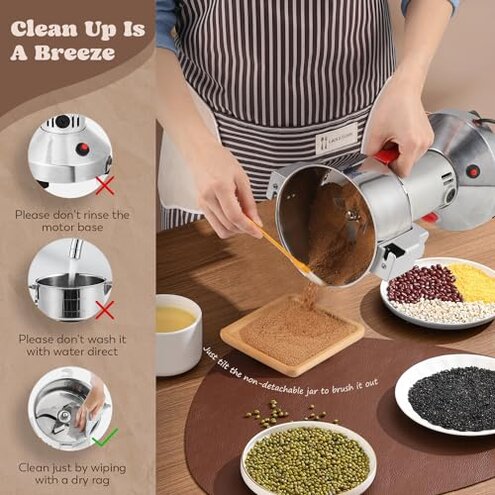
Secondary issue: Cleanup is a common frustration point because the grinding jar is not detachable. That changes a simple wash into a careful brush-and-wipe routine.
After each use, the inconvenience is easy to notice if you switch between ingredients often. For this category, that feels more upkeep than many mid-range alternatives.
- Pattern: This appears repeatedly whenever buyers mention routine kitchen use, not just edge cases.
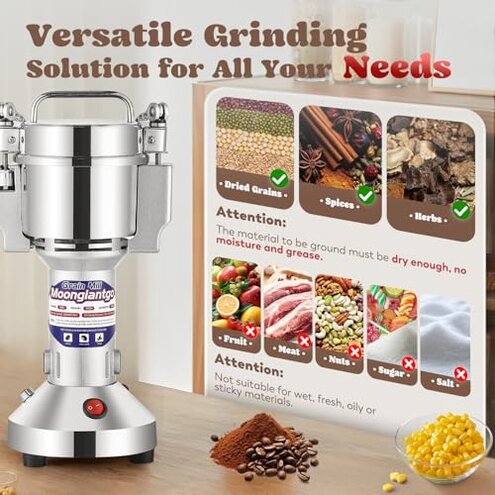
- Cause: The inside must be cleaned with a brush or dry cloth, not rinsed directly with water.
- Worsens when: It gets worse with fine powders that cling to the cup and blade area.
- Impact: Cleaning between coffee, spices, and herbs can add flavor carryover risk if you are not thorough.
- Hidden requirement: Buyers need to accept a dry-only cleaning routine, which is easy to miss before purchase.
- Compared with baseline: Many grinders need careful cleaning, but this one is less convenient because you cannot separate the cup for a normal wash.
Does the small capacity create more frustration than expected?
- Secondary complaint: The 150g size is a small-capacity design, and the listing warns that batches over about 100g should use a bigger model.
- When it hits: This becomes obvious during meal prep or when grinding for more than one person.
- Pattern: It is a recurring mismatch for buyers who assume the headline wattage means larger practical output.
- Why worse: Small grinders normally have limits, but this one has a narrow usable range because the material should cover the blade yet stay below about two-thirds full.
- Impact: That increases the odds of multiple batches, which then runs into the cooldown issue.
- Fixability: This is only fixable by changing habits or choosing a larger grinder.
- Regret point: The frustration is not just size. It is how size plus rest time compounds the delay.
- Edge note: For occasional tiny spice jobs, the capacity may be less of a problem.
Illustrative excerpts
- Illustrative: “It grinds fast, but getting powder-fine took another round.” — Primary pattern
- Illustrative: “I didn’t expect the long cooldown after such a short run.” — Primary pattern
- Illustrative: “Cleaning carefully without rinsing it is more annoying than I thought.” — Secondary pattern
- Illustrative: “Good for tiny batches, frustrating for weekly prep.” — Secondary pattern
Who should avoid this
- Avoid it if you want a grinder for frequent back-to-back use, because the cooldown rule exceeds normal patience for everyday prep.
- Avoid it if you expect easy washing, since the non-detachable cup creates more cleanup effort than many buyers tolerate.
- Avoid it if you need consistent fine powder without extra steps, because on/off-only control can mean regrinding.
- Avoid it if your normal routine involves larger batches, since the practical fill limits and rest time stack together.
Who this is actually good for
- Good fit for buyers doing small, occasional dry grinding who can tolerate cooldown breaks.
- Good fit if you mainly process single-ingredient batches and do not mind careful dry cleanup afterward.
- Good fit for users who already expect to sift and regrind when chasing a finer texture.
- Good fit if your priority is short-burst power, not convenience across multiple batches.
Expectation vs reality
Expectation: A small electric grinder should be reasonably simple for daily spice and coffee jobs.
Reality: This one asks for more babysitting, with strict load limits, rest periods, and dry-only cleaning.
Reasonable for this category: Some noise, some mess, and occasional pulsing are normal.
Worse than expected: The combination of regrinding, cooldown, and careful cleanup adds more time than many mid-range alternatives.
- Expectation: High wattage means easy larger batches.
- Reality: The usable batch size stays fairly small, and larger jobs quickly become multiple cycles.
Safer alternatives
- Choose a grinder with a removable cup if cleanup frustration is your biggest concern.
- Look for pulse or grind settings if you want finer texture control without repeated passes.
- Buy larger capacity if you often prep more than a small personal batch, especially for grains.
- Check duty-cycle guidance before buying if you need back-to-back grinding instead of short bursts.
- Separate coffee and spice use if you want to avoid odor and flavor carryover from dry-only cleaning.
The bottom line
Main regret trigger: The problem is not that it cannot grind. It is that the hidden limits around batch size, cooldown, texture control, and cleanup can make ownership feel tedious.
Why avoid: Those trade-offs are higher than normal for a mid-range household grinder if you want convenience, repeated use, or easy cleaning. Verdict: Avoid it for daily multi-batch kitchen use, and consider it only for small, dry, occasional grinding where patience is part of the plan.
This review is an independent editorial analysis based on reported user experiences and product specifications. NegReview.com does not sell products.