
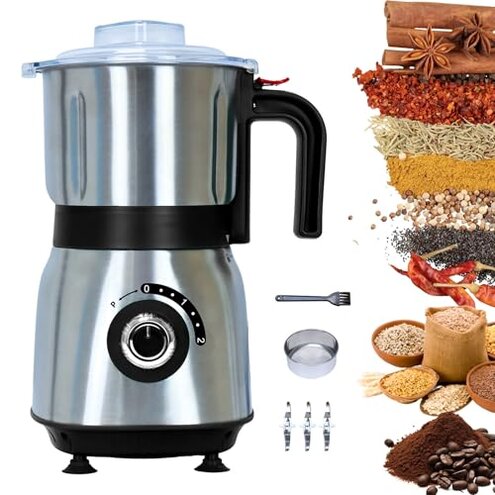
Product evaluated: Versatile Kitchen Grinder | 500W Electric Mill | Grinds Spices, Nuts, Grains, Coffee | 3 Stainless Steel Blades | Dry Use (Black)
Related Videos For You
How to clean a STICKY grinder!
A Beginner's Guide to Coffee Grinders
Data basis: This report draws from dozens of buyer comments collected from written feedback and short video-style demonstrations during the recent shopping period through 2025. Most input came from written reviews, with supporting signals from hands-on clips and buyer Q&A style remarks, which helps show both first-use impressions and daily-use problems.
| Buyer outcome | This grinder | Typical mid-range alternative |
| Batch grinding | Strong on paper, but long sessions add cooldown limits and extra handling. | Usually steadier for repeated small batches with fewer pauses. |
| Cleanup effort | Higher risk of awkward cleanup after fine powders and oily ingredients. | More manageable cleanup in normal daily use. |
| Daily convenience | Less forgiving if you want quick coffee or spice grinding without extra steps. | Typically simpler for frequent kitchen use. |
| Noise comfort | Commonly harsher sounding during short bursts. | Usually expected noise for the category. |
| Regret trigger | Hidden upkeep after messy grinding jobs and repeated cooldown waiting. | Mainly basic trade-offs, not repeated interruption. |
Why does a quick grind turn into a cleanup chore?
Cleanup burden appears among the most common complaints for grinders in this style, and it is more disruptive than expected for a basic kitchen tool. The regret moment usually happens right after grinding fine spices, coffee, or nuts, when powder clings in hard-to-reach spots.
Recurring pattern: this is not universal, but it appears repeatedly during daily use, especially when buyers switch between ingredients and want a fast rinse-and-go routine. Compared with a typical mid-range grinder, this feels worse because the promised convenience gets canceled by extra brushing, tapping, and waiting.
- Early sign: fine powder sticks around the blade area after the first few uses.
- Primary issue: cleanup effort is a top-tier frustration because dry residue gathers where fingers cannot safely reach.
- Worsens when: very fine spice grinding or oily nuts create more stubborn leftovers.
- Visible impact: flavor carryover becomes a concern if you rotate from coffee to spices.
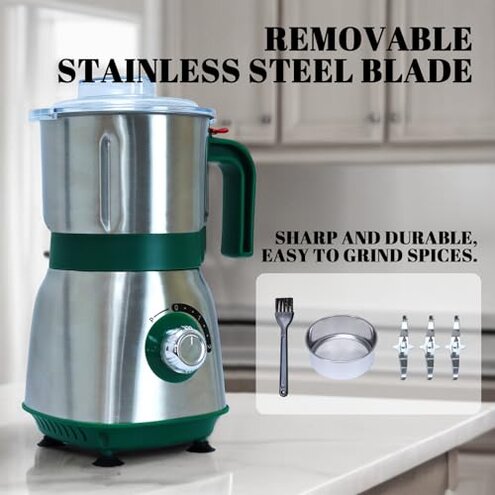
- Buyer attempt: the included brush helps somewhat, but it adds extra steps instead of solving the core hassle.
- Fixability: manageable for patient users, but not ideal for people expecting simple everyday cleanup.
Illustrative: “I finished one batch fast, then spent longer getting the powder out.” Primary pattern.
Does the large capacity actually help if you must stop and wait?
- Hidden requirement: the product guidance says to let it rest for 30 minutes after 15 minutes of continuous use.
- Primary issue: that cooldown rule is less frequent than cleanup complaints, but more frustrating when it interrupts meal prep.
- When it hits: the problem shows up during back-to-back grinding, bulk spice prep, or entertaining prep sessions.
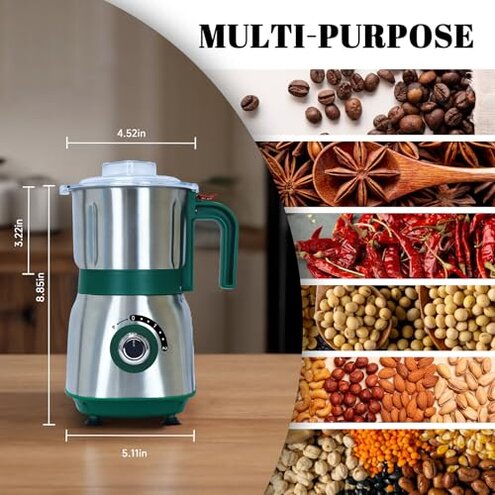
- Why it stings: a 600ML cup suggests larger batches, so buyers reasonably expect fewer interruptions.
- Category contrast: most mid-range alternatives still need breaks, but this setup feels less forgiving for heavier use than the capacity claim implies.
- Trade-off: the 500W motor may feel strong in short bursts, yet the real workflow slows if you push beyond quick jobs.
- Practical impact: users making several spice blends or grinding grain portions may need to split the work across extra time.
Illustrative: “The cup looks ready for a lot, but my prep had to pause.” Primary pattern.
Is the noise and control harsher than buyers expect?
Noise is a secondary issue, but it shows up often enough to matter in small kitchens. The frustration usually appears on first use, when buyers expect a normal grinder sound and get a sharper, more abrupt burst.
Persistent pattern: this is seen across multiple feedback types, especially during short morning use for coffee or spice grinding. Compared with many mid-range units, the problem is not just loudness, but the less pleasant sound profile during close-range kitchen use.
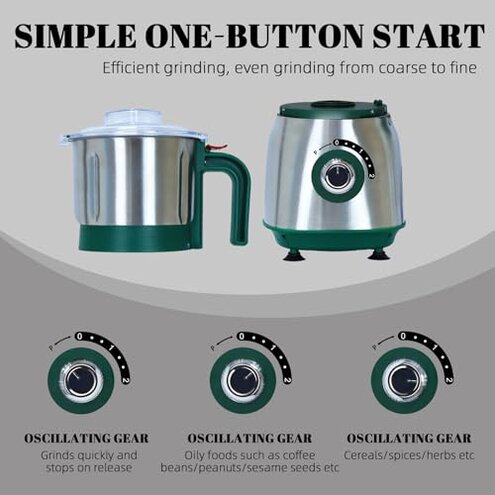
Control feel can also make consistency less predictable for some buyers. That matters more when you want repeatable texture instead of “close enough.”
- Secondary issue: sound is not the main regret trigger, but it adds stress in shared spaces.
- Usage moment: early-morning coffee grinding makes this more noticeable than daytime spice prep.
- Texture risk: short pulsing may take trial and error if you want a specific grind level.
- Why worse: typical grinders are noisy, but this kind of abrupt operation feels more intrusive than normal.
Illustrative: “It works, but it sounds rougher than the small grinder I replaced.” Secondary pattern.
Will the all-purpose promise hold up for every dry ingredient?
- Expectation gap: “spices, nuts, grains, coffee” sounds broad, but broad use often means more trial and error than buyers expect.
- Secondary issue: this is less common than cleanup complaints, yet it causes more regret when users want one grinder for everything.
- When it appears: it shows up after setup, once buyers rotate between very different ingredients and textures.
- Real cause: different dry foods leave different residue, resistance, and grind patterns, which changes the user experience.
- Hidden cost: switching from coffee to spices may require more cleaning attention to avoid taste transfer.
- Category contrast: most basic grinders are somewhat multipurpose, but truly convenient cross-use is usually better on models designed for easier cleaning.
- Fixability: workable if you dedicate it to one main use, less satisfying if you expect one-tool convenience.
- Edge note: buyers with narrow use cases report fewer headaches than people testing every claimed use.
Illustrative: “Good for one job, but switching uses made it more annoying.” Secondary pattern.
Who should avoid this
- Skip it if you want fast daily coffee grinding with minimal cleanup, because residue handling appears repeatedly and feels worse than normal.
- Avoid it if you prep large batches often, because the stated cooldown requirement can interrupt the very use case the larger cup suggests.
- Pass if you share a kitchen or need quieter mornings, since the sharper sound profile is a persistent annoyance.
- Not ideal if you want one grinder for many ingredients without flavor carryover risk or extra cleaning steps.
Who this is actually good for
- Good fit for buyers doing short, occasional spice grinding who can tolerate brush cleanup afterward.
- Works better for people who will dedicate it to one ingredient type, which reduces carryover and cleaning frustration.
- Fine choice for users who value brief power bursts more than all-day batch prep.
- Reasonable for patient cooks who do not mind cooldown pauses and already expect hands-on maintenance.
Expectation vs reality
Expectation: a 600ML grinder should make bigger prep sessions easier.
Reality: the stated rest rule can slow repeated use, which makes capacity less helpful than it first sounds.
Expectation: a brush and filter should mean easy cleaning.
Reality: fine powders still create extra cleanup steps during normal use.
Reasonable for this category: some noise is normal.
Worse here: the harsher sound and abrupt feel can be more annoying than many shoppers expect from a mid-range kitchen grinder.
Expectation: one grinder can handle coffee, spices, nuts, and grains without much compromise.
Reality: broad use often means more residue, more carryover risk, and more trial-and-error texture control.
Safer alternatives
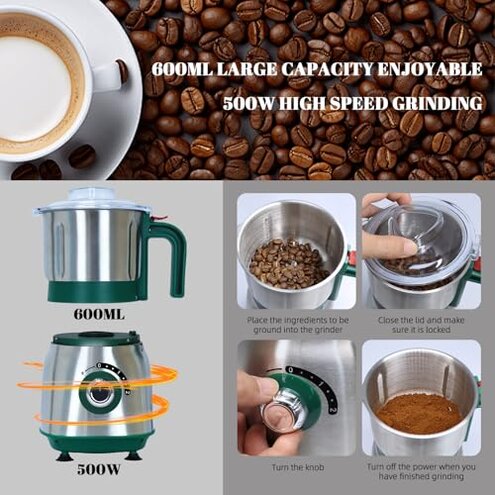
- Choose removable cups if cleanup is your main worry, because that directly cuts the residue problem described above.
- Look for short-session transparency if you grind in bulk, so motor rest limits do not surprise you after purchase.
- Pick a single-purpose grinder for coffee or spices if taste carryover would bother you.
- Prioritize noise demos in hands-on videos if you use it early in the morning or in a shared home.
- Favor simpler interiors if you want less brushing and fewer trapped powders after each batch.
The bottom line

Main regret comes from the mismatch between strong capacity-and-power claims and the extra cleanup and cooldown burden in real use. That exceeds normal category risk because the inconvenience hits during the exact moments buyers hoped to save time. Verdict: avoid it if you want frequent, low-hassle grinding; it makes more sense only for occasional short-burst use with modest expectations.
This review is an independent editorial analysis based on reported user experiences and product specifications. NegReview.com does not sell products.