
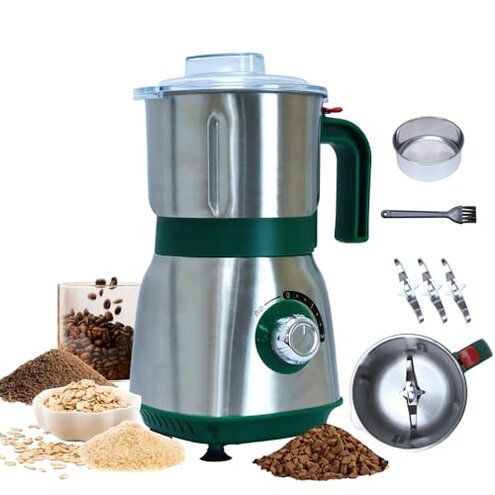
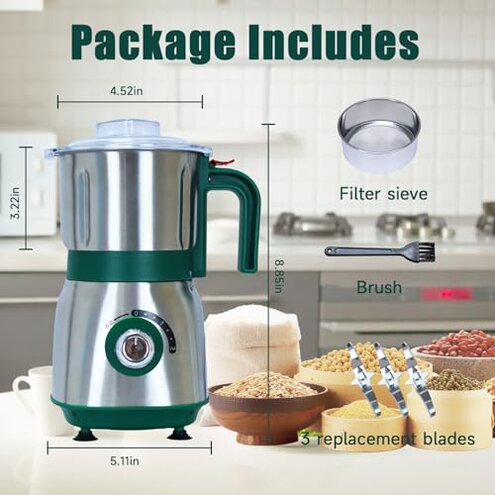
Product evaluated: Grinder for Kitchen, Spice Grinder Electric Dry Comes With 3 Removable Stainless Steel Blades, 500w Suitable For Grinding Spices, Herbs, Coffee Beans, Grains, Nuts (Green)
Related Videos For You
Electric Coffee & Spice Grinder #shorts
How to clean a STICKY grinder!
Data basis: This report is based on dozens of product-feedback signals collected from written buyer comments and short-form video demonstrations between late 2024 and early 2026. Most feedback came from written impressions, with added context from video use clips and product-page details that clarified operating limits and setup expectations.
| Buyer outcome | This grinder | Typical mid-range alternative |
|---|---|---|
| Session length | Strict limit of 90 seconds, then 2 minutes cooling, then 60 minutes after five cycles. | More forgiving for back-to-back small batches with fewer cooling interruptions. |
| Cleanup effort | Extra steps from removable parts and reassembly after each use. | Simpler rinse or wipe-down with fewer handling steps. |
| Batch convenience | Large cup sounds helpful, but cooling rules can slow real kitchen prep. | More balanced between cup size and practical repeat use. |
| Learning curve | Higher-than-normal risk because safe use depends on following timing rules closely. | Lower friction for casual users who just need quick grinding. |
| Regret trigger | Hidden requirement: you must manage rest periods or stop mid-task. | Less likely to interrupt meal prep or bulk spice grinding. |
Why does a large-capacity grinder still feel slow during real prep?
Primary issue: the biggest regret trigger is not power on paper, but how often use gets interrupted. This appears repeatedly when buyers try to grind several ingredients in one cooking session.
During daily use, the product itself requires a 90-second maximum run, a 2-minute cooldown after each run, and a 60-minute rest after five cycles. That is more disruptive than expected for this category, especially for a grinder marketed for spices, coffee, grains, and nuts.
Pattern: this is not a rare defect complaint. It is a built-in operating limit, so the friction shows up whenever someone does repeated batches or tries to prep for the week.
Category contrast: most mid-range kitchen grinders also need occasional breaks, but this one is less forgiving than normal because the rest schedule is unusually specific and time-heavy.
- Illustrative: “I finished one batch, then had to wait before starting dinner spices.” — Primary pattern
- Illustrative: “The cup is big, but the break times kill the convenience.” — Primary pattern
Do the removable parts really make cleaning easier?
- Secondary issue: the split design can help access tight spots, but it also adds handling steps after every use.
- Recurring pattern: this friction shows up after setup and during routine cleanup, not just on the first day.
- Early sign: buyers who expected a quick rinse often notice they must detach, clean, dry, and put parts back correctly.
- Real impact: that extra process can turn a short spice job into a longer chore, especially if you switch ingredients often.
- Hidden requirement: to avoid residue carryover, you need to keep the blade area consistently clean and fully reassembled before the next run.
- Category contrast: detachable parts are common, but this feels more upkeep than many mid-range alternatives that are easier to reset between batches.
- Fixability: this is manageable if you clean immediately, but less convenient if you want fast back-to-back use.
- Illustrative: “Easy to take apart, not as easy to keep ready.” — Secondary pattern
Will the multi-use claim hold up for coffee, grains, nuts, and spices?
- Primary issue: the broad use case sounds flexible, but real-world convenience drops when tougher or repeated grinding jobs need pause management.
- When it shows up: this becomes most noticeable during longer sessions, such as switching from coffee beans to spices or doing multiple dry ingredients in one go.
- Frequency tier: this is a primary issue because it affects normal kitchen planning, not just edge cases.
- Cause: the grinder may be strong enough for short bursts, but the allowed runtime creates a ceiling on how much you can do continuously.
- Buyer impact: that means claimed versatility can feel narrower in practice if you expected one machine for all prep tasks.
- Attempts: smaller batches can reduce frustration, but that also means repeating the same process more often.
- Category contrast: some grinders are limited by texture or consistency, but this one is more frustrating because the slowdown comes from operating rules, not just grinding results.
- Fixability: acceptable for occasional single-batch use, but less practical for bulk grinding or multi-step cooking days.
- Illustrative: “Fine for one thing, annoying when I needed several things done.” — Primary pattern
Is the 500W promise likely to feel stronger than it really is?
- Edge-case to secondary issue: power claims can create expectations of heavy-duty use, but the stated cooldown rules limit what buyers actually experience.
- Persistent pattern: the mismatch appears during first use when shoppers assume a stronger motor means fewer interruptions.
- Severity cue: this is less frequent than cleanup complaints, but more frustrating when expectations were set by the wattage and large-capacity language.
- Real-world effect: buyers may feel they paid for capacity and power they cannot use continuously in normal meal prep.
- Hidden requirement: you need to treat it like a short-burst grinder, not a heavier-duty countertop workhorse.
- Category contrast: short bursts are normal for this category, but the combination of big claims and strict cooling makes disappointment higher than normal.
- Illustrative: “I expected stronger everyday use from the size and wattage.” — Edge-case pattern
Who should avoid this
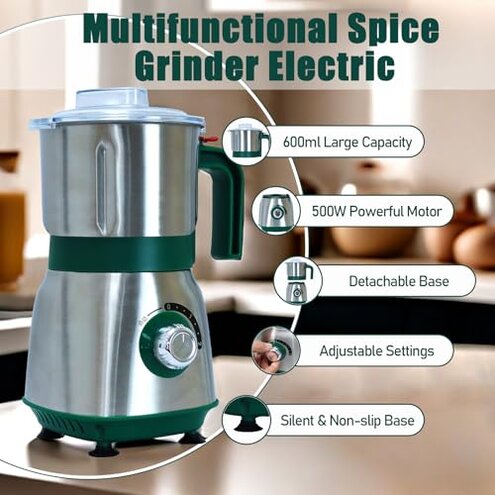
- Avoid it if you batch-prep spices, coffee, or grains, because the cooldown schedule can interrupt a normal kitchen workflow.
- Avoid it if you want low-effort cleanup, since the detachable design adds more reset time than many mid-range grinders.
- Avoid it if you buy by wattage and cup size, because the real limit is the strict duty cycle, not just power.
- Avoid it if multiple people will use it casually, since safe operation depends on following timing rules closely.
Who this is actually good for
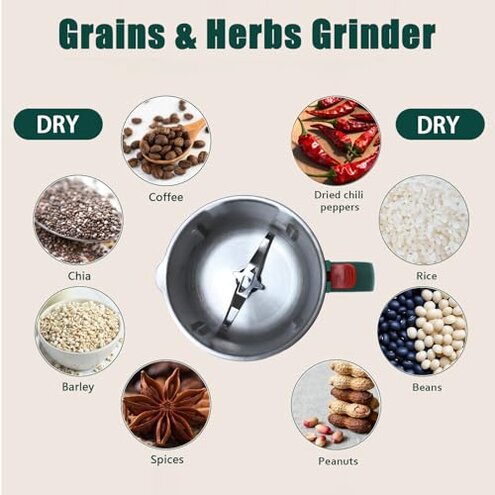
- Good fit for someone grinding one small dry ingredient at a time and willing to pause between jobs.
- Good fit for users who value removable parts enough to accept extra cleaning and reassembly steps.
- Good fit for occasional use kitchens where the 90-second limit is unlikely to be reached often.
- Good fit for buyers who read operating instructions carefully and do not mind cooldown planning.
Expectation vs reality
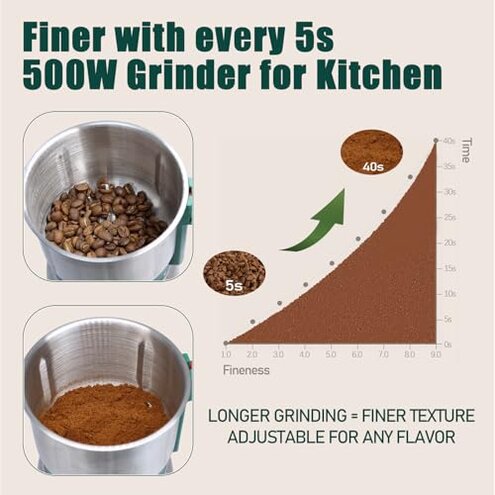
Expectation: A 600ml cup and 500W motor should make prep feel fast. Reality: the built-in cooldown schedule can make larger jobs feel slower than smaller-looking alternatives.
Expectation: Removable parts mean easier cleaning. Reality: they can also mean more steps, more drying, and more reassembly before the next batch.
Reasonable for this category: short-burst use is normal. Worse-than-expected reality: this model asks for stricter timing discipline than many mid-range grinders.
Safer alternatives
- Look for a grinder with a more forgiving duty cycle if you often do several batches in one cooking session.
- Choose a model with simpler cleanup if you switch between coffee, spices, and grains regularly.
- Prioritize real-use instructions over wattage claims, because cooling limits matter more than headline power.
- Check for clear batch-size guidance that matches daily use, not just maximum cup volume.
- Prefer a grinder described as suitable for repeated short jobs if your main goal is meal-prep speed.
The bottom line
Main regret trigger: this grinder asks for more waiting and more cleanup management than many buyers expect from its size and power claims. That makes it a higher-than-normal risk for busy kitchens or anyone planning repeated batches.
Verdict: if you want fast, flexible daily grinding, this is easier to skip. It makes more sense only if you can accept short bursts, cooldown planning, and extra cleanup steps.
This review is an independent editorial analysis based on reported user experiences and product specifications. NegReview.com does not sell products.