
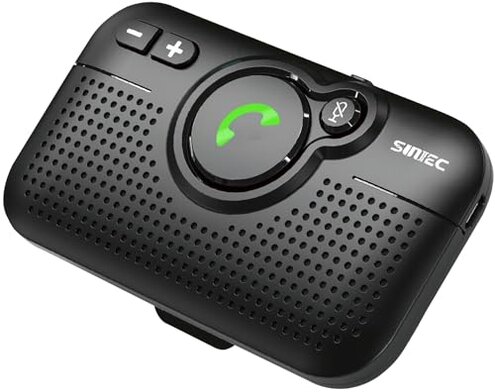
Product evaluated: SUNITEC Bluetooth Car Speaker for Cell Phone, Handsfree Bluetooth Car Kit Motion AUTO ON Off Support Siri Voice Assistant Handsfree Speakerphone with Visor Clip - BC980P
Related Videos For You
2022 Car Bluetooth Speakerphone w/ FM transmission - How to use Avantree Roadtrip for Calls & Music
Jabra Freeway Bluetooth in-Car Speakerphone Review
Data basis: This decision report is based on dozens of aggregated buyer comments collected from a mix of star ratings with short written notes and longer written reviews, supported by a smaller set of Q&A-style feedback. The collection window spans the past 12 months through recent weeks. Most signals came from written experiences, with some buyers describing real driving use cases and repeat pairing attempts.
| Buyer outcome | SUNITEC visor speakerphone | Typical mid-range alternative |
| Call clarity | Higher risk of echo or “sounds far away” reports during driving use | More consistent clarity once positioned and set up |
| Connection stability | More finicky pairing and reconnect behavior in daily in-and-out car routines | Smoother auto-reconnect with fewer manual steps |
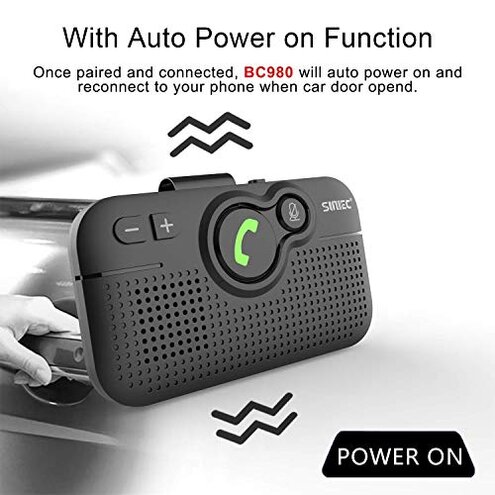
| Auto on/off | Higher-than-normal false wake or missed wake complaints tied to motion detection | More predictable behavior, often using simpler power logic |
| Controls | More mistakes from big buttons being hit while driving or on the visor | Fewer accidental presses due to better spacing or simpler controls |
| Regret trigger | Most regret starts when calls fail mid-trip and you must troubleshoot | Less regret because failures are rarer and easier to recover from |
“Why do callers say I sound muffled or echo-y?”
Regret moment often hits on the first real commute call, when the other person asks you to repeat yourself. This is more disruptive than expected for a handsfree device because it defeats the main reason you bought it.
Pattern appears repeatedly but is not universal, and it shows up most during moving driving with cabin noise. Compared with typical mid-range kits, the tolerance for placement and volume tweaks seems lower, so you spend more time fiddling.
- Primary complaint is weak outgoing voice or “underwater” sound during live calls.
- Recurring echo is commonly reported when the speaker volume is high and the unit is close to reflective surfaces.
- First-trip surprise happens after setup seems fine, then problems show up during the first longer call.
- Cabin noise makes it worse during highway speeds or rough roads, based on repeated driving-context feedback.
- Workarounds commonly attempted include repositioning on the visor and reducing volume, which adds extra steps each trip.
- Fixability is mixed, because some buyers report improvement with placement while others still get complaints from callers.
- Category contrast: mid-range speakerphones usually tolerate imperfect mounting better, while this one is described as picky.
“Why won’t it reconnect every time I get back in the car?”
Regret moment shows up after a few days, when you expect “set and forget” but end up re-pairing or toggling Bluetooth. This is a secondary issue in frequency, but it becomes a daily annoyance.
- Persistent pattern is intermittent reconnect behavior during daily in-and-out use, not just one bad day.
- Hidden requirement is keeping your phone’s Bluetooth behavior consistent, or you may need extra taps after the device sleeps.
- Worse conditions include switching between multiple devices or using the phone with other audio sources.
- Manual recovery often involves toggling Bluetooth or cycling the unit, which is harder when already driving.
- Expectation gap feels bigger because mid-range alternatives often auto-reconnect more reliably once paired.
- Not universal, because some buyers report stable pairing, but the repeated complaints suggest a real risk.
- Impact is missed calls or temptation to handle your phone, which undermines the safety goal.
“Is the motion auto on/off actually reliable?”
Regret moment happens when the unit is asleep when you need it, or it wakes when you did not expect it. This is among the most frustrating complaints because it feels random.
Pattern is less frequent than call-quality complaints, but it is persistent enough to matter for buyers who chose it for automation. Compared with simpler power designs in the category, motion-based power can be less predictable in real life.
- Missed wake shows up when you start driving and expect it to be ready, but it stays asleep until extra movement.
- False wake is also reported, especially with door closing vibrations or bumps that trigger the sensor.
- Environment sensitivity appears tied to how firmly it is clipped and how much the visor flexes in normal use.
- Battery impact can follow from unexpected waking, because it may spend more time powered on than you assume.
- Troubleshooting loop often becomes “move it, press buttons, check phone,” which adds friction.
- Category contrast: many mid-range options trade smart wake for steadier power behavior, which can feel better day to day.
“Do the buttons and mounting cause distractions?”
Regret moment is pressing the wrong button while reaching up, or the unit shifting on the visor. This is an edge-case issue in frequency, but it is more serious when it happens because it can pull attention from the road.
- Accidental presses are reported when the unit is on the visor and your hand hits a nearby control.
- Learning curve shows up early, because muscle memory takes time and the controls are used while driving.
- Mount stability complaints appear during repeated visor flips or when the clip fit is not snug.
- Sound bursts can happen if volume is changed by mistake, which makes the next call moment feel jarring.
- Mitigation is mounting it where your hand never brushes it, which can reduce visibility and convenience.
- Category contrast: typical mid-range alternatives often have better button separation or rely more on phone controls.
Illustrative excerpts (not real quotes):
- “They say I’m in a tunnel unless I crank it.” Primary pattern tied to call clarity during driving.
- “Every other trip I’m re-pairing at a stoplight.” Secondary pattern tied to reconnect friction.
- “Auto-on is random; sometimes it’s just asleep.” Secondary pattern tied to motion wake behavior.
- “Big buttons are easy, but I hit them by accident.” Edge-case pattern tied to control layout.
Who should avoid this
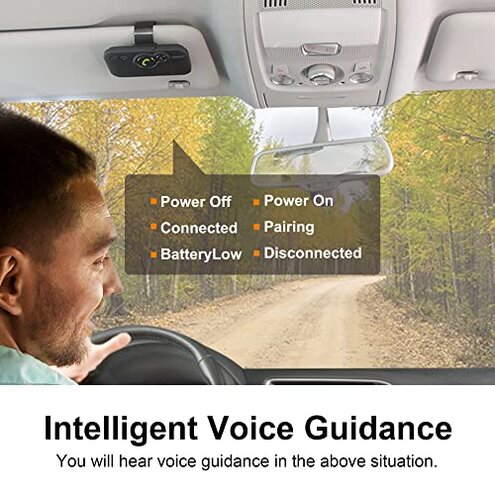
- Frequent callers who need reliable voice clarity on highways, because call-quality complaints appear repeatedly in motion.
- Hands-off drivers who expect perfect automation, because auto on/off can be less predictable than simpler designs.
- Multi-device users who switch between car audio, earbuds, and speakers, because reconnect friction is a recurring theme.
- Noise-sensitive cabins like trucks or older cars, because cabin noise makes muffled audio more noticeable.
Who this is actually good for
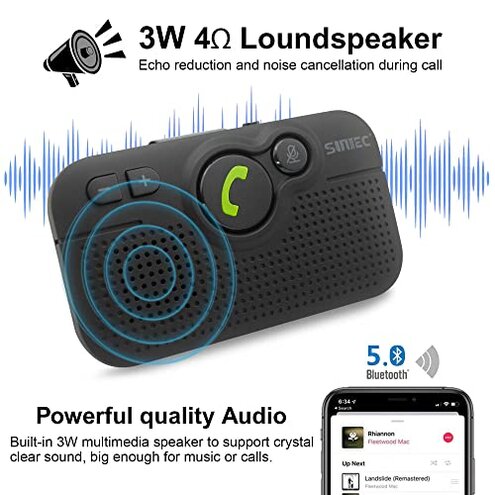
- Short-call users who mainly take quick calls, because brief use can hide the clarity downside.
- Single-phone setups that rarely switch Bluetooth targets, because that avoids common reconnect triggers.
- Tinker-tolerant buyers who will test visor placement and volume, because positioning can sometimes mitigate echo.
- Older vehicles with no built-in handsfree, if you accept occasional manual steps as the price for basic handsfree.
Expectation vs reality
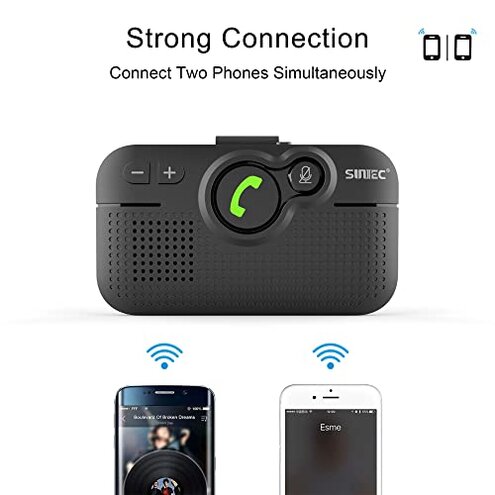
Reasonable expectation for this category is stable auto-reconnect after first pairing. Reality in aggregated feedback is more frequent manual intervention during daily use than many mid-range alternatives.
- Expectation: clear voice pickup from a visor mount. Reality: recurring “muffled” or “echo” moments when road noise rises.
- Expectation: motion power saves effort. Reality: motion behavior can add uncertainty instead of removing steps.
Safer alternatives
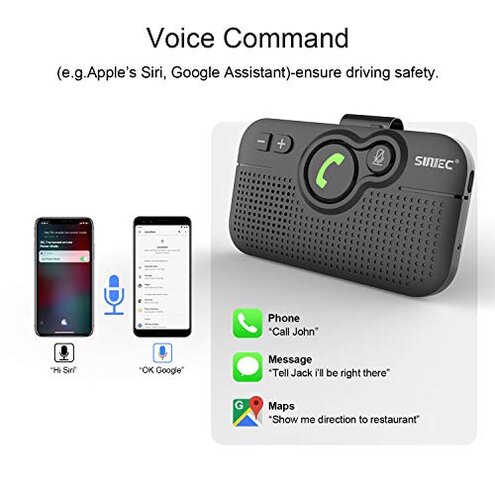
- Choose proven mics by prioritizing models with strong feedback on outgoing voice, to neutralize the muffled-call risk.
- Prefer simple power if you hate surprises, because basic on/off is often more predictable than motion wake.
- Look for reconnect wins by checking for consistent reports of seamless auto-reconnect after car starts.
- Test return window with real commutes, because call clarity issues often appear during driving, not at home.
- Consider integrated solutions if possible, because built-in or head-unit systems usually reduce button distractions.
The bottom line
Main regret comes from call clarity and reliability issues that show up during real driving, when fixes are least convenient. The risk feels higher than normal for mid-range speakerphones because motion power and reconnect behavior can add extra steps. If you need dependable handsfree calling with minimal tinkering, this is a skip based on the recurring patterns.
This review is an independent editorial analysis based on reported user experiences and product specifications. NegReview.com does not sell products.