
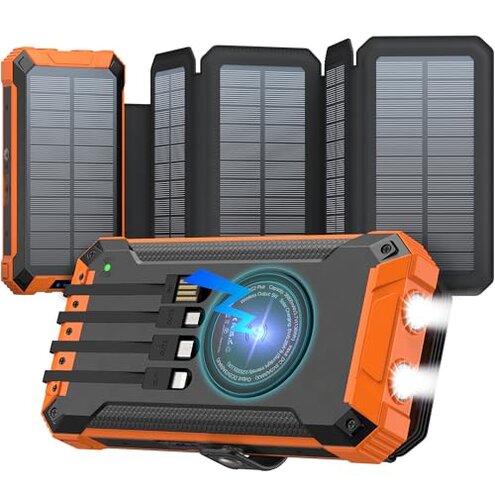
Product evaluated: GOODaaa Solar Charger Power Bank, Portable Wireless Charger 36800mAh with Five Solar Panels Built-in Four Cable Five Outputs Outdoor Battery Pack for Cell Phone with Dual Flashlights, Carabiner
Related Videos For You
Solar recharging power bank! Lights, USB phone charger!
Solar Charger Instructions
Data basis: This report draws on dozens of written reviews and several video demonstrations collected between Jan 2024 and Feb 2026. Most feedback came from written reviews, supported by video tests and buyer Q&A. Patterns below reflect commonly reported buyer experiences.
| Outcome | GOODaaa PN-W22PLUS | Typical mid-range power bank |
|---|---|---|
| Solar recharge speed | Very slow in real use; solar often adds minimal charge after hours in sun. | Slow but usable for emergencies; needs full sun but shows noticeable gain in hours. |
| Battery reliability | Inconsistent hold and discharge reported after weeks of use. | More stable for similar capacity; fewer early drop-off reports. |
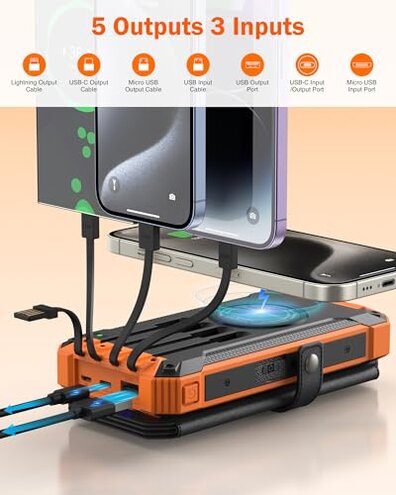
| Built-in cables | Fragile and short; repeated failure appears in buyer comments. | Detachable or higher-quality cable options are common in mid-range models. |
| Wireless charging | Unreliable charging and heat under load during daily use. | Basic wireless works more consistently on mid-range units with fewer heat reports. |
| Regret trigger | Higher-than-normal risk from expecting usable solar backup and receiving poor daytime recharge instead. | Lower risk when buyers rely on wall charging for daily top-ups. |
Top failures buyers should know
Does the solar charging actually keep devices powered?
Regret moment: Buyers expect usable solar backup but often get negligible real-world charging.
Pattern: This is a commonly reported issue across written and video feedback.
When it appears: Noticeable on the first outdoor use and persists after repeated sunny days.
Why worse than normal: Many mid-range solar power banks add small but useful charge after a few hours. This unit often adds little despite similar sun exposure, so reliance leads to regret.
Are the built-in cables durable enough for regular use?
- Early sign: Built-in cables feel loose or bend at the connector within days.
- Frequency: This complaint is a primary pattern in buyer notes.
- Cause: Repeated tugging and storage stress during travel accelerates failure.
- Impact: You lose the convenience of built-in cords and must carry replacements.
- Fixability: Replacing or bypassing cables adds time and cost compared with detachable-cable designs.
Will the battery and wireless features meet daily needs?
- Performance drop: Some buyers report faster-than-expected drain after weeks of use.
- Wireless heat: Wireless charging sometimes gets hot and slows charge speed during use.
- Context: Problems show up under continuous charging sessions or when charging multiple devices.
- Category contrast: Mid-range alternatives usually maintain steady output when charging two devices; here output can fall off.
- Attempts to fix: Buyers tried firmware resets and full recharges, with limited improvement.
- Hidden requirement: Expect to rely on a wall charger for reliable daily performance.
- Buyer cost: Extra charging gear or replacements raises total ownership effort.
Are the ports, flashlight, and weather protection reliable?
- Port wear: USB and output ports can become loose after repeated plugging.
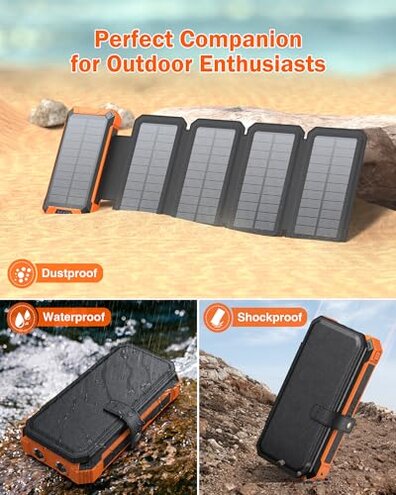
- Seal failure: Silicone port covers may not fully prevent dust ingress with regular outdoor use.
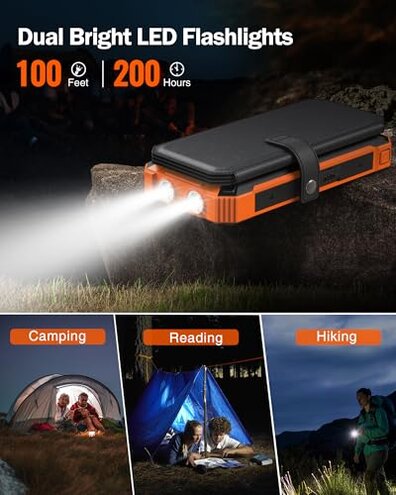
- Flashlight limits: The LED lights are bright enough for short tasks but not for prolonged use.
- Frequency tier: These are secondary but persistent complaints across buyer types.
- When worse: Issues escalate with daily outdoor handling and rugged trips.
- Impact: Reduced water/dust resistance increases risk of failure in wet or dusty conditions.
- Workaround: Buyers often use extra protective cases or avoid exposure, adding friction.
- Repairability: Fixing port issues usually requires component replacement or replacement unit.
Illustrative excerpts (not actual quotes)
Excerpt: “Solar panel added almost no charge after a full sunny day.” — primary pattern.
Excerpt: “Built-in cable frayed at the plug within a week of travel.” — primary pattern.
Excerpt: “Wireless pad got hot and slow with two devices.” — secondary pattern.
Excerpt: “Port covers loosened after minimal hiking use.” — edge-case pattern.
Who should avoid this
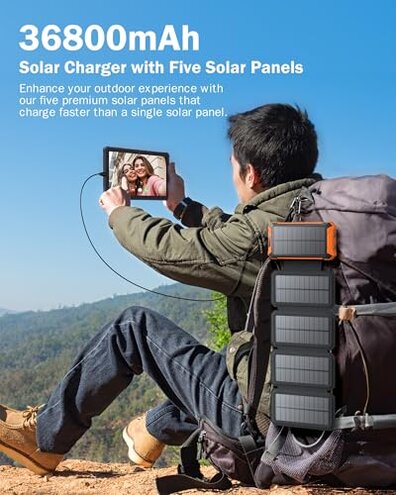
- Off-grid travelers who expect dependable solar recharge for extended trips.
- Daily commuters who need reliable wireless charging without heat slowdowns.
- Minimalist packers who plan to rely on built-in cables as the sole cords.
Who this is actually good for
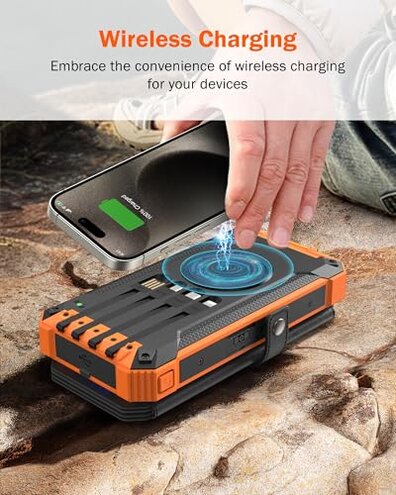
- Occasional campers who top up at home and accept slow solar trickle charging.
- Budget buyers who want many features in one unit and can accept durability trade-offs.
- Users with backup wall chargers who can tolerate fragile built-in cables by carrying spares.
Expectation vs reality
Expectation (reasonable for this category): Solar panels provide an emergency trickle charge after several hours in sun.
Reality: The unit often adds negligible charge in the same conditions, leaving phones unusable.
Expectation: Built-in cables last through travel handling.
Reality: Cables can fail quickly, creating immediate inconvenience and extra purchases.
Safer alternatives
- Choose external solar tests: Prefer units with verified solar wattage or independent solar test results to avoid weak panels.
- Prefer detachable cables: Buy power banks with removable or replaceable cables to eliminate the built-in cable failure risk.
- Look for thermal reports: Pick models with documented wireless charging heat control for stable multi-device use.
- Check ingress ratings: Select units with certified IP ratings rather than silicone covers for real outdoor durability.
The bottom line
Main regret: Buyers often expect usable solar backup but encounter very slow or ineffective solar recharge.
Why worse: This exceeds normal category risk because buyers pay for a large-capacity unit and still need wall charging.
Verdict: Avoid this model if you depend on reliable off-grid charging or built-in cable durability.
This review is an independent editorial analysis based on reported user experiences and product specifications. NegReview.com does not sell products.