
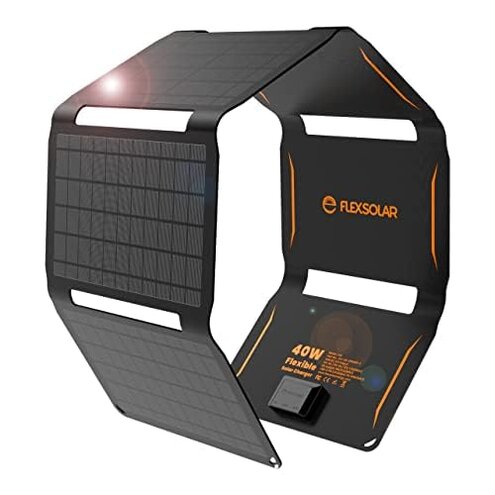
Product evaluated: FlexSolar 40W Foldable Solar Panel Charger with USB-C and USB-A Outputs for Phones, Power Banks, Tablets - Waterproof for Camping, Hiking, Backpacking
Related Videos For You
DIY Solar Setup: Easy to Follow Step-by-Step Instructions
The BEST Portable Solar Panel! Bluetti PV420 Foldable Solar Panel Review
Data basis This report synthesizes feedback from dozens of buyer reviews and several video demonstrations collected between Jan 2022 and Feb 2026. Most feedback came from written reviews, supported by video tests and a few Q&A posts, giving a mix of hands-on and filmed usage.
Comparative risk snapshot
| Outcome | FlexSolar 40W | Typical mid-range 40W |
|---|---|---|
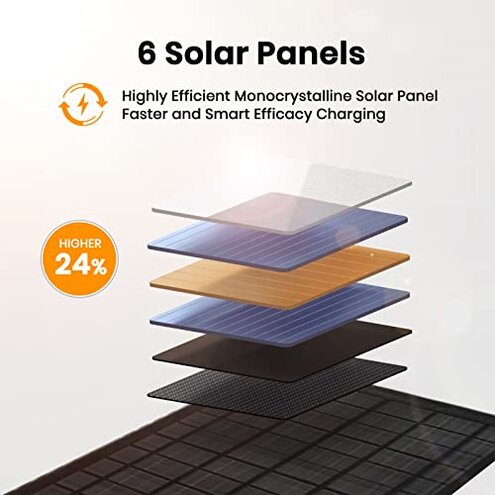
| Real-world power | Prone to low output — commonly reported as delivering less-than-expected charging in non-ideal sun. | More consistent — mid-range panels usually hit close to rated power under good sun. |
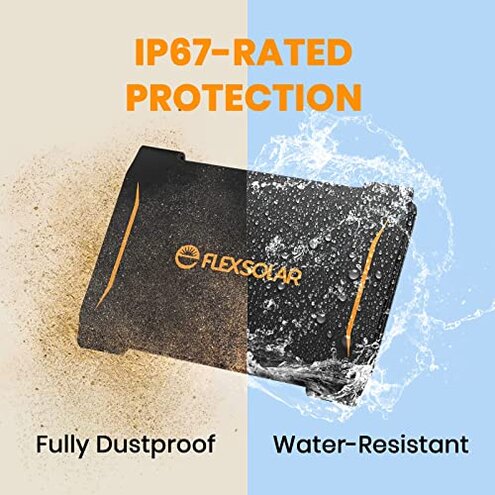
| Waterproofing | Junction caution — reports repeatedly note the junction box is not fully waterproof in heavy rain. | Better sealed — many competitors have more robust junction boxes for outdoor use. |
| Port reliability | Connector issues — users often see fluctuating charge or loose cables after repeated use. | Sturdier ports — alternatives use reinforced connectors that last longer in the field. |
| Ease of use | Angle-sensitive — performance drops sharply with partial shade and wrong tilt. | More forgiving — others keep steady output in slightly imperfect setups. |
| Regret trigger | Higher failure risk — combined lower output and junction sensitivity creates a higher-than-normal regret trigger for campers. | Lower risk — mid-range units rarely combine both faults. |
Top failures buyers report
Why does the panel rarely reach advertised power?
Real-world underperformance — many buyers report the panel often supplies noticeably less power than the 40W rating.
When it shows — this shows up during first use in real sun and worsens in partial shade or off-angle setups.
Category contrast — this is more disruptive than most mid-range panels, which usually give usable charging in typical campsite sun.
Is the product waterproof enough for real outdoor use?
- Early sign — buyers commonly report moisture near the junction box after heavy rain.
- Frequency tier — this is a secondary but persistent problem across written reviews and videos.
- Cause — the junction area appears less sealed than the panel body, so rain can reach electronics.
- Impact — affected units can stop charging or fail after exposure to prolonged wet conditions.
- Hidden requirement — users must store the junction box indoors during heavy rain, a constraint not obvious from the general waterproof claim.
Why do the ports and connectors act flaky after use?
- Symptom — intermittent charging or loose fits are commonly reported after repeated hookups.
- When it appears — problem surfaces after several uses or while moving the panel in the field.
- Frequency — this is a secondary issue but appears across both text reviews and camera tests.
- Attempts — users try different cables or tap the port, which sometimes restores charging temporarily.
- Fixability — field fixes are short-term; durable repair often requires replacement or professional service.
- Category contrast — ports on many peers are reinforced and less likely to loosen with normal outdoor handling.
Will this meet on-the-go charging needs without a battery?
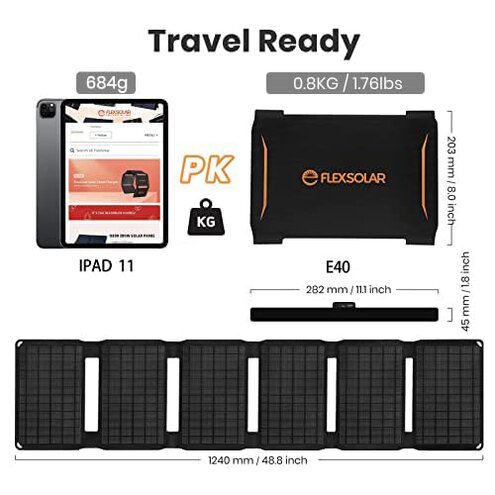
- Expectation gap — the panel is an instant-only charger and has no energy storage, which buyers sometimes overlook.
- When it matters — this matters during cloudy days or when you need power at night.
- Performance hit — shade or wrong tilt reduces output sharply, cutting effective charging by up to a large fraction.
- What users do — some pair it with a power bank, adding cost and bulk.
- Frequency tier — this is a primary usage mismatch for buyers expecting reliable off-grid charging without extra gear.
- Category contrast — many campers prefer panels bundled with small batteries or clearer guidance, which reduces regret.
- Hidden cost — buyers often need to buy a separate battery or better mounting to get dependable results.
Illustrative excerpts
Illustrative “Panel barely trickled power under midday sun, not the 40W I expected.” — Primary pattern.
Illustrative “Water pooled near the junction after a storm; then it stopped charging.” — Secondary pattern.
Illustrative “Needed a power bank too, or the phone dies at night.” — Edge-case pattern.
Who should avoid this
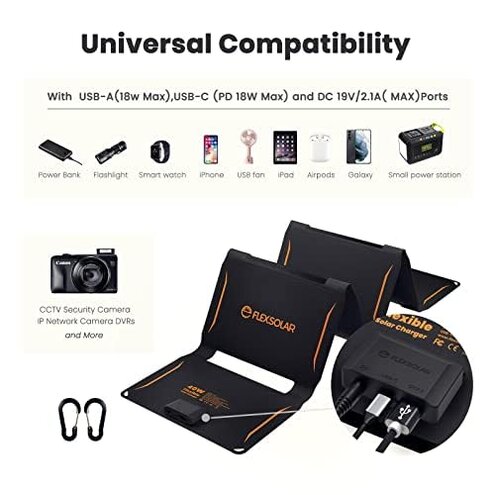
- Long-trippers — if you need dependable all-day power without extra batteries, this product risks outages.
- Rain-heavy campers — if you expect to leave gear exposed in storms, the junction caution exceeds normal tolerance.
- Hard-use handlers — if you frequently move or re-plug outdoors, port durability may frustrate you faster than typical panels.
Who this is actually good for
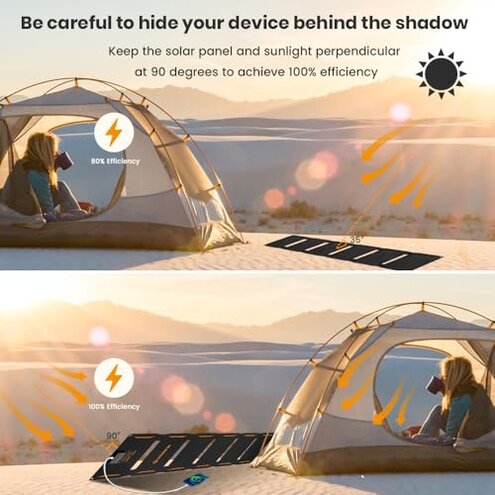
- Occasional hikers — if you need light, occasional top-ups in good sun and can manage tilt, you may accept lower output.
- Budget-minded day campers — if you carry a power bank and avoid storms, the panel gives a low-weight option.
- Day-use photographers — if you recharge on-site and store the unit after use, the portability advantage outweighs durability limits.
Expectation vs reality

Expectation — reasonable for this category is steady near-rated output under good sun.
Reality — the panel commonly falls short in typical campsite conditions, causing slower charging than buyers expect.
Expectation — waterproof claims mean safe outdoor storage in rain.
Reality — junction caution requires indoor storage during heavy rain, adding an extra handling step.
Safer alternatives
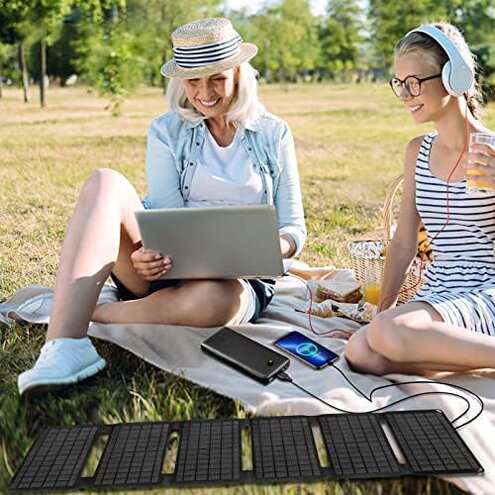
- Choose sealed junctions — look for panels with fully enclosed junction boxes to avoid the rain vulnerability.
- Prefer reinforced ports — pick units with metal-reinforced or weatherproof USB ports to reduce connector failures.
- Bundle with battery — consider a kit that includes a small battery to remove the instant-only limitation.
- Check angle guides — choose panels that include clear tilt/stand hardware to reduce performance loss in the field.
The bottom line
Main regret — buyers most often regret the combined lower-than-expected output and junction sensitivity in real outdoor use.
Why it matters — this combination creates a higher-than-normal risk compared with typical mid-range foldable panels.
Verdict — avoid this unit if you need reliable, weather-tolerant off-grid charging without buying extra batteries or protective gear.
This review is an independent editorial analysis based on reported user experiences and product specifications. NegReview.com does not sell products.