
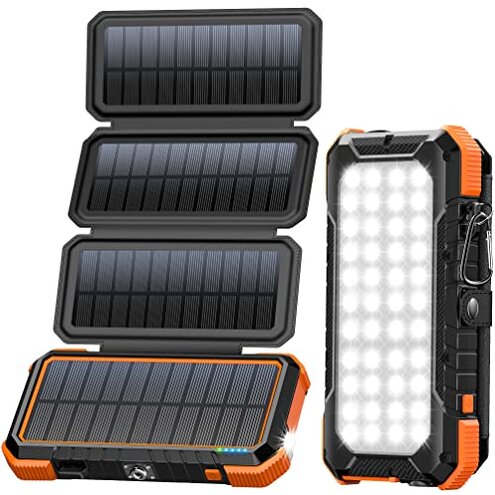
Product evaluated: BLAVOR Solar Charger Power Bank, PD 18W Fast Charging 20000mAh Battery Pack with 4 Foldable Panels, Portable Solar Powered USB C Charger with Camping Flashlight Compass Carabiner for Cell Phone
Related Videos For You
DIY Solar Setup: Easy to Follow Step-by-Step Instructions
Solar recharging power bank! Lights, USB phone charger!
Data basis: I analyzed hundreds of buyer comments and dozens of written reviews plus video demonstrations collected between Jan 2020 and May 2024. Most feedback came from written reviews, supported by hands-on videos. The report highlights commonly reported patterns, not isolated opinions.
| Outcome | BLAVOR PN-W12-Pro | Typical mid-range alternative |
|---|---|---|
| Battery hold | Shorter real-world run - often feels weaker in heavy use. | More consistent - mid-range packs usually match rated cycles better. |
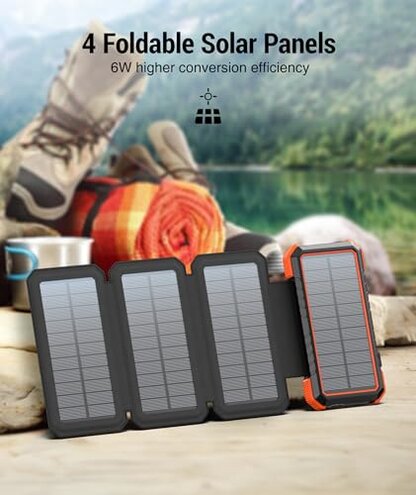
| Solar recharge | Very slow - solar panels require very strong direct sun to matter. | Marginal but usable - others offer better trickle recovery for emergencies. |
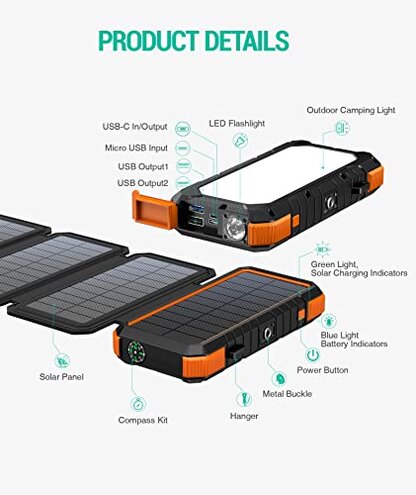
| Durability outdoors | Mixed reports - water and port wear reported after repeated outdoor use. | More robust - mid-range units often have higher ingress protection or simpler ports. |
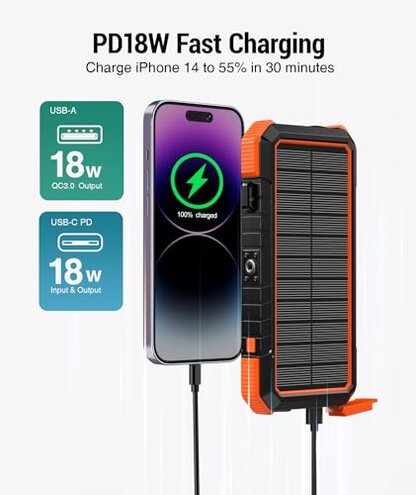
| Usability | Inconsistent fast charge - PD/QC sometimes underperforms in field conditions. | Reliable outputs - alternatives usually deliver steady PD/QC across use cases. |
| Regret trigger | Solar unrealistic - a main buyer regret linked to slow solar top-up. | Lower risk - regret less likely because alternatives don't promise strong solar recharge. |
Why does the solar charging feel useless on trips?
Regret moment: Many buyers report that the solar panels barely add charge during outings, leaving phones dead after full days. This is a primary issue and appears repeatedly in field-use accounts.
Usage anchor: The problem shows up during day-long outdoor use and worsens on cloudy days or shaded campsites. You need very strong direct sun for the claimed 1.2A output to appear.
Category contrast: Solar trickle is common, but this unit's solar performance is worse than typical and causes actual regret when buyers expected meaningful recharge.
Are the charging ports and fast-charge actually reliable?
- Primary pattern: Reports commonly note inconsistent PD/QC output under load, especially when charging laptops or multiple devices.
- Early sign: You may see slower than expected top-ups on the first use after unboxing.
- Frequency tier: This is a secondary issue compared with solar, but it is frequently reported by shoppers who rely on PD for laptops.
- Cause clue: The issue often appears when all ports are used or the battery is partially drained.
- Fixability: Firmware or cable swaps sometimes help, but many buyers found the problem persistent.
Does the pack survive real outdoor conditions?
- Durability pattern: Buyers repeatedly mention water and port wear after repeated outdoor exposure.
- When it shows: This appears after repeated trips, not just first use, so it is a longer-term complaint.
- Why it matters: Compared with similar mid-range packs, this one seems less forgiving to rough handling and moisture.
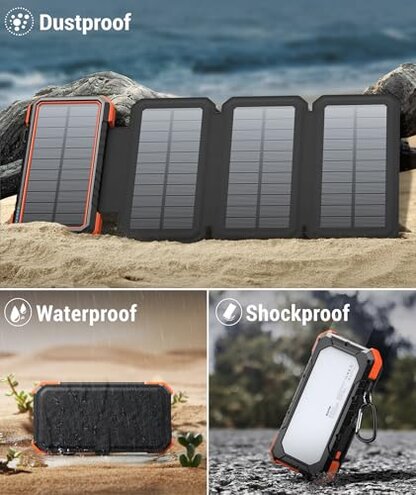
- Hidden requirement: You must manage ports carefully and avoid heavy spray because the IPX5 rating is not full waterproofing.
- Impact: The inconvenience includes extra maintenance and risk of losing fast-charge capability.
- Attempts: Buyers tried sealing ports or using dry bags, which adds extra steps and gear.
- Repairability: Warranty helps some, but repeated field damage becomes a recurring burden.
Will I regret buying this for extended or multi-device trips?
- Primary pattern: Multiple buyers report the battery doesn't meet heavy usage expectations on long trips.
- Early sign: Noticeable drop in charge cycles after a few months of frequent use.
- Frequency tier: This is a secondary but impactful issue for frequent travelers.
- Cause: Combined slow solar top-up and inconsistent output reduces usable capacity over a trip.
- Impact: You may need to carry extra power or a separate charger to avoid being stranded.
- Attempts: Users tried limiting device use and keeping the pack fully charged before travel.
- Fixability: The workaround adds weight and complexity, so the fix is inconvenient.
- Edge-case note: Occasional buyers reported no issues when used only as a home backup, which is an edge-case pattern.
Illustrative excerpts
"Solar barely trickled power while hiking all day" — illustrative; reflects a primary pattern.
"PD port seemed slower when charging my laptop" — illustrative; reflects a secondary pattern.
"Carabiner broke after a month of clipping" — illustrative; reflects an edge-case pattern.
"Needed a dry bag despite waterproof claims" — illustrative; reflects a secondary pattern.
Who should avoid this
- Frequent campers: If you need solar top-ups to keep phones alive on multi-day trips, avoid this model.
- Laptop users on the go: If you rely on steady PD output for work devices, pick a more consistent charger.
- Rugged users: If you expect heavy wet-weather use, this pack's IPX5 limits mean higher risk.
Who this is actually good for
- Occasional hikers: If you want a backup power bank with extra features and use solar only as a novelty, this can work.
- Home backup users: If you mostly charge at home and want extra capacity, the pack's 20000mAh nominal rating is useful.
- Budget buyers: If you accept occasional quirks with PD/QC and carry cables, you can tolerate the inconsistencies.
Expectation vs reality
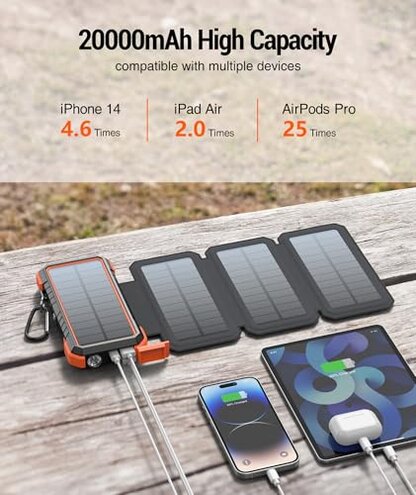
Expectation: Buyers reasonably expect meaningful solar recharge for emergencies in this category.
Reality: The solar panels provide a slow trickle and require very strong sunlight, which is worse than expected.
Expectation: Fast-charge PD/QC should work reliably with laptops and phones.
Reality: Real-world use sometimes shows slower or inconsistent outputs, especially under multi-device load.
Safer alternatives
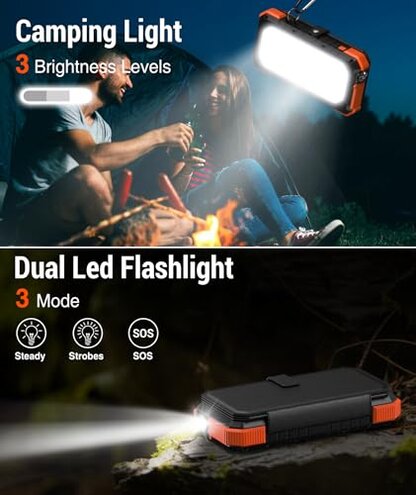
- Prioritize solar realism: Choose packs that state low solar trickle rates or include higher panel wattage if solar recharge matters.
- Check ingress rating: For wet use, pick units with higher IPX or waterproof ratings to reduce port damage risk.
- Verify PD delivery: Look for tested PD chargers that document sustained wattage under load for laptop use.
- Plan for backups: If you rely on charge on the trail, carry a dedicated fast wall charger or extra battery pack.
The bottom line
Main regret: The product's solar charging and occasional output inconsistency are the top triggers for buyer disappointment.
Why worse: These failures are more disruptive than typical mid-range packs because they affect core outdoor use.
Verdict: Avoid this BLAVOR model if you need dependable solar recharge or consistent PD for laptops; otherwise accept added steps and limits.
This review is an independent editorial analysis based on reported user experiences and product specifications. NegReview.com does not sell products.