
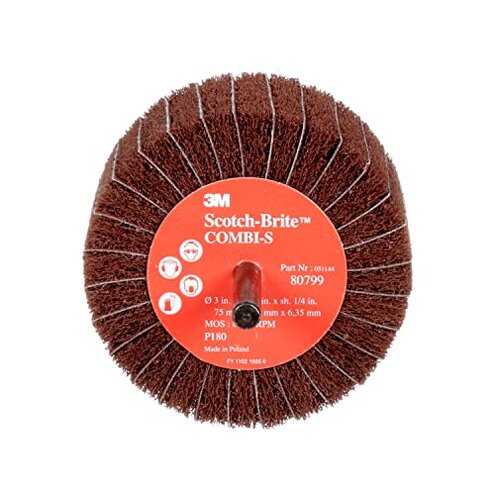
Product evaluated: 3M Scotch-Brite Combi-S Wheel - P180 Grit Aluminum Oxide - X-Weight Backing - Metal Finishing Wheel For Die Grinder - 3" x 1.75" x 1/4" - 80799
Related Videos For You
Mandrel Flap Wheel Straight Die Grinder Install
How to Polish Dull Aluminum Wheels to a Mirror Finish in SECONDS using Flitz Metal Polish
Data basis: This report synthesizes feedback from dozens of user reports collected between Jan 2018 and Dec 2025. Sources include written product reviews and video demonstrations, with most feedback coming from written reviews and supported by video tests. The signal is qualitative: common themes repeat across both review types and post-purchase videos.
| Outcome | This product | Typical mid-range wheel |
|---|---|---|
| Finish quality | Inconsistent finish reported; some users noted streaking and uneven brushing. | Smoother and more uniform finish under similar use in most mid-range options. |
| Lifespan | Shorter life reported for many buyers when used in repeated sessions. | Longer usable life is typical for comparable mid-range abrasive wheels. |
| Fit & compatibility | Hidden fit issues appear with non-standard collets or low-power grinders. | More forgiving fit on mid-range alternatives that include adapters or smaller diameters. |
| Safety / vibration | Higher-than-normal vibration complaints seen on first use and at high RPMs. | Lower vibration is typical for mid-range wheels balanced for die grinders. |
| Regret trigger | Premature wear plus fit problems combine to cause the main buyer regret. | Predictable longevity without frequent fit work is common in mid-range picks. |
Top failures
Why does the wheel wear out so quickly?
Regret moment: Many buyers notice loss of abrasive texture after only a few uses, especially on thicker metal or long sessions.
Pattern: This is a commonly reported primary complaint across written reviews and videos, not isolated feedback.
When it happens: Wear appears after repeated use and worsens during long grinding sessions or heavy material removal.
Category contrast: Buyers expect mid-range flap wheels to deliver several consistent sessions; this wheel declines faster than that baseline.
Is vibration or imbalance a problem?
- Early sign: Noticeable wobble on first spin for a number of users.
- Frequency tier: Appears repeatedly in feedback and is a primary safety concern.
- Cause: Imbalance may come from inconsistent flap placement or hub seating.
- Impact: Vibration reduces control and can cause poor surface finish or user fatigue.
- Attempted fixes: Users tried re-centering, lower RPMs, or swapping collets with mixed success.
Will it fit my grinder without extra parts?
- Hidden requirement: The wheel needs a true 1/4" shaft collet to sit perpendicular and stable.
- Usage anchor: Fit problems show up at initial setup when the wheel won’t seat or wobbles.
- Scope signal: Seen across written reports and setup videos from different buyers.
- Why worse: Many mid-range wheels include adapters or smaller sizes; this one is less forgiving.
- Impact: Poor seating increases wear and risk of vibration during even light use.
- Fixability: Some buyers solved it with a precise collet or spacer, adding steps and cost.
- Buyer cost: For many this hidden step makes the overall purchase more expensive than expected.
Do you get consistent brushed finishes?
- Early sign: Visible streaks and uneven brushing reported on delicate or visible workpieces.
- Frequency tier: This is a secondary but recurring issue in multiple reviews.
- Usage anchor: Problems appear during precision passes or when pressure varies.
- Cause: Flexible web pads and alternating flaps sometimes produce variable contact angles.
- Impact: Extra sanding or buffing is often required to hide streaks.
- Attempted fixes: Lower RPMs and lighter pressure helped some buyers but not all.
- Category contrast: Mid-range alternatives tend to give a more uniform finish without repeated touch-ups.
- Value hit: Time lost to rework turns this into a real cost for visible-surface work.
Illustrative excerpts (not real quotes)
Illustrative phrasing: “Wheel lost grit after two thicker steel passes, had to switch.”
Pattern: This reflects a primary wear pattern.
Illustrative phrasing: “Wobble on first spin made me stop and re-seat the wheel.”
Pattern: This reflects a primary fit/vibration pattern.
Illustrative phrasing: “Needed a spacer to get true perpendicular seating on my grinder.”
Pattern: This reflects a secondary hidden-requirement pattern.
Who should avoid this
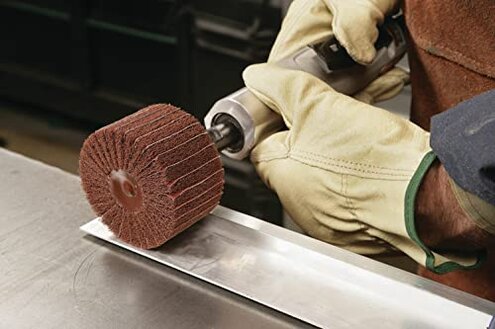
- Finish-sensitive buyers who need consistent brushed surfaces without rework.
- High-volume users who run long sessions and expect typical mid-range durability.
- Low-power grinders or non-standard collet owners who don’t want extra adapters.
Who this is actually good for
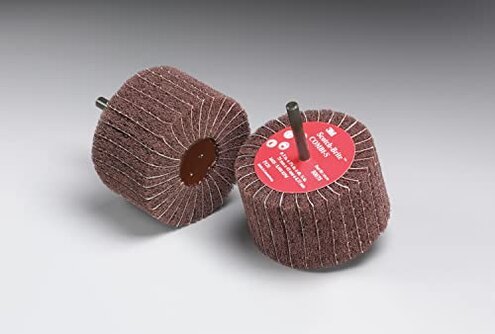
- Occasional hobbyists who accept shorter life for lower upfront cost and can tolerate rework.
- Users with correct 1/4" collets who can seat the wheel properly and won’t face fit surprises.
- Non-visible metal work where finish uniformity is not critical and rough brushing is fine.
Expectation vs reality
Expectation: Buyers reasonably expect a mid-range flap wheel to last through multiple sessions and produce uniform brushing.
Reality: This wheel often wears faster and can need extra setup to fit correctly, making it worse than that baseline.
Expectation: Reasonable for this category is predictable seating and low vibration.
Reality: Users report initial wobble that sometimes persists until hardware adjustments are made.
Safer alternatives
- Choose balanced wheels marketed for die grinders to reduce initial vibration and improve control.
- Buy options with adapters if your grinder uses mixed collet sizes to avoid hidden fit work.
- Pick coarser grits for heavy material removal needs and finer grits for visible finishes to reduce rework.
- Prefer wheels with longevity claims or visible testing data to reduce premature replacement risk.
The bottom line
Main regret: The combination of premature wear and occasional fit/vibration problems is the key buyer complaint.
Why it matters: These failures are more disruptive than typical category issues because they add setup steps and rework time.
Verdict: Avoid this wheel if you need consistent durability and plug-and-play fit; consider higher-rated mid-range alternatives instead.
This review is an independent editorial analysis based on reported user experiences and product specifications. NegReview.com does not sell products.